Severance Season Two and the Geometry of the Hallway
Apple's second season of Severance is built almost entirely out of a single architectural unit. The hallway is the show's argument and the season's discipline.
53 pieces in this section.

Tina Fey's adaptation of the 1981 Alan Alda film is a show about three couples, four vacations, and what middle-aged friendship sounds like when nobody is performing for an audience.
Eleven months after Severance returned, the second season's structural gambles are clearer. The show's patience has always been its argument; the real question is whether that argument still scales.
Jonathan Tropper's Apple series gave Jon Hamm a part he has been waiting a decade for. The show itself is a more complicated object.

Fifteen months after Shōgun's historic Emmy sweep, and with a second season confirmed, it's worth asking what the show changed about prestige TV, and what it didn't.

Liz Meriwether's eight-episode FX series handed Michelle Williams the role of the decade and Jenny Slate the best supporting performance on television last year.

Eighteen months after The Bear's third season landed to the worst reviews of its run, the season has quietly become the one I most want to rewatch. An argument for the slow, prickly middle chapter.

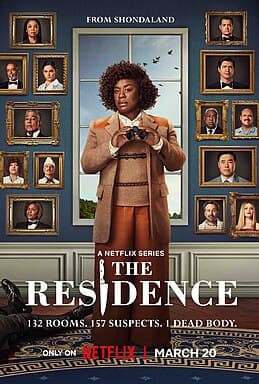
Shondaland's White House whodunnit handed Uzo Aduba the role she has been waiting for since Orange is the New Black. The rest of the show is trying to catch up to her.

A year after Industry's third season brought Kit Harington and a green-energy IPO into the show's London trading floor, the season looks like the moment the show became the best finance drama in TV history.
A year on from Season 4, Slow Horses is still the most consistently-good spy drama on television. An argument for the show that has quietly become one of the best.

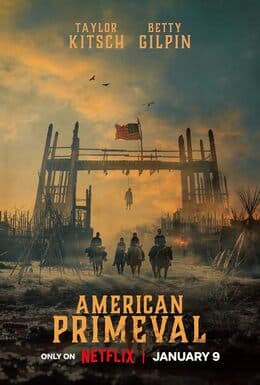
Peter Berg and Mark L. Smith's six-episode Netflix limited western compresses a brutal 1857 Utah into ninety minutes per episode, and the compression is both the method and the mistake.
Dan Fogelman's Paradise uses a first-episode reveal as a structural argument. The reveal works; what the show does with it is the interesting part.

Tony Gilroy's second and final season of Andor is the most disciplined piece of franchise television anyone has produced. It is also an argument about what franchise television could have been.

Richard Gadd's seven-episode autobiographical drama was the TV moment of spring 2024 and the legal controversy of summer 2024. A year later, the show itself is still the best argument for why it exists.

Three and a bit years after the first season, Hwang Dong-hyuk's second Squid Game is a structurally different object from the original, and the difference is the thing worth describing.

R. Scott Gemmill's real-time hospital drama on Max ran fifteen episodes across a single shift. It is the best procedural television has produced in a decade.

Joshua Zetumer's FX adaptation of Patrick Radden Keefe's Troubles-era book is a better television show than many people expected. It is also a book that perhaps should not have been adapted at all.

Steven Zaillian's eight-episode Netflix adaptation of Patricia Highsmith was the quiet prestige show of April 2024. A year later, its patience has only looked smarter.

Sky and Peacock's Jackal adaptation stretched the Forsyth novel across ten episodes and bet the show on Eddie Redmayne's stillness. The bet paid off, mostly.

A year after Hacks Season 3 landed, the show is quietly one of the best ongoing comedies on television. An argument for the series whose cruelty keeps getting better-calibrated.

Mindy Kaling's Netflix NBA comedy is a vehicle for Kate Hudson's return to screen work. The show around her is more conventional than her performance deserves.

Disney's Daredevil revival survived a mid-production creative overhaul and emerged looking, eventually, like a continuation of the Netflix show it nominally wasn't.

Graham Yost's second season of Silo split its story across two bunkers and asked viewers to wait. The waiting is the show's argument, and also its risk.

A year after The Penguin finished its run on HBO, the show is a strong argument for what the superhero universe can still do on television when nobody makes it wear tights.

Alfonso Cuarón's seven-part thriller on Apple TV was the prestige-TV arrival of October 2024. A year out, the shape of what went wrong is clearer.
Debora Cahn's second season ran six episodes and handed its final scene to Allison Janney. The compression changed what the show is.

Jac Schaeffer's Agatha limited series did what Marvel's TV slate had mostly stopped doing: it knew what it was, and it finished.

Mike Schur's Netflix show placed Ted Danson inside a retirement community as an amateur investigator. The premise is a disguise for the comedy Schur has been moving toward for a decade.

Issa López's anthology season was the most divisive prestige TV of the year. Eighteen months out, the things it got right outweigh the things it did not.
Nathan Fielder returned in April 2025 with six episodes about cockpit communication and commercial aviation safety. The premise sounds like a joke. It is not a joke.
Taylor Sheridan's Landman arrived in November 2024 as his fifth active series for Paramount. The show is good enough in places and overextended everywhere, and the overextension is the company strategy.
Jennie Snyder Urman's CBS reboot smuggled a revenge thriller and a grief story inside a network legal procedural. Kathy Bates held the whole thing together across nineteen episodes.
Peter Craig's Philadelphia crime serial dropped on Apple TV+ in March with Brian Tyree Henry and Wagner Moura as the leads. It is patient, specific, and the best adult crime drama the service has aired.
Brian Jordan Alvarez's FX comedy arrived on Hulu in September 2024 and renewed quickly. The show is doing more than its loose register suggests, and the workplace logic is the reason.

Joe Barton's six-episode Netflix spy series arrived in the Christmas release slot in December 2024 and did the thing most genre television cannot do: hold a comic register and a grief register in the same frame without either one winning.

Steven Knight's Victorian boxing drama dropped on Disney+ and Hulu in February 2025. Six episodes in, the show's interest in three parallel hustles is what makes the frame hold.
Erin Foster's Netflix series arrived in September with a tidy ten-episode run and an audience the streamer did not appear to expect. The show's virtue is its willingness to let the romance breathe.

Amazon's third Reacher season adapted Persuader across eight episodes in February 2025 and did the specific thing the show exists to do. The formula holds, and the reasons it holds are worth marking.
The second season of Apple's therapist comedy deepens rather than complicates, which is the correct instinct for the show and an increasingly rare one on contemporary prestige TV.

Chris Smith's six-part documentary arrived on Netflix in September and did the specific job the genre rarely gets to do. It let its subject speak, and then it outlasted him.

HBO's six-episode Bene Gesserit prequel arrives with a specific set of inherited problems and a few genuine pleasures. The question is whether the pleasures can sustain a second season.

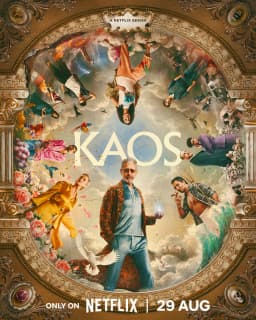
Charlie Covell's Greek-myth reworking arrived on Netflix in August 2024 and was cancelled a month later. The show deserved better, and the cancellation revealed something specific about Netflix's renewal math.

ABC's High Potential premiered in September 2024 to the strongest broadcast numbers of the season and built from there. The show is a throwback in ways that reveal what streaming has quietly stopped doing.
The BBC's Ludwig, broadcast across six episodes in September and October, is the closest a mainstream British commission has come in years to the register the genre was built on.

Hulu's Arconia comedy moved its fourth season to Los Angeles and brought a Hollywood satire with it. The season is the show's most uneven and reveals a specific structural tension the format was built to avoid.

House of the Dragon's second season ended earlier this month. After eight episodes that often circled material without advancing it, the season is a specific diagnostic.

Apple's Presumed Innocent is not a radical show. It is a competent one, and competent legal drama has become rare enough that the competence is worth noting.
Park Chan-wook's HBO adaptation of Viet Thanh Nguyen's novel is the most formally audacious prestige TV of the spring. A show about duality delivered by a director who specialises in it.

Jonathan Nolan's Fallout is the best video game adaptation anyone has made, because it treats the source material’s tone as the thing worth preserving.

The Regime, the six-episode HBO political satire starring Kate Winslet, finished airing earlier this month. The show is a specific tonal experiment, and it is worth taking seriously.

Netflix's adaptation of Cixin Liu's Remembrance of Earth's Past trilogy is, on balance, a better show than the Game of Thrones showrunners' previous form suggested. It is also structurally compromised in specific ways.

Donald Glover and Francesca Sloane's Amazon spy drama is not a remake. It is a character study dressed as a spy show, and it works because of what it refuses to be.

The third Spielberg-Hanks World War II series landed on Apple TV+ in January with enormous production ambition and uneven dramatic execution.