Black Doves and the Spy Show That Refuses to Pick a Tone
Joe Barton's six-episode Netflix spy series arrived in the Christmas release slot in December 2024 and did the thing most genre television cannot do: hold a comic register and a grief register in the same frame without either one winning.
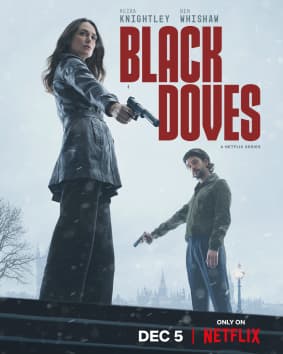
Poster / promotional material via Wikipedia, Black Doves. Used under fair use for criticism and review.
Joe Barton’s Black Doves was Netflix’s big-ticket UK holiday release of 2024. It landed on 5 December and ran six episodes. Keira Knightley plays Helen Webb, the wife of the British Defence Secretary, who is also a long-time operative for a private intelligence service called the Black Doves. Ben Whishaw plays Sam Young, a contract assassin and her oldest friend, recalled to London after the death of her lover. The show was renewed for a second series within two weeks of the first’s release. I want to argue that the renewal was earned, and that the specific thing Barton’s show is doing is harder than it first appears.
The show has been, in the critical conversation, filed under stylish-London-thriller in the post-Killing Eve lineage. That filing is correct at the surface level and inadequate at the structural one. Black Doves is not Killing Eve with tinsel. What it is, and what I want to spend this piece working out, is a grief narrative disguised as a genre show, and the disguise is the achievement.
The premise, and what it actually asks
The first episode opens with the death of Jason Davies, Helen’s lover of eighteen months, in a targeted killing whose circumstances the series spends its six episodes unpacking. The spine of the plot is a murder mystery: who killed Jason, why, and what the specific intelligence stakes are around a cache of information he was carrying. This is the genre frame, and Barton handles it efficiently.
What the show is actually about is Helen’s grief. Knightley’s Helen is not permitted to grieve publicly. Her husband does not know about the affair; her professional handlers do not regard the lover’s death as operationally relevant; her children cannot know. The grief is contraband. The entire plot machinery of the series, the intelligence sub-plots, the cross-agency action, the comic-register Sam Young material, is a structural vehicle for the specific problem of how a woman who cannot admit her loss continues to function.
This is the thing the show is doing that I think has been under-registered in the reviews. The genre content is not decorative. It is the structural shape the grief takes because Helen cannot take it in any other form.
Knightley, doing quiet work
Keira Knightley’s screen career has passed through several specific phases. The early prestige period (Atonement, Pride & Prejudice, Anna Karenina). The commercial-franchise phase (the Pirates films). The character-actor middle period (Colette, The Imitation Game, Boston Strangler). Black Doves is the first role I can remember in which the show is built around a sustained interior performance from her, and she is exceptional.
Knightley’s Helen does the specific emotional work the show is built for. In the public-register scenes (dinners, state functions, school events with the children) she is a specific and controlled political wife. In the private scenes with Sam Young she is a different and more available person. In the solitary scenes, particularly in the episode-two hotel room sequences and in the episode-five stretch after a specific piece of information lands, she is a third register: a woman alone with what she is not permitted to feel in any of the other rooms.
The acting is in the transitions between the registers. Knightley will move from one to another inside a single scene, and the transitions are the performance. Watch her in the episode-three sequence where she arrives at her children’s nativity play directly from a set-piece the previous scene has just ended. The shift from operational-mode to mother-mode happens across the length of a corridor, and Knightley does it at the level of posture, gaze, and specifically the rhythm of her breathing.
Whishaw, and the comic register
Ben Whishaw’s Sam Young is the show’s other centre. Sam is, structurally, the comic relief and the emotional confidant, and the combination in a lesser show would collapse into either camp or sentiment. Whishaw refuses both. His Sam is a specifically tired working assassin whose affection for Helen is the unstated structural fact of his life, and whose jokes are the coping mechanism of a man who has been in the work too long.
The thing Whishaw does in this show that I have not seen in British comic-register work in a while is treat the comedy as load-bearing. When Sam is funny he is funny because the alternative to being funny is being destroyed. This is a specific actor’s choice and it is what makes the show’s tonal shifts, which on paper should not work, work continuously.
Sam’s own subplot, which involves an ex-boyfriend played by Omari Douglas and the specific history of a botched operation four years earlier, is the show’s most self-contained piece of writing. The Douglas-Whishaw scenes across episodes four and five are the most emotionally precise thing in the series. The relationship is not soft. It is two adults working out whether the work they do is compatible with the kind of loving they want, and the conclusion they reach is not tidy. The show is braver with this material than it had to be.
Barton, and the script’s precision
Joe Barton, who created and wrote the series, has been working at a specific register in British genre television for the last decade (his credits include Giri/Haji and The Lazarus Project) and Black Doves is the most controlled script work he has produced. The writing has a specific quality that deserves marking: the dialogue carries more than one register per scene, almost continuously. A scene about a dead drop at a London market is also a scene about Helen telling Sam the specific way she has been sleeping since Jason’s death. A scene about an interrogation is also a scene about Sam and his ex negotiating what the word friendship is going to mean between them.
This is writing that respects the audience’s capacity to hold two emotional registers simultaneously, and it is what gives the show its specific texture. Most spy television either plays the plot machinery straight or leans into stylish-comic detachment. Barton does neither. He writes scenes that operate on the plot level and on the emotional level at once, and the cast delivers them in a register that holds the two.
The supporting ensemble
Sarah Lancashire plays Reed, the London handler for the Black Doves service, and gives the show its best single character actor performance. Lancashire’s Reed is a woman who has been in the work for thirty years and who has calibrated her professional affect to a specific emotional distance the series gradually explores. The Reed-Helen scenes across episodes two and four are the show’s clearest piece of feminist character writing, and they are written and performed without announcement.
Andrew Buchan plays Helen’s husband, the Defence Secretary Wallace Webb. The performance is a specific piece of restrained character work. Buchan’s Wallace is not a villain, not a fool, and not a plot device. He is a politician who loves his wife without knowing her, and the specific quality of his not-knowing is the structural irony the show’s ending turns on.
Ella Lily Hyland plays Williams, the young operator the Black Doves have assigned to support Helen, and Adeel Akhtar plays Eleanor Davies’s brother in a specific cross-plot thread. The ensemble is deep, and the writing distributes the emotional weight across it evenly enough that the show does not collapse into a two-hander.
The Christmas London
The series is set and shot across the Christmas-lights London of mid-December into the new year. This is a specific and deliberate production-design choice. The holiday setting is not ironic decoration. It is doing two things the show needs. First, it heightens the contrast between Helen’s domestic-performance register (school events, husband’s official Christmas functions, children’s presents) and the work she is actually doing in the same hours. Second, it grounds the grief material in a specific temporal frame. Jason has died in early December. Helen is being asked to perform Christmas for her family across the following three weeks. The calendar is doing work the show does not need to explain.
The photography, by Benedict Spence across the first block and Nick Dance across the second, handles the specific London-at-Christmas visual register with discipline. The lights are not over-aestheticised. The city reads as recognisable rather than postcard.
The plot, and its refusals
The mystery plot is worked out across the six episodes at a pace the show trusts. I will not describe specific resolutions. What I want to mark is the show’s refusal of a specific kind of genre payoff. The final episode does not hand Helen a redemptive resolution. It hands her the specific terms on which she will continue her life, and the terms are harder than the plot has suggested they would be. The show is honest about what grief costs, and honest about the fact that the work will not return to her what she has lost.
This is the right ending for this material, and it is the reason the second-season renewal is welcome. The show has built a specific world with specific consequences for its characters, and there is more to do in it.
What the season leaves
Black Doves is the British spy show I have most enjoyed since Slow Horses, and the comparison is deliberate. Where Slow Horses operates in a register of shabby competence, Black Doves operates in a register of polished grief. Both shows understand that spy fiction works best when the spying is not the subject. The subject, in Slow Horses, is bureaucratic failure. The subject, in Black Doves, is what a woman does when she is permitted to be a wife and a mother and an operative but not, structurally, a widow.
Watch the six episodes close together if you can, and watch them in the evenings of a long week. The specific pleasures of the show land harder when the grief has space to settle. Barton has earned the second series. I will be watching.
Priya came to criticism sideways from theatre. She is patient with slow shows, short with bloated ones, and cheerfully vicious about lazy writing.
MORE BY PRIYA NAIR →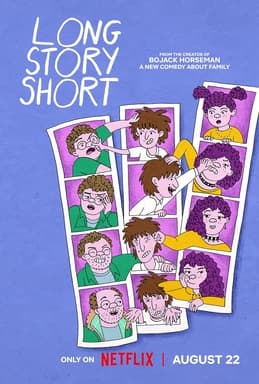
Long Story Short Lights the Same Candle Twice
Raphael Bob-Waksberg's family comedy jumps across six decades in ten half-hours. The jumping is not the design. The design is what gets handed from one pair of hands to the next.

The Four Seasons: Tina Fey's Middle-Aged Friendship Show
Tina Fey's adaptation of the 1981 Alan Alda film is a show about three couples, four vacations, and what middle-aged friendship sounds like when nobody is performing for an audience.
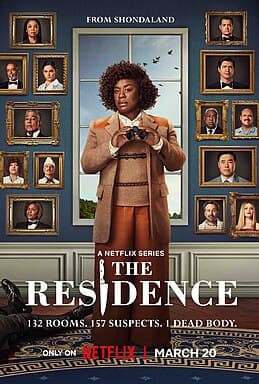
The Residence: Uzo Aduba, Shondaland, and the Detective as Structure
Shondaland's White House whodunnit handed Uzo Aduba the role she has been waiting for since Orange is the New Black. The rest of the show is trying to catch up to her.