Mr. McMahon and the Documentary That Its Subject Agreed To
Chris Smith's six-part documentary arrived on Netflix in September and did the specific job the genre rarely gets to do. It let its subject speak, and then it outlasted him.
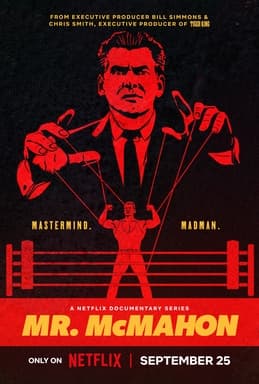
Poster / promotional material via Wikipedia, Mr. McMahon (miniseries). Used under fair use for criticism and review.
Chris Smith’s Mr. McMahon, which dropped as a six-part documentary on Netflix on 25 September 2024, is the rare celebrity-access documentary that does the harder version of the job. Smith interviewed Vince McMahon, former WWE chairman and chief executive, across what is reported to have been two years of sit-downs before McMahon resigned in January 2024 amid the Janel Grant sex-trafficking lawsuit. The interviews were conducted across a period in which the world was moving under the interview chair. What the film does with that movement is the reason the documentary works.
I want to argue that Mr. McMahon is the best long-form celebrity documentary Netflix has aired in several years, and that it is working against the genre conventions Netflix itself has helped codify. Most docs of this shape are puff pieces negotiated in exchange for access. Smith’s film used the access and then, specifically, refused the deal.
The structural problem of access
The access-doc as a genre has become, across the last decade, essentially a promotional vehicle. Subject agrees to interviews. Subject’s representatives negotiate rights. Director gets material. Director produces a portrait that the subject can live with. The audience gets a sanitised version of a person they already had opinions about. The deal is transparent. Most viewers have learned to read the genre through it.
What Smith does in Mr. McMahon is take the initial access deal and then, across the documentary’s production timeline, watch it collapse. The Janel Grant lawsuit landed in January 2024. The deal McMahon and his representatives had presumably structured around a favourable portrait could no longer be honoured. Smith had hours of interviews that had been conducted on the premise that McMahon was a captain-of-industry figure in the late stage of a legacy career. The ground under that premise shifted. Smith’s film registers the shift.
The documentary could have been recut around the lawsuit in a sensational register. It is not. Smith’s choice, working with editor John Chimples and his team, is to let the earlier interview footage play with the later context applied. You watch McMahon, in a sit-down from presumably 2022 or 2023, answer a question about his treatment of employees. The answer, on the day it was recorded, was one kind of answer. In September 2024, with the lawsuit public, the answer reads differently. The film does not underline the difference. It lets the viewer do the work.
The ex-talent, as counter-chorus
The documentary interviews an unusual range of former WWE talent, including Hulk Hogan, Bret Hart, John Cena, Stephanie McMahon, Shane McMahon, Paul Heyman, Tony Atlas, and several others. The ex-talent interviews are the documentary’s counter-chorus. Smith structures the series so that McMahon’s account of a given period in the company’s history is followed, often directly, by accounts from talent who worked inside the same period.
The accounts do not always agree. This is the point. McMahon’s account of the 1980s national expansion, the 1990s Attitude Era, the Montreal Screwjob, the steroid trials, the various deaths in the company’s orbit, the early 2000s talent relations, the recent Vince-adjacent controversies, is in every case followed by accounts from people with a different relationship to the events. The documentary does not position either side as correct. It positions the gap between the accounts as the thing to examine.
The Bret Hart interview material is especially sharp. Hart, on screen, is still working the specific anger of a man who left the company in 1997 believing he had been cheated out of a title run. His account of the Screwjob, recorded more than twenty-five years after the fact, is delivered with the clarity of someone who has told the story many times and still means it. McMahon’s counter-account, recorded separately, is characteristically framed as business-pragmatic. Smith lets both sit. The viewer decides.
The figure of Heyman
Paul Heyman, the longtime WWE creative and current-era executive presence, is the documentary’s most structurally interesting interviewee. Heyman is loyal. Heyman is articulate. Heyman is also, visibly across his interviews, aware of the position he is in, which is the position of a public defender of a figure whose public image has collapsed. Heyman’s interview material is, in places, the documentary’s most morally uncomfortable content. He is good at what he does. The documentary is good at watching him do it.
Heyman’s account of McMahon’s management style, the specific working rhythm of the chairman’s writing room, the meetings at odd hours, the re-writes in the hallway at a televised event, is among the most vivid process-of-work material in the documentary. This is the kind of material that a favourable access doc would have made the centre of the portrait. Smith uses it as texture. The portrait is not reducible to the process.
The sports-business frame
Mr. McMahon is also, specifically, a sports-business documentary. The company McMahon built, from a regional territory inherited from his father in 1982 to a publicly traded global media company by the time of the 2024 sale to Endeavor, is a specific and instructive business story. Smith gives the business material its time. The expansion, the national cable deal, the pay-per-view model, the WrestleMania scaling, the eventual IPO, the merger environment of the late 2010s and early 2020s, the Endeavor sale, the TKO Group structure.
The documentary’s treatment of the business story is clearer than most dedicated business docs manage. There is a specific section, across the fourth and fifth episodes, that walks through how WWE restructured its television rights across the post-cable environment. The walkthrough is patient. It does not condescend. It explains what the deals were and what they meant. Most business coverage of professional wrestling does not bother.
The Grant lawsuit, handled directly
The documentary’s handling of the Janel Grant lawsuit, which names McMahon, John Laurinaitis, and WWE as defendants in allegations of sex trafficking and abuse filed in January 2024, is direct. Smith and his producers, including Bill Simmons as executive producer through his company, clearly understood that the documentary could not be released without a specific address of the allegations. The final episode pivots explicitly to the lawsuit. The allegations are described in specific terms. The documentary includes McMahon’s denial via statement. McMahon, by this point, had resigned from TKO Group.
What the final episode does, structurally, is ask the viewer to reconsider the six hours of documentary they have just watched in light of what the lawsuit alleges. The reconsideration is built into the form. McMahon’s earlier interview material, re-viewed with the final episode’s framing, reads differently. The film is not accusing. It is making the allegations available and positioning the earlier access material alongside them. The effect is cumulative, not prosecutorial.
Some critics objected that the final-episode pivot is tonally late. The objection is fair on form. I think it is wrong on structural logic. The late pivot replicates, for the viewer, the actual experience of the documentary’s production: a portrait being assembled under one premise, and then the premise collapsing. The late pivot is the documentary’s honesty about what happened to its own project.
What the documentary refuses
Mr. McMahon refuses the redemption-frame the access-doc genre usually ends on. There is no scene of McMahon looking out a window and reflecting. There is no soft-light sit-down in which he acknowledges having changed. The final episode ends without a closing statement from its subject. The subject is gone. The company continues. The allegations continue in court.
Smith is not arguing that McMahon is a figure to be rehabilitated. He is also not arguing for tabloid demonisation. He is arguing, structurally, that the story is not finished and the documentary’s job is to assemble what can now be assembled and leave the rest for the legal system.
What the series does for the subject
The broader question Mr. McMahon raises is what the access deal actually gives the subject. McMahon clearly expected a specific kind of portrait. He did not get it. The deal he thought he was signing was undermined by events he did not control. A subject who agrees to on-camera interviews is agreeing to a portrait that will be finished in a context the subject cannot predict.
What stays
Mr. McMahon is available on Netflix. It is six hours. Watch it in order, across a week rather than a weekend. Pay attention to how the early episodes sit inside the later context. The documentary is sharper than the publicity around it suggested. It deserves more attention than the initial news cycle gave it.
Marcus believes good criticism is an argument. He is almost always angry about something, usually for good reason. Horror is his first language.
MORE BY MARCUS VELL →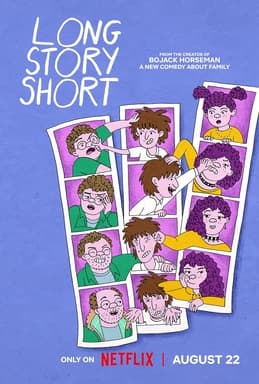
Long Story Short Lights the Same Candle Twice
Raphael Bob-Waksberg's family comedy jumps across six decades in ten half-hours. The jumping is not the design. The design is what gets handed from one pair of hands to the next.
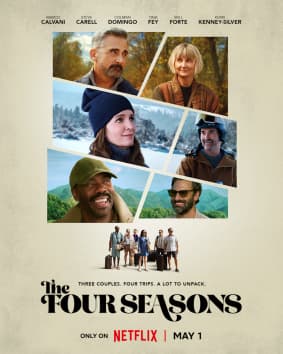
The Four Seasons: Tina Fey's Middle-Aged Friendship Show
Tina Fey's adaptation of the 1981 Alan Alda film is a show about three couples, four vacations, and what middle-aged friendship sounds like when nobody is performing for an audience.
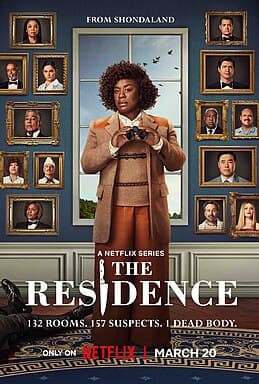
The Residence: Uzo Aduba, Shondaland, and the Detective as Structure
Shondaland's White House whodunnit handed Uzo Aduba the role she has been waiting for since Orange is the New Black. The rest of the show is trying to catch up to her.