Nobody Wants This and the Rom-Com That Trusts Its Leads
Erin Foster's Netflix series arrived in September with a tidy ten-episode run and an audience the streamer did not appear to expect. The show's virtue is its willingness to let the romance breathe.

Erin Foster’s Nobody Wants This launched on Netflix on 26 September 2024, ran ten half-hour episodes, and immediately became one of the streamer’s most-watched originals of the autumn, according to Netflix’s top-ten reporting. Kristen Bell plays Joanne, a thirty-something agnostic sex-and-relationships podcaster. Adam Brody plays Noah, a reform rabbi in his mid-thirties. The show is about their romance, which is structurally difficult because one of them is not going to convert and the other has a career whose continuity depends partly on his marrying in.
Seven months on, with a second season filming and the streaming audience still discovering the first run, the show is worth a closer look. My argument is that it is the best romantic comedy American television has produced in several years, and that the reason is specific, small, and has to do with the show’s willingness to trust what its two leads can do with each other.
The rom-com problem, solved
Television rom-com has been, across the streaming era, a structurally difficult form. The shape wants two leads who fall in love across obstacles, reach an episode-ten near-miss, and either end on a kiss or on a stalled misunderstanding that resets for Season 2. The streaming economy has been impatient with the form. Episodes have drifted longer. Plots have added ensembles, workplace sub-plots, fourth-episode twists, and most recently the trauma-reveal midpoint that the prestige-era shifted toward in the late 2010s.
Nobody Wants This rejects most of this. Its episodes are twenty-six to thirty minutes. Its plot per episode is modest. Its ensemble is present but does not pull focus. Its midpoint is a conversation, not a revelation. The structural discipline is where the show wins. Foster, who created the series and wrote on most of the episodes, has clearly read the rom-coms she loves and has chosen to honour the form rather than update it. The form did not need updating. It needed respecting.
The two leads, and what they are doing
Bell and Brody are the show. They are the only story. Everything else is scaffolding to get them in a room together. If the scaffolding is doing work, the work is giving them specific, small reasons to talk.
Bell’s Joanne is a specific kind of present-tense forty-minus-nothing California woman. She works on a podcast she hosts with her sister. She is verbally fast, defended with humour, intermittently self-aware about the defence. Bell has been doing versions of this register for twenty years, on Veronica Mars and The Good Place and House of Lies. What she does here is quieter. She is dialling down the speed and letting the spaces between lines do the emotional work. Her scenes with Brody, in particular, slow her delivery in a way her recent work has not. The quieter Joanne is the Joanne the show is built around.
Brody’s Noah is the performance I want to talk about at length. Brody has been, across the last twenty years, a specific kind of underused American actor. He was the emotional centre of The O.C. in the early 2000s and then spent two decades in supporting film roles, adjacent projects, and intermittent prestige work (Fleishman Is in Trouble in 2022 was a recent high point). What Brody does with Noah is play a man who is genuinely good at his job, genuinely at peace with his faith, genuinely interested in the woman across the table from him, and genuinely uncertain about what it would cost either of them to try to make this work.
This is a difficult register. Rom-com men are usually written as either the slick charmer who needs to grow up or the sad-eyed romantic who needs to loosen up. Brody’s Noah is neither. He is an adult. He listens. He is funny in a quiet way that rewards rewatch. He disagrees, gently, when he disagrees. He has his own life that is not narratively dependent on Joanne. The performance is built around the premise that Noah is a whole person whose romantic interest in Joanne is one feature of a life that already works. The rom-com hero as a whole person is not a common thing on American television. Brody is doing it.
The specific religious register
The show’s willingness to take Noah’s religious life seriously is the other piece of its structural achievement. Foster herself converted to Judaism after meeting her husband, Simon Tikhman, and the show’s observant-Jewish texture is built from inside rather than from outside. Noah’s family, his shul, his colleagues, his rituals are rendered with specific attention. The show is interested in what being a rabbi is actually like on a Tuesday afternoon. It is not interested in making the religion exotic or comic in the cheap registers some prestige shows have drifted toward.
This matters because the romance is structurally dependent on the religious material being credible. If Noah’s career and community feel like a TV plot device, the central obstacle becomes cheap. If they feel like the life of an actual person, the stakes of the romance are real. Foster gets this right. The scenes inside the synagogue are staged with care. The scenes with Noah’s mother Bina, played by Tovah Feldshuh, are built around a specific generational weight. The show is not asking the viewer to root against Noah’s community. It is asking the viewer to hold the difficulty of what the community’s continuity requires.
The supporting ensemble, kept modest
Joanne’s sister Morgan, played by Justine Lupe, and Noah’s brother Sasha, played by Timothy Simons, are the two supporting figures the show leans on. Both actors are doing careful work. Lupe’s Morgan is a specific kind of older-sister register, part confidante, part competitor, part small anxiety engine. Simons, whose career has been defined by Veep’s Jonah Ryan, is working here in a warmer register than any he has recently played. Sasha is a husband, a father, a reasonably happy man making a case to his brother that marriage and religious continuity are compatible. Simons plays him as a person, not a type.
The parent generation, particularly Feldshuh as Noah’s mother and Michael Hitchcock as Noah’s father, are kept in the middle distance. The show resists the temptation to give them comic setpiece episodes. Foster’s instinct is correct. The supporting ensemble is there to sharpen the central romance, not to compete with it.
The show’s limits
Nobody Wants This is not a perfect season. Its third episode sags around a dinner-party setpiece that the show does not quite land. Its seventh episode leans on a misunderstanding that is a more conventional sitcom beat than the show’s best writing permits. The character of Joanne’s ex is underwritten. The podcast-career material is present but underused.
These are the limits of a first-season rom-com finding its register. The show is better in its second half than its first, and the second half is structurally where the Bell-Brody dynamic has earned the weight the later episodes put on it. The finale is not a proposal. It is not even a kiss. It is a conversation. The conversation is better than the kiss would have been.
What the second season has to manage
Shooting on Season 2 began in early 2025. What the show has to do in its second run is the hardest thing a rom-com can be asked to do, which is sustain a romantic relationship across a season as its dramatic centre rather than use the pursuit as the engine. The Will They shows that have survived the shift to They Did have generally done so by finding new sources of obstacle inside the established relationship.
Foster has indicated in press that Season 2 will continue to foreground the religious-continuity question. This is the right call. The show has a sustained obstacle that is not a contrived misunderstanding. The question is whether the writers’ room can continue to trust the two-handed scenes that Season 1 was built on.
What the season leaves
Nobody Wants This is a careful show. It is small on purpose. It is about two adults trying to figure out whether a specific version of the future is possible. The pleasure of the show is the pleasure of watching Bell and Brody find the rhythm of a grown-up couple, on screen, in scenes that do not need to prove anything else is happening around them.
Watch it in order, across a week rather than a weekend. The ten episodes reward the patience. The form is worth keeping. Foster has a specific talent, and the first season is the argument for the streamer letting her keep using it.
Priya came to criticism sideways from theatre. She is patient with slow shows, short with bloated ones, and cheerfully vicious about lazy writing.
MORE BY PRIYA NAIR →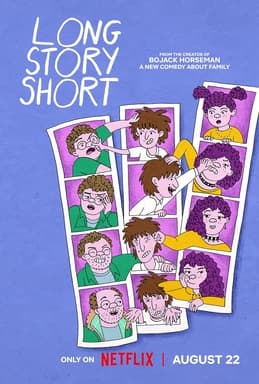
Long Story Short Lights the Same Candle Twice
Raphael Bob-Waksberg's family comedy jumps across six decades in ten half-hours. The jumping is not the design. The design is what gets handed from one pair of hands to the next.

The Four Seasons: Tina Fey's Middle-Aged Friendship Show
Tina Fey's adaptation of the 1981 Alan Alda film is a show about three couples, four vacations, and what middle-aged friendship sounds like when nobody is performing for an audience.

Shōgun's Emmy Sweep and the Future of the Limited Series
Fifteen months after Shōgun's historic Emmy sweep, and with a second season confirmed, it's worth asking what the show changed about prestige TV, and what it didn't.