American Primeval: Peter Berg's Utah and the Cost of a Six-Episode Western
Peter Berg and Mark L. Smith's six-episode Netflix limited western compresses a brutal 1857 Utah into ninety minutes per episode, and the compression is both the method and the mistake.
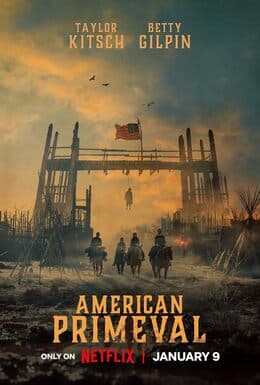
Poster / promotional material via Wikipedia, American Primeval. Used under fair use for criticism and review.
Netflix dropped American Primeval on the 9th of January 2025, all six episodes at once, with no prior week-by-week marketing buildup. The show arrived with a specific pedigree: Peter Berg directing every episode, Mark L. Smith writing every episode (Smith having co-written The Revenant and written The Marsh King’s Daughter), a cast led by Taylor Kitsch and Betty Gilpin, and a setting that announced itself as the 1857 Utah War period, specifically the Mountain Meadows massacre’s geographical and political surround.
The show was received, in its first ten days, as a major event. The specific scale, specific violence, and specific physicality of the production were the things the coverage emphasised. Nine months on, I want to write about what the show is and what the six-episode limited-western format cost it.
What the show depicts
Utah Territory, 1857. The Mormon settler community, led by Brigham Young, is in open political conflict with the US federal government. Young’s militia, the Nauvoo Legion, is mobilising against federal troops. The Mountain Meadows massacre, in which a Mormon militia (with Paiute involvement) killed approximately 120 emigrants in a wagon train, occurs in the show’s opening episode.
Sara Rowell (Betty Gilpin) is a woman travelling west with her young son, fleeing something specific that the show reveals across its running time. Isaac Reed (Taylor Kitsch) is a specifically damaged trapper with a specific past he is not discussing. Their paths cross at Fort Bridger, run by a morally ambiguous man named Jim Bridger (played by Shea Whigham). The show follows them, and a specific Shoshone ensemble including Two Moons (Shawnee Pourier) and Red Feather (Derek Hinkey), across a punishing overland journey through a territorial landscape that no one is effectively governing.
The show’s violence is relentless. Massacres, skirmishes, interpersonal killings, exposure deaths, and specific animal deaths occur across every episode. The show’s tone is not gratuitous; it is, instead, insistent on the specific claim that the 1857 Utah landscape was a place in which death was the default outcome of most human interactions.
The Peter Berg direction
Peter Berg’s previous directing work has been, for the most part, contemporary military and docudrama: Lone Survivor, Patriots Day, Deepwater Horizon. American Primeval is a specific departure, and the tonal continuities with his earlier work are interesting.
Berg stages the show’s violence with the specific procedural register of his military films. Combat sequences are choreographed to a specific tactical logic: weapons are loaded, cover is used, casualties are specifically consequential. This is unusual for American television westerns, which typically render period combat more cinematically than procedurally. Berg’s specific interest in the mechanics of how violence is actually accomplished, which informed his earlier features, is doing productive work here.
Jacques Jouffret, the director of photography, shoots the Utah and New Mexico locations on what appears to be a specifically wide palette of natural-light setups. The show’s look is closer to contemporary Terrence Malick’s work on The New World than to the John Ford western tradition. Landscapes are rendered at specific scales that dwarf the human figures. Interior scenes, when they occur, are lit almost entirely by fire or by the specific pale light of a frontier dwelling.
Taylor Kitsch, re-scaled
Taylor Kitsch, who spent the 2010s being miscast as a leading-man romantic figure in several specifically unsuccessful studio films, has, across the last few years, found a specific second-career register in character-actor work. American Primeval is the most substantial role of this second phase. His Isaac is a specifically traumatised man who has built, from the trauma, a functional frontier competence and a specific distance from other people that the show is slowly unwinding.
Kitsch plays Isaac as a man whose specific physical presence is organised around avoiding social contact. He stands at specific distances from other characters. He speaks, when required, in specifically short sentences. The performance’s best work is in the scenes in which Isaac is required, reluctantly, to accept responsibility for Sara and her son. Kitsch plays the accumulation of responsibility as a physical cost: his Isaac is, visibly, worse off for caring, and the show is specific about not pretending otherwise.
Betty Gilpin’s work
Betty Gilpin, who came to broad attention in GLOW and who has been underused since that show ended, is the show’s other major performance. Sara Rowell is, structurally, the audience surrogate: a specific woman fleeing a specific past, forced to navigate a territorial landscape whose rules she has to learn in real time.
Gilpin plays Sara as a woman whose intelligence is the thing she is trying to keep under guard. She is, visibly, smarter than most of the people she encounters, and most of the people she encounters are in positions to kill her if they notice. The performance’s specific register is a woman conducting specific operational assessments of every situation while performing, at the surface, the specific deference that her safety requires. It is sophisticated acting in a genre that does not traditionally reward it.
Gilpin’s best scenes are with her young son (played by Preston Mota). The mother-and-son interactions are staged without the specific sentimentality that period television conventionally applies to frontier-mother figures. Sara loves her son. Sara is also specifically clear about the tactical implications of his presence in specific situations. Gilpin plays both at once.
The Shoshone ensemble
The show’s specific ambition, and the place I think it partially succeeds, is in its representation of the Shoshone community that the protagonists encounter. Shawnee Pourier’s Two Moons and Derek Hinkey’s Red Feather are given specific interiority, specific cultural texture, and specific narrative weight beyond what American television westerns have historically afforded Indigenous characters.
The Shoshone scenes are performed substantially in the Shoshone language, with subtitles, and the production employed specific cultural consultants (including Julie Roanhorse and others) to develop the specific ceremonial, linguistic, and material practices that the ensemble is depicting. The result is a portrayal that is more textured than the genre norm, though I want to register the specific limit: the show is still, structurally, a white-protagonist western that is showing Indigenous characters at the edge of its frame rather than centering them.
Where the compression hurts
The show’s format is six episodes, each running between 75 and 105 minutes. The total running time is approximately 540 minutes, roughly eleven conventional hours. In the compression, specific narrative materials are under-developed.
Jim Bridger’s Fort Bridger community, which functions as one of the show’s key geographic anchors, is introduced with a density of secondary characters who receive single-scene setups and then are not returned to. The Mormon militia’s internal politics, gestured at through figures including a commander played by Kim Coates, are under-developed relative to the weight the militia’s actions carry. A subplot involving a US federal marshal pursuing Sara ends in a way that feels, narratively, as though a longer form would have given it more time. A twelve-episode version would have let the secondary characters breathe. A three-hour feature would have committed to Sara and Isaac’s arc without attempting the ensemble scale. The six-episode limited attempts both and, in places, delivers neither.
Where it leaves the genre
American Primeval is, on balance, a serious piece of American television that has specific formal ambitions the streaming western has not frequently attempted. It is also, specifically, compromised by its format in ways that the show’s reception has not, in my view, fully absorbed.
Berg and Smith have reportedly discussed further collaborations in the same period register. Whether the lessons of the compression issue will carry forward is an open question. What I would want, from the specific talent involved, is either the committed feature-length register that The Revenant demonstrated Smith is capable of, or the long-form commitment that a ten-or-twelve-episode structure would allow.
Watch it across three sittings, two episodes at a time. Pay specific attention to the Shoshone sequences, which are doing the show’s most careful work. Pay specific attention to Betty Gilpin, who is giving the show’s best performance. Do not watch it before bed. The show is specifically punishing, which is the genre’s specific ambition, and also the specific reason I am uncertain whether I will rewatch it.
Marcus believes good criticism is an argument. He is almost always angry about something, usually for good reason. Horror is his first language.
MORE BY MARCUS VELL →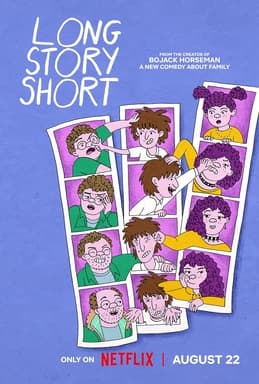
Long Story Short Lights the Same Candle Twice
Raphael Bob-Waksberg's family comedy jumps across six decades in ten half-hours. The jumping is not the design. The design is what gets handed from one pair of hands to the next.
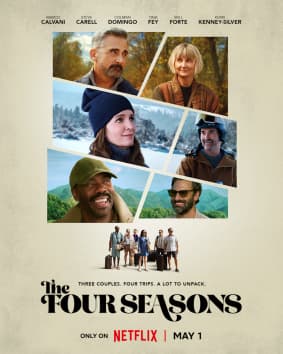
The Four Seasons: Tina Fey's Middle-Aged Friendship Show
Tina Fey's adaptation of the 1981 Alan Alda film is a show about three couples, four vacations, and what middle-aged friendship sounds like when nobody is performing for an audience.
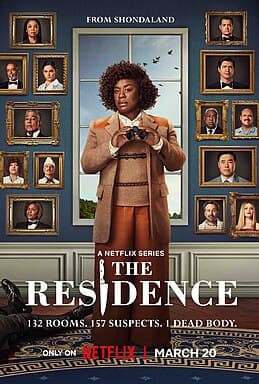
The Residence: Uzo Aduba, Shondaland, and the Detective as Structure
Shondaland's White House whodunnit handed Uzo Aduba the role she has been waiting for since Orange is the New Black. The rest of the show is trying to catch up to her.