Shōgun's Emmy Sweep and the Future of the Limited Series
Fifteen months after Shōgun's historic Emmy sweep, and with a second season confirmed, it's worth asking what the show changed about prestige TV, and what it didn't.
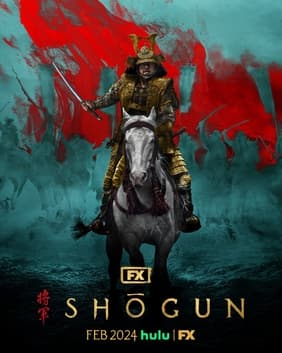
Poster / promotional material via Wikipedia, Shōgun (2024 TV series). Used under fair use for criticism and review.
The Emmy ceremony in September 2024 was unusual because almost nobody disagreed with the results. Shōgun won Outstanding Drama Series, Outstanding Lead Actor (Hiroyuki Sanada), Outstanding Lead Actress (Anna Sawai), Outstanding Supporting Actor (Tadanobu Asano), and a sweep of directing and writing categories. Eighteen awards in total, a single-year record for a drama series. The usual critical game of “but the real best show was…” did not, for once, materialise. The consensus held. Shōgun was what it looked like.
Fifteen months on, and with a second season filming, I think the show’s reception is worth revisiting for what it revealed about how television criticism is organising itself around the changing shape of the “limited series” category.
A limited series that wasn’t
The first and strangest thing about Shōgun is that it was submitted, and won its Emmys, as a Drama Series rather than a Limited Series. This was a deliberate choice by FX. The show had been produced, marketed, and received as a ten-episode adaptation of James Clavell’s 1975 novel, a complete, bounded story. Clavell’s book has an ending. Shōgun’s first season ended that ending. By any ordinary definition, it was a limited series.
The Drama Series categorisation was justified, publicly, by the show’s announcement of a second season, which was confirmed before the Emmys took place. Internally, the calculation was almost certainly about competition: the Limited Series category in 2024 was tight (Baby Reindeer, True Detective: Night Country, Fargo, Ripley, Lessons in Chemistry) and Drama was soft (The Crown’s final season, Mr. & Mrs. Smith, Slow Horses, a returning 3 Body Problem).
It succeeded. It also distorted the category. Shōgun in 2024 was not competing with other ongoing dramas. It was competing with limited series that had been designed, written, and shot as complete units. Rewarding it as Drama Series effectively rewrote the rules of the Emmy category on the fly. I don’t blame FX for making the move. I do think, fifteen months later, the industry should have had the conversation about what it meant.
The real achievement
Set aside the categorisation argument. Shōgun is a show whose achievement does not need the Emmy hardware to be legible. Its achievement is a specific one.
It is the first Hollywood adaptation of Japanese historical material that has treated the Japanese cast as the protagonists of their own story. That sounds like a trivially low bar. The 1980 Richard Chamberlain miniseries, adapted from the same novel, did not clear it. Nor, pointedly, has any major American-produced Japan-set drama in the intervening four decades. Shōgun (2024), developed by Rachel Kondo and Justin Marks, made a specific structural choice: the centre of gravity was Toranaga, not Blackthorne. The English navigator, played by Cosmo Jarvis, was displaced into a supporting-observer role. The Japanese court intrigue became the show’s primary plot, with Blackthorne as the outsider whose perspective occasionally matched the audience’s.
This is an editorial decision that reshapes every scene it touches. In Clavell’s novel, we primarily experience the Japanese characters through Blackthorne’s foreign incomprehension. In Kondo and Marks’s adaptation, Blackthorne is often in the room but not the lens. We are given access to the Japanese characters directly. The result is that the show’s most emotionally dense material, the interactions between Toranaga and Lady Mariko, Lady Mariko’s history with her father, the complex court politics between Toranaga and Ishido, is all staged as interior to Japanese life rather than performed for a Western observer.
This is, I think, the show’s permanent contribution to how this kind of material gets adapted. A generation of future Japan-set international productions will operate under a new baseline: of course the Japanese characters get the interior access. It shouldn’t be a radical move, but it is one, and Shōgun is the show that made it look like the obvious thing to do.
Sanada and Sawai
The acting standard across Shōgun is almost absurdly high. Hiroyuki Sanada’s Toranaga is a character study that works by minimisation, a political genius who has made himself unreadable as a survival strategy, and who therefore plays almost every scene three layers below the surface. Anna Sawai’s Lady Mariko is its opposite, a character whose interior life is the show’s strongest emotional engine, played by an actress working at an extraordinary level of precision. Her final arc, which I won’t detail, is the show’s single best dramatic sequence and one of the best pieces of television acting of the 2020s.
Tadanobu Asano’s supporting Emmy win, for Yabushige, is the more surprising of the show’s acting awards and, on reflection, the most deserved. Yabushige is a role that could easily have been played either for laughs or as a conventional fourth-rank scheming lord. Asano plays him as a comic figure without ever reducing him to comedy. He is funny, and untrustworthy, and strangely sympathetic, and Asano threads all three registers through a single performance without ever seeming to decide which is primary. It is masterful work.
Cosmo Jarvis’s Blackthorne is the role the conversation underestimates. Jarvis was cast as the show’s outsider, and the outsider in this version of the story is required to be, a great deal of the time, the least interesting person in the room. Jarvis’s great achievement is that he plays that diminishment cleanly. His Blackthorne is not a bumbling comic figure, not a gauche American-style hero, and not, crucially, someone whose foreignness is the show’s punchline. He is a man who has understood that he is not, this time, the protagonist, and he is working out what a supporting role in somebody else’s story looks like. That is hard acting. Jarvis did it without fuss.
The Season 2 problem
The show’s renewal for a second season, and the Kondo-Marks-FX decision to continue the story beyond the Clavell novel, has been, since its announcement, the most divisive piece of Shōgun news. The novel ends at a point from which continuation is possible but not strictly called for. Extending the story requires inventing new material, or adapting from historical sources beyond Clavell, or both.
The risk is structural. The first season was a limited series. It had a shape. It had an ending. Extending it risks doing to Shōgun what extending True Detective did to True Detective, blurring the original’s specificity by welding on continuations whose reason for existing is principally that the original succeeded.
I will be watching carefully. I will not be assuming the second season is a good idea merely because the first was a great one. If Kondo and Marks can articulate why Shōgun still has a story to tell, I’ll meet them with full attention. If they can’t, the show’s second season will be a reminder of why limited series used to remain limited.
Either way, the first season is there. It is not being unmade by what comes next. If you haven’t watched it, or if you watched it during release and let it slip out of your memory, go back. It is better than the Emmy sweep made it sound. The awards were doing the show a disservice. The show did not need them.
Priya came to criticism sideways from theatre. She is patient with slow shows, short with bloated ones, and cheerfully vicious about lazy writing.
MORE BY PRIYA NAIR →
The Bear Season 3: The Season That Slowed Down
Eighteen months after The Bear's third season landed to the worst reviews of its run, the season has quietly become the one I most want to rewatch. An argument for the slow, prickly middle chapter.
Ripley: The Slowness Was Always the Point
Steven Zaillian's eight-episode Netflix adaptation of Patricia Highsmith was the quiet prestige show of April 2024. A year later, its patience has only looked smarter.

The Brutalist: In Defence of the 3.5-Hour Epic
A year after The Brutalist swept its technical categories and divided audiences, its length has stopped looking like a gamble and started looking like the point. An argument for the long film in a short-film decade.