Paradise: The Bunker Twist That Reframes the Show
Dan Fogelman's Paradise uses a first-episode reveal as a structural argument. The reveal works; what the show does with it is the interesting part.

Dan Fogelman’s Paradise, which premiered on Hulu in January 2025, operates a structural trick that I want to describe carefully because the trick is the show. Within the first episode, the series establishes a premise that appears to be a contained murder mystery in a wealthy community, and then, about thirty-five minutes in, reveals that the setting is not what it appears. I am going to write about that reveal, because the show is not really about the murder. The show is about the premise the murder is embedded in.
Nine months after the finale, this is the show I keep returning to, not because it is the best prestige drama of 2025 but because it is the most confident piece of genre staging I saw last year.
What the premise actually is
The community where the show is set is an underground replica of an affluent American suburb, built inside a mountain, housing approximately twenty-five thousand survivors of an extinction-level environmental event. The outside world, we are told, has become uninhabitable. The community has been operating for three years. The residents have been told a specific version of what happened on the surface. That version is not entirely true.
Sterling K. Brown’s Xavier Collins is a Secret Service agent assigned to the former US President Cal Bradford (James Marsden), who now lives in the community as one of its administrators. The first episode opens with Xavier discovering Bradford’s body. The rest of the season unfolds as a murder investigation braided with a flashback structure showing us how the community came to exist, what the environmental event actually was, and who knew what, when.
The Fogelman risk, and what it buys him
Fogelman, who created This Is Us, is a writer-producer whose tendency is toward emotional scale. Paradise uses that tendency deliberately. The show is, in its basic dramatic register, a soap. The characters carry intimate personal stakes that continuously intersect with the larger political mystery. The murder is tangled with marriage. The marriages are tangled with the construction of the community. The community’s origin is tangled with the political backroom decisions that governed who was allowed in.
This is a lot of plot. Fogelman holds it by committing, across all eight episodes, to the specific register of wounded American family drama. He is not trying to write The Leftovers. He is not trying to write Severance. He is writing a bunker-suburbia story in the specific emotional language of the mid-budget American prestige drama. The language is not fashionable. It is working.
Sterling K. Brown, doing Sterling K. Brown
Brown’s Xavier is the anchor performance. What Brown does consistently, across the season, is play Xavier as a man who has been professionally disciplined for years to absorb information without visible reaction. The Secret Service training is the surface register. Underneath, Brown plays a man who is continuously processing grief: the disappearance of his wife during the evacuation, the specific weight of being a father who is parenting two children inside a fabricated environment.
The best Brown scene of the season is in episode five. Xavier is sitting with his daughter at the community’s artificial lake, having a conversation about whether the lake is real. The lake, as we have been shown, is not real. It is a very convincing simulation. The daughter has figured this out. Brown plays the whole scene at the specific register of a parent who has been waiting for the question and has not prepared an answer. He does not lie to her. He does not fully tell her the truth. He modulates. The modulation is the performance.
Julianne Nicholson, arriving with weight
Julianne Nicholson’s Sinatra, the community’s administrator, is the season’s formal villain and its most interesting character. Sinatra is a former tech-billionaire’s lieutenant who engineered the specific political decisions that selected the twenty-five thousand. She is, in the show’s framing, the person who knows what actually happened on the surface. She is also the person who is keeping the community’s residents in a carefully managed ignorance.
Nicholson plays Sinatra as a woman who understands herself to have made the necessary choice, and who has spent three years living with the specific knowledge that the necessity involved some number of people dying who did not need to. The performance is not apologetic. It is not self-justifying. It is the specific register of a person who has made peace with a choice and is now operating on the other side of it.
The scene where Nicholson locks in is in episode four. Sinatra is alone in her office. She is reviewing a specific classified file about the evacuation. Nicholson plays the entire scene as a woman reading something she has read many times before, recalibrating her own relationship to it. There is no speech. There is no reveal to the audience about what the file says. What we see is Nicholson’s face processing a fact she already knows. The acting is structural: we are meant to understand that the whole community is haunted by documents like this one.
The world-building, and its edges
Fogelman and his directors (primarily Glen Mazzara, with Zetna Fuentes on key episodes) have built the underground community with a specific attention to the question of what it takes to fake normalcy at scale. The simulated sky. The artificial weather cycles. The specific problem of how the community’s public spaces feel when they are lit by engineered sunlight at a volume that cannot quite imitate the real thing.
These details are the show’s most successful world-building element. The community feels wrong, but it does not feel wrong in the obvious Twilight-Zone way. It feels wrong in the specific way a well-designed simulation feels wrong: almost right, slightly airless, just off the mark in ways that the residents have learned to stop noticing. The production design, by David Bomba, is doing a great deal of the season’s thematic work.
Where the show wobbles
The show’s weakest element is a subplot involving Xavier’s wife and her fate during the evacuation. The subplot is handled through flashbacks and ambiguous glimpses that pay off in the penultimate episode. The payoff is emotionally effective but the structural engineering is visible. You can see Fogelman shaping the timeline to produce a specific reveal, and the shaping occasionally sacrifices plausibility.
This is not fatal. The reveal, when it arrives, lands. But it lands on machinery, and the machinery is slightly creaky.
The finale and Season 2
The finale, without spoiling, reframes the community’s political situation and resets the stakes. Hulu renewed the show within a week. Fogelman has said Season 2 will open the community outward, which, in practice, means addressing the question of what is actually happening on the surface.
The risk is clear. The first season worked partly because the show kept the question of the surface partially deferred. Season 2 cannot sustain the deferral. It has to answer. Whether the answer extends the show or collapses it depends on specific choices Fogelman and his writers have not yet made.
What the season leaves
Paradise is the prestige drama that most confidently used a genre premise as a political metaphor in 2025, and it did so while remaining, at its heart, a family drama. The combination is unusual. The execution is disciplined. The show is, to my mind, better than the initial reviews suggested, and better for reasons that have to do with Fogelman’s specific dramaturgical instincts rather than with the premise’s novelty.
Watch it for Brown and Nicholson. Watch it for David Bomba’s production design. Watch the third and fifth episodes twice. The show rewards the second pass.
Priya came to criticism sideways from theatre. She is patient with slow shows, short with bloated ones, and cheerfully vicious about lazy writing.
MORE BY PRIYA NAIR →
Severance Season 2 and the Mythology Problem
Eleven months after Severance returned, the second season's structural gambles are clearer. The show's patience has always been its argument; the real question is whether that argument still scales.

Slow Horses Season 4: The Gary Oldman Show
A year on from Season 4, Slow Horses is still the most consistently-good spy drama on television. An argument for the show that has quietly become one of the best.
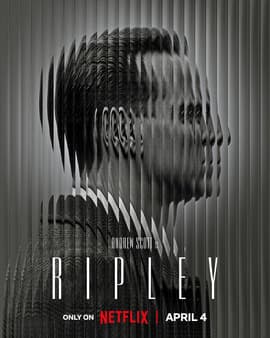
Ripley: The Slowness Was Always the Point
Steven Zaillian's eight-episode Netflix adaptation of Patricia Highsmith was the quiet prestige show of April 2024. A year later, its patience has only looked smarter.