Anatomy of a $200M Musical Flop: What Killed Folie à Deux
Eighteen months after Todd Phillips' much-hated sequel opened to a $37 million weekend and a 30% audience score, it is time to autopsy the corpse. The film isn't good. It also isn't quite what you've been told.
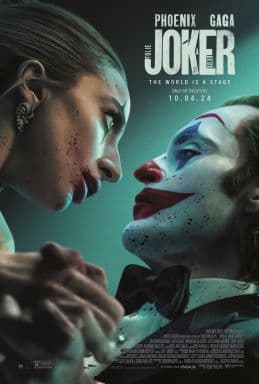
Poster / promotional material via Wikipedia, Joker: Folie à Deux. Used under fair use for criticism and review.
Let me get one thing out of the way. Joker: Folie à Deux is not a good film. I watched it again last week, the home release, in a better mood than I was in when I saw it opening weekend in 2024, and what it is, once you strip out the discourse, is a ninety-minute film stretched to two hours seventeen minutes with musical numbers that the film cannot be bothered to stage well. That’s the plain fact. Anyone telling you there’s a secret masterpiece in there is lying.
But there’s a small critical industry, now, that has emerged around declaring Folie à Deux the worst film of the decade. And that industry is almost as lazy as the film. The film is bad in specific and interesting ways. It’s worth, eighteen months later, being specific about them, because the specifics tell you something about the condition of studio filmmaking in late 2024, and about what the first Joker (2019) was actually doing, and about why the sequel was a trap nobody on the production understood they were walking into.
The first film, in retrospect
To understand why the sequel fails, you have to be honest about the first film. Joker (2019) made $1.07 billion on a reported $55 million production budget. It won Phoenix the Oscar. It also arrived into a cultural moment that was primed for it, a moment when the “disaffected loner radicalises” narrative was considered sufficiently urgent to merit a Warner Bros. tentpole. The discourse around that film, at the time, was enormous and often hysterical. People who hadn’t seen it argued about it. People who had seen it argued about whether it was genuinely saying anything or merely mimicking the shape of something that would say something.
What I think now, with six years of distance, is that the first Joker was a cleverly-staged piece of film-school pastiche that understood exactly which buttons to push. It lifted its visual grammar from Taxi Driver and The King of Comedy without quite earning the transfers. But the staging was tight. Phoenix was committed. The climax delivered a cathartic image, the dance on the steps, that was memeable in a way the film’s more ambivalent ambitions couldn’t quite control.
Todd Phillips and his team, on the back of that success, had a genuine opportunity. The world was expecting a conventional sequel. Phillips appeared to want to make something weirder. That’s a promising impulse.
The musical as misdirection
The widely-reported framing, before and during release, was that Folie à Deux was a musical. This was technically accurate and deeply misleading. Folie à Deux is not a musical. It’s a drama about a man in prison, interrupted by songs that function, mostly, as interior-monologue musical numbers in a staging register that the film cannot commit to.
A real musical commits. The songs do things the dialogue can’t do. The staging has ideas. Folie à Deux stages its numbers, and I say this with no pleasure, like music videos shot by someone who had seen a musical once. Phoenix is not a singer. Lady Gaga, who is, is used as a sort of vocal anchor for Phoenix’s half-sung mumbling. The film is embarrassed by its own genre. You can feel the directorial flinch in every cut.
If you are going to make a musical, a real musical, the kind of thing that shifts registers with confidence and expects the audience to shift with it, you have to believe, at minimum, that your songs are doing something the prose parts of the film could not. Folie à Deux does not believe this. The songs always feel like interruptions. They feel like things you’re waiting to end so the courtroom drama can continue.
The courtroom drama problem
Because yes, underneath the musical surface, Folie à Deux is a courtroom drama. A bad one. Arthur Fleck is on trial. His lawyer, played by Catherine Keener, argues he is not responsible for the first film’s violence. A prosecutor argues otherwise. Witnesses are called. Testimony is given. The film expects this to be gripping, and it isn’t, and the reason it isn’t is that the film has no interest in the legal question it is ostensibly litigating.
The legal proceedings exist, structurally, to punish Arthur. To make him sit still for two hours while being told he is a thing he doesn’t want to be. This might have worked as a dramatic engine if the film had any interest in Arthur’s perspective beyond the glassy-eyed passivity that Phoenix, admirably committed, sustains throughout. But it doesn’t. Arthur, in Folie à Deux, is the passive recipient of a legal process that the film has no opinions about. That’s not a drama. That’s a holding pattern.
The ending
Spoiler, sort of, for a film that’s been out for eighteen months and that you’ve almost certainly already read about: the ending pivots. Arthur breaks from the “Joker” myth, publicly disowns it, and is attacked in prison by another inmate for his apostasy. The final moments suggest that another figure, the attacker, now taking the “Joker” identity for himself, will continue the work of chaos that Arthur started.
I want to be fair about this. As a conceptual move, the ending has a point. It’s saying: the mythology is bigger than the man. The “Joker” is a position, not a person. Arthur was only ever the vessel. There are writers, now, who have built entire appreciative readings of the film around this closing idea.
Fine. But a conceptual move is only as good as its execution, and the execution here is perfunctory. The film does not set up its closing pivot. The attacker is a character we have barely seen. The “handing off” of the Joker identity is not staged, it is announced. A film that wanted to make this argument in earnest would have spent time with the attacker, would have earned the transfer, would have made us feel the continuation. Folie à Deux cuts to black and trusts the viewer to do the emotional work the film itself declined to do.
That’s not a subversive ending. That’s an unfinished one.
What killed it
So, the autopsy. Why did Folie à Deux fail the way it did?
Not because it was subversive. It wasn’t. Not because audiences reject musicals. They don’t, Wicked made $700 million the same quarter. Not because sequels are automatically poisoned. They aren’t.
Folie à Deux failed because Todd Phillips made a film that was contemptuous of its audience without being honest about the contempt. The marketing promised a musical. The film delivers a joyless courtroom drama with songs attached. The marketing promised Gaga as a Harley Quinn figure of equal weight. The film gives her a subordinate and underwritten role. The marketing promised a continuation. The film delivers a negation, Arthur renouncing the Joker identity, without doing the dramatic work to make that negation meaningful.
Audiences didn’t hate it because it was challenging. They hated it because it was a bait-and-switch, and bait-and-switch is unforgivable at $12.50 a ticket.
What it tells us
The studio-tentpole-as-auteur-vehicle experiment, give a director $200 million and see what happens, has a mixed record. Sometimes it produces Mad Max: Fury Road. Sometimes it produces Avatar: The Way of Water. In 2024, it produced this. A reminder that a large budget without discipline is not freedom. It’s just expensive contempt.
I don’t think Phillips will get this chance again. I’m not sure he should.
Marcus believes good criticism is an argument. He is almost always angry about something, usually for good reason. Horror is his first language.
MORE BY MARCUS VELL →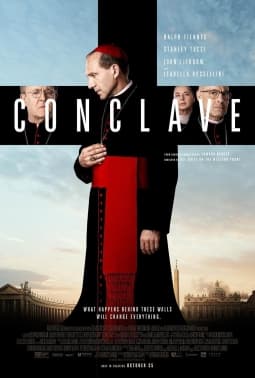
Conclave and the Surprise Return of the Talk Movie
Fifteen months after Conclave's surprise commercial run, Edward Berger's Vatican procedural still feels like an argument from another era of filmmaking. The genre it quietly revived, the talk movie, is worth examining.
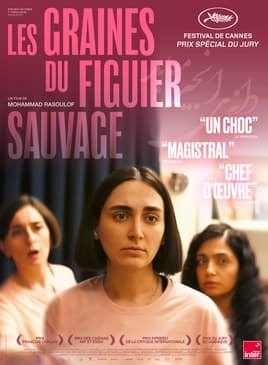
The Seed of the Sacred Fig: Rasoulof's House Film
Mohammad Rasoulof shot the film in secret, fled Iran during post-production, and arrived at Cannes with a three-hour domestic thriller about a judiciary father and his protesting daughters. The retrospective argument is that the long cut is the cut.
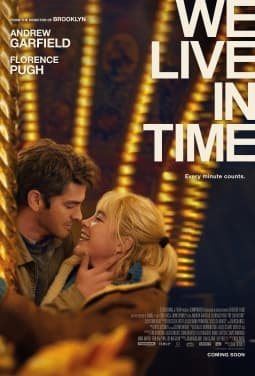
We Live in Time: Crowley's Non-Linear Gamble
John Crowley's third collaboration with A24 runs the ten-year relationship in a non-linear shuffle, and the shuffle is what makes the film survive its cancer-drama premise. Just barely, but it does.