Hit Man: Richard Linklater's Star Vehicle for a Non-Star
A year on from Hit Man's Netflix release, the film is a quieter argument than it first appeared. Richard Linklater made a star-launcher for someone he knew would not, in the end, need launching.
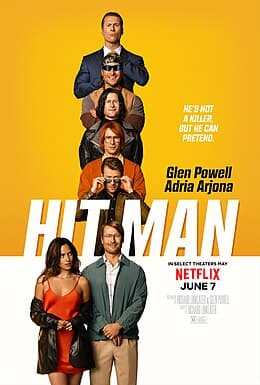
Poster / promotional material via Wikipedia, Hit Man (2023 film). Used under fair use for criticism and review.
Hit Man is a film I have now watched five times, which is more times than I have watched any other 2024 release, and I have been trying to work out why. The film is not, on any single viewing, obviously great. It is too light for that. What it is, on five viewings, is a deeply disciplined piece of craft masquerading as a piece of fluff, and the craft is what keeps pulling me back.
A year on from its Netflix release in June 2024, I want to argue for what Richard Linklater actually made here.
What the film is
Gary Johnson, played by Glen Powell, is a mild-mannered New Orleans philosophy professor who moonlights as a police consultant, pretending to be a hitman in sting operations that catch people trying to hire killers. He is very good at this. Too good, in the film’s suggestion. He plays each mark’s idea of what a hitman would look like with such specificity that the marks almost always take the bait.
One day, Gary meets Madison, played by Adria Arjona, a woman trying to escape an abusive marriage. Instead of setting her up for arrest, he warns her off and, over the following weeks, begins a relationship with her, continuing to play the fake-hitman persona she met him in. The film is about what happens when Gary’s “Ron” persona becomes a separate, more confident version of himself that he does not want to give up.
The Powell argument
Hit Man is, among other things, the film that made Glen Powell a movie star. I am not sure this fact has been sufficiently analysed. Powell had been working in supporting parts for fifteen years (Everybody Wants Some!!, Top Gun: Maverick, Anyone But You) without quite crossing over into leading-man status. Hit Man is the crossover, and it crossed him over by giving him a role that required him to play several different men inside a single character.
What Powell does across the film, and what Linklater’s direction is disciplined enough to let him do, is play each undercover persona as a specifically-calibrated performance, Gary-as-biker, Gary-as-yuppie, Gary-as-Russian-thug, and let the viewer see him calibrating. The comedy of the film is largely built out of Powell’s micro-adjustments. A year later, that is still the achievement.
What Linklater is doing
Linklater, now in his sixties, has been making films about the specific question of performed identity for thirty years. Dazed and Confused, Before Sunrise, Boyhood, Everybody Wants Some!!: all of these are, in different registers, about how the self is a thing you build by choosing who to be in a given room. Hit Man is the most explicit version of this theme in his filmography.
The film’s central argument, which most of the 2024 reviews acknowledged and then moved past, is that identity is a practice. You are the person you rehearse yourself as being. The film’s final act, in which Gary has to decide which of his various selves he is willing to commit to, is the argument made dramatic.
This is a serious philosophical claim delivered in the form of a romantic thriller. The film’s willingness to be both serious and fun is the thing that keeps it rewatchable.
Adria Arjona, equally cast
Adria Arjona as Madison is the performance I want to flag more strongly than most reviews have. Madison has to register as the kind of woman whose attractiveness to Gary (and to Ron) is immediate and specific, without the film reducing her to the object of that attractiveness. Arjona plays her as a specifically smart woman who is, at various points, several steps ahead of Gary and, at other points, several steps behind him. The shifting register is the character.
The scene in which Madison realises what Gary has been doing, staged as a long close-up shot-reverse-shot in a New Orleans diner, is the film’s emotional centre. Arjona does not over-react. She absorbs. The absorption is what the film is about.
The ethical problem
There is a reading of Hit Man that finds its ending morally suspect. I will not spoil the specific final beat; I will say that the film has a love affair with characters behaving unscrupulously in the service of personal liberation, and that some viewers found the film’s endorsement of this too breezy.
I understood the objection at the time and find it less persuasive now. Hit Man is not a moral treatise. It is a film about performed identity and the pleasures thereof, made in a comedic register that does not demand we endorse the characters’ choices. The film is honest about the pleasures of its own amorality in a way that reads, on rewatch, as its most interesting feature.
Where it sits
Hit Man was released on Netflix as part of a straight-to-streaming deal, which meant it missed most of the awards conversation. This is a shame. It is, on balance, one of the best-written American films of 2024, and Linklater and Powell (who co-wrote the screenplay) deserved more recognition than the streaming calendar allowed.
Powell has since become an A-list star on the back of this film, with leading roles secured in multiple 2025 and 2026 productions. Linklater, characteristically, has moved on to smaller stranger projects.
Watch Hit Man again if you have not in a while. The fifth viewing is the best one.
Lena writes long-form essays on the films that will still be talked about in a decade. Previously at a defunct monthly whose name we do not speak.
MORE BY LENA ASHWORTH →
Thelma: June Squibb's Late-Career Lead
Josh Margolin's debut feature gave June Squibb her first leading role at 94. It was not a stunt. It was a film.
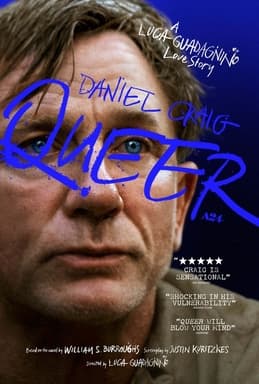
Queer: Guadagnino's Burroughs and the Case for Tenderness
Guadagnino's second film of 2024 was the quieter one, the one with the more difficult source material, and the one that has settled, a year later, as the more specifically strange.
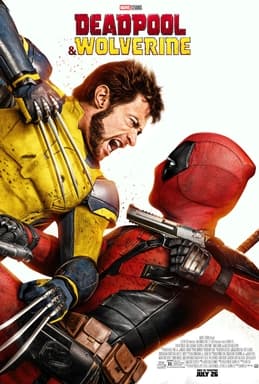
Deadpool & Wolverine: The Last MCU Win
A year after Deadpool & Wolverine made $1.3 billion and saved a bad year for the MCU, the film looks less like a triumph and more like the last thing Marvel is going to get away with.