Deadpool & Wolverine: The Last MCU Win
A year after Deadpool & Wolverine made $1.3 billion and saved a bad year for the MCU, the film looks less like a triumph and more like the last thing Marvel is going to get away with.
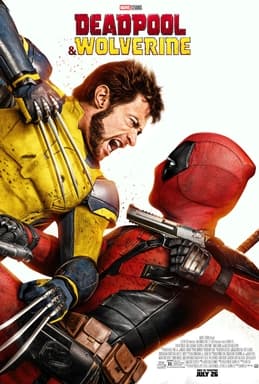
Poster / promotional material via Wikipedia, Deadpool & Wolverine. Used under fair use for criticism and review.
Deadpool & Wolverine was, by almost any measure you want to use, the last genuine Marvel Cinematic Universe success. It made $1.34 billion worldwide in the summer of 2024. It received, by MCU Phase 5 standards, strong reviews. It gave Hugh Jackman a proper Wolverine send-off. It was the one large-scale comic book event of 2024 that audiences actually turned up for.
A year out, it also looks like a very specifically last-thing kind of film. I want to argue for what it is and against the studio conclusions it seems to have encouraged.
What worked
The core premise (Ryan Reynolds’ Deadpool breaks into the MCU from the old Fox film universe, recruits a resurrected Hugh Jackman as Wolverine, team up against a multiversal antagonist) could have been a disaster. In practice, Shawn Levy’s direction and the screenplay (credited to Reynolds, Levy, Rhett Reese, Paul Wernick, and Zeb Wells) executed the premise cleanly.
The film worked for three reasons, all of which are worth articulating because they explain both the commercial win and the limits of what it means.
First: the Reynolds-Jackman pairing is genuinely funny. Reynolds has been Deadpool across three films and knows the comic register the character requires. Jackman, across seventeen years of Wolverine, has developed a specific gruff-stoic register that is the perfect straight-man for Reynolds’ comic chaos. The two actors have chemistry. The film is mostly a buddy comedy with action scenes, and as buddy comedies go it is a good one.
Second: the film is, structurally, a nostalgia machine for the pre-Disney Fox X-Men films. The cameos (Wesley Snipes’ Blade, Channing Tatum’s Gambit, Jennifer Garner’s Elektra, Chris Evans’ Human Torch, among others) were designed as specifically gen-X millennial fanservice. They worked. The theatre I saw it in cheered each reveal.
Third: the film has stakes. Not big moral stakes, not world-ending stakes, but specific character stakes. Wolverine is a morally compromised character at the start of the film. His arc across the running time is coherent. Jackman plays the weight.
What did not work, and why nobody cared
The film’s plot, underneath the comedy and the cameos, is muddled. The multiversal antagonist (Emma Corrin’s Cassandra Nova) has motivations that the film introduces late and resolves fast. The Time Variance Authority material, which ties the film to the rest of the MCU’s multiverse saga, is connective tissue that no viewer actually cares about. The third act has the standard issue of every recent MCU film: it concludes with a CGI-heavy battle that is less interesting than the character work that preceded it.
None of this mattered, commercially. Audiences arrived for the Reynolds-Jackman chemistry and the cameos, and the film delivered those in volume. The plot was the excuse.
What the studio wrongly concluded
Here is where the retrospective gets interesting. Marvel’s response to Deadpool & Wolverine’s success has been, across the subsequent year, a doubling-down on multiversal cameo logic. The Avengers: Doomsday and Avengers: Secret Wars productions, currently in various states of shooting and post, are both organised around the same “assemble a large cast of legacy characters, generate cameo-driven fan service, market the spectacle” playbook.
This is, I think, the wrong lesson. Deadpool & Wolverine worked because Reynolds and Jackman carried it. You cannot replicate that with a committee of twelve returning characters. You need specific actors with specific on-screen chemistry and specific story stakes, and the MCU, as an institution, has forgotten how to assemble those.
The evidence is already in. Marvel’s 2025 releases, Captain America: Brave New World (February), Thunderbolts* (May), The Fantastic Four: First Steps (July), have underperformed relative to expectations. Audiences are not buying the multiversal cameo framework when Reynolds and Jackman are not the anchors.
Hugh Jackman’s real contribution
Jackman, I think, deserves more credit than he has received for what the film accomplishes. His Wolverine in Deadpool & Wolverine is not a nostalgia appearance. It is a genuinely-written character whose failures have specific weight, whose arc has specific earned catharsis, and whose interactions with Reynolds are calibrated to let Reynolds be funnier than he has been in years.
The costume (the yellow-and-blue comics-accurate Wolverine outfit Jackman had never previously worn) is the surface pleasure. The performance underneath the costume is the real achievement. Jackman, at fifty-five, is doing some of his best screen acting as Wolverine in this film, and it is the farewell the character deserved.
What the franchise now looks like
As of this writing, the MCU is in its least-commercially-stable period since Phase 1. Deadpool & Wolverine was the plateau before the decline. The next several years will test whether the studio can reassemble a coherent theatrical franchise or whether the MCU effectively contracts into its Disney+ television arm.
My bet, for what it is worth, is the contraction. The theatrical MCU peaked at Avengers: Endgame and has been losing cultural altitude steadily since. Deadpool & Wolverine was, specifically, Hugh Jackman’s last-service lap, and nobody currently on the MCU’s talent roster has the equivalent cultural weight to stage the next one.
Watch the film again for what it is: a specific comic actor and a specific character actor, at the height of their shared register, getting to say goodbye to a sixteen-year relationship with their characters. That is what the film is actually about. The multiverse plot is set dressing.
Marcus believes good criticism is an argument. He is almost always angry about something, usually for good reason. Horror is his first language.
MORE BY MARCUS VELL →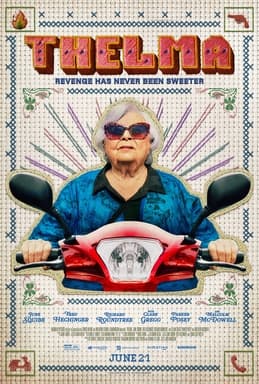
Thelma: June Squibb's Late-Career Lead
Josh Margolin's debut feature gave June Squibb her first leading role at 94. It was not a stunt. It was a film.
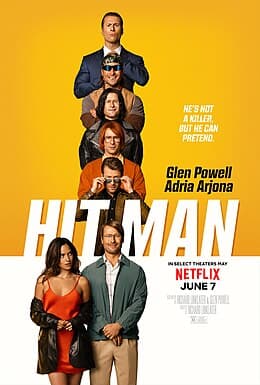
Hit Man: Richard Linklater's Star Vehicle for a Non-Star
A year on from Hit Man's Netflix release, the film is a quieter argument than it first appeared. Richard Linklater made a star-launcher for someone he knew would not, in the end, need launching.

Dream Scenario: Borgli's Cage Vehicle as Media Critique
Kristoffer Borgli's A24 feature used Nicolas Cage as the vehicle for a media satire that landed in late 2023 and has aged, through 2024 and into 2025, into a specifically sharper object than the reviews initially registered.