The Taste of Things: Tran Anh Hung's Culinary Romance
Tran Anh Hung's 2023 film, released theatrically in February 2024, is the best film about food and cooking since Babette's Feast. It is also a deeply disciplined romance in disguise.
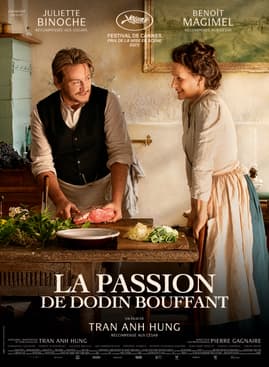
Poster / promotional material via Wikipedia, The Taste of Things. Used under fair use for the purpose of criticism and review.
The Taste of Things, Tran Anh Hung’s 2023 French-language feature, was released theatrically in the United States in February 2024 by IFC Films after winning the Best Director prize at Cannes. It is, for my money, the most quietly remarkable film of the 2023-2024 commercial window, and one of the two or three best films ever made about the specific craft of cooking.
It is also, and more importantly, a romance. The cooking is the form. The romance is the argument.
What the film is
Set in 1889 in the French countryside, the film follows Dodin Bouffant (Benoît Magimel), a specifically accomplished gourmand and amateur gastronomer, and Eugénie (Juliette Binoche), his cook and long-term lover. The two have been collaborating in Dodin’s country kitchen for two decades. They have declined, across that period, to marry, despite Dodin’s repeated proposals.
The film unfolds across a year of seasonal meals, prepared in elaborate detail for Dodin’s friends and, in the film’s quieter intervals, for Dodin and Eugénie themselves. Tran films the meals at length, with specific attention to the physical craft of their preparation. A ten-minute sequence at the film’s opening depicts the preparation of a single multi-course lunch in unbroken long takes; the sequence is, on its own, a specific argument about what film attention can accomplish when it commits fully to physical craft.
What Tran Anh Hung is doing
Tran’s specific cinematic language, established across a career that includes The Scent of Green Papaya (1993), Cyclo (1995), The Vertical Ray of the Sun (2000), and Norwegian Wood (2010), is organised around a specific patience with everyday physical activity. His films give extended screen time to cooking, gardening, sewing, reading, walking. The activities are not, in his films, backdrop for character drama. They are the drama.
The Taste of Things takes this tendency to its specific logical endpoint. The film’s running time is 135 minutes. Approximately 60 of those minutes, by my rough count, are specifically dedicated to the physical preparation and serving of meals. The meals are not summarised, montaged, or elided. They are filmed at length, with specific attention to the specific techniques and specific textures the preparation involves.
This patience would, in a less disciplined film, produce specific tedium. The Taste of Things does not produce tedium. The meals are the relationship. The specific craft Dodin and Eugénie practice together is the specific shared vocabulary through which their romance operates. When Eugénie, late in the film, produces a specific perfect version of a dish Dodin has been trying to perfect for years, the moment is as emotionally significant as any verbal declaration could be.
The Binoche-Magimel chemistry
Juliette Binoche and Benoît Magimel, who were partners for several years in the early 2000s and have a daughter together, bring to the film a specific pre-existing chemistry that cannot be performed and that no other casting could have produced. The characters are not themselves. The actors, however, have a specific shared physical history that inflects every scene they play together.
The specific way Eugénie and Dodin move through the kitchen, the specific way their bodies accommodate each other’s presence in the specifically small spaces the film is shot in, the specific way they pass utensils and plates without looking, is the product of actual lived chemistry between Binoche and Magimel. Tran has cast them with specific awareness of this, and the film exploits the chemistry with specific intention.
The sustained-cooking sequences
I want to flag the specific value of the film’s cooking sequences as formal cinema. Tran and his cinematographer Jonathan Ricquebourg have staged the cooking in specifically unbroken takes that move the camera through the kitchen at a specific speed calibrated to match the pace of the cooks’ work. The camera does not dramatise the cooking. The camera watches the cooking.
The effect is that the viewer becomes specifically absorbed in the cooking in a way that is genuinely unusual. I watched the film for the first time with a specific anticipatory appetite that built across its running time and that I did not fully understand until approximately the ninety-minute mark, when I realised I was hungry in a specifically cinematic way. The film is doing, with food, what Challengers does with tennis: making the specific physical activity of the film’s characters into the specific emotional vocabulary of the film’s argument.
The late structural turn
I will not spoil the film’s specific late structural development. I will say only that Tran introduces, approximately eighty minutes in, a specific plot development that reconfigures the viewer’s relationship to the earlier material. The reconfiguration is the film’s specific emotional core, and it rewards the patience the film has required up to that point.
Where it sits
The Taste of Things grossed approximately $4 million in the United States, which for an IFC Films-distributed French-language period piece is a respectable outcome. The film received an Academy Award nomination for Best International Feature (representing France), though it lost to The Zone of Interest.
The film’s longer afterlife will be on streaming, where its specific patience may find a larger audience than theatrical release could deliver. Watch it at home, on a weekend evening, after a specific meal you have put some effort into. The film rewards context. It deserves it.
Lena writes long-form essays on the films that will still be talked about in a decade. Previously at a defunct monthly whose name we do not speak.
MORE BY LENA ASHWORTH →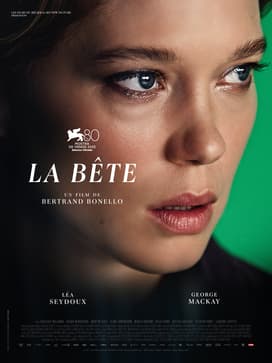
The Beast: Bertrand Bonello's Time-Travel Dread
Bertrand Bonello's 2023 film, released in the US in April 2024, is the strangest and most formally ambitious film I saw in either year. An argument for the specific dread of being alive in multiple decades at once.
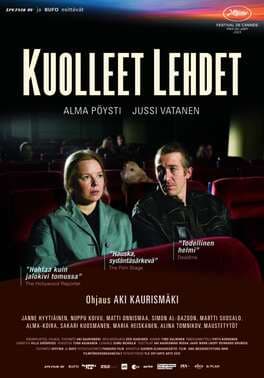
Fallen Leaves: Kaurismäki's Deadpan Romantic
Aki Kaurismäki's 2023 film, out of retirement and better for it, is one of the shortest great films of the decade. An 81-minute case for the romantic comedy as serious cinema.
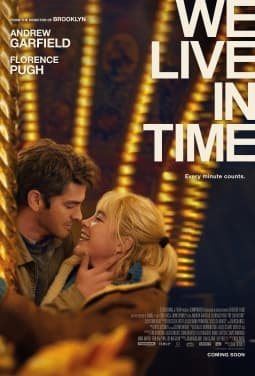
We Live in Time: Crowley's Non-Linear Gamble
John Crowley's third collaboration with A24 runs the ten-year relationship in a non-linear shuffle, and the shuffle is what makes the film survive its cancer-drama premise. Just barely, but it does.