Past Lives: Celine Song's Quiet Argument About Time
Two Oscar nominations, a slow-burn awards run, and a second viewing at home. Celine Song's debut keeps revealing itself. An argument for the film that refuses its own climax.
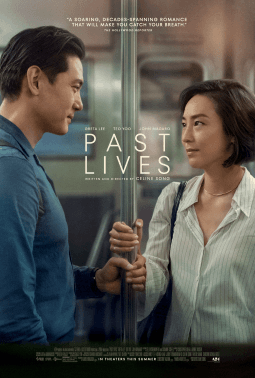
Poster / promotional material via Wikipedia, Past Lives (film). Used under fair use for criticism and review.
The most remarkable thing about Past Lives, on a second and third viewing, is what Celine Song chooses not to give us. The film is structured around a romance that the film itself refuses to consummate. Two people who might have been together in a different life sit at a bar in New York City and decide, gently and without drama, that this is not the life in which they will be. The film ends. The credits roll. Nobody shouts.
A year out, with the awards-season noise fully dispersed, this restraint looks less like shyness and more like Song’s entire thesis.
The structural risk
The gamble Past Lives takes is immediately legible: set up a love story the audience wants a climax for, then decline to provide one. A lesser film, or a film by a less confident first-time director, would flinch at the final reel. Bring the kiss forward. Stage a longer goodbye at the cab. Give the audience their catharsis.
Song does not. Her argument, if we can call it that, is that the kind of maturity the film is about, the slow work of integrating someone you once loved into the person you still are, does not produce catharsis. It produces an evening in a bar, and then a walk home, and then the rest of the week.
Greta Lee’s face
Greta Lee’s performance as Nora is the reason the film survives its own restraint. She is doing, across long silent shots, the thing that is almost impossible to do in cinema: playing a person who is actively not making a decision. Nora is not torn between two men. She has made her decision, and the decision was made years before the film begins, and the film is about her holding that decision in place while a very specific pressure tests it.
Lee plays the holding. Watch the long shot in the back of the car, with her husband Arthur asleep beside her, after Hae Sung has flown home. She is not crying. She is not resolving. She is absorbing. It is one of the finest single shots of acting in any film of the last five years, and it required an actor willing to do almost nothing for almost thirty seconds.
The In-Yun problem
Past Lives traffics in the Korean concept of in-yun, the idea that relationships across lifetimes accumulate a kind of karmic debt that can only be paid in a later incarnation. The film is careful not to oversell the concept. It is offered as a thing the characters half-believe, not as a metaphysical claim the film endorses.
This is the correct handling of it. A worse film would have leaned on the mysticism to generate emotion. Past Lives uses it as cultural texture, and then quietly demonstrates, across the bar scene, that the characters do not actually need the mysticism to do what they do. They are, both of them, adults, and they have been thinking about this meeting for twenty years, and they show up prepared.
John Magaro, the third point
I want to say a word for John Magaro, whose Arthur has been the most consistently under-discussed element of the film. Magaro is asked to play a character who, on paper, could have been catastrophically weak: the American husband watching his wife meet a version of her life he is not part of. The trap is obvious. Make Arthur pathetic and the film becomes a referendum on whether Nora chose correctly. Make Arthur too perfect and the film becomes reassuring in a way it shouldn’t be.
Magaro threads it. His Arthur is insecure in specific small ways that the film does not make the whole personality. He says, at one point, that he is the villain in someone else’s love story, and the line lands because it is both self-aware and entirely accurate and entirely bearable. The marriage survives not because Arthur is generous but because the three of them are, finally, grown.
What the second viewing revealed
On first watch, I thought Past Lives was about a romance. On second watch, I think it is about time. Specifically, about the way time edits a person without their consent. Nora in the film’s final act is not the Nora who could have married Hae Sung at twenty-four. That person no longer exists. She was written over by a decade and a half of American life, by a marriage, by a career in playwriting, by the specific New York geography the film photographs so carefully. The bar scene is not a test of whether Nora will leave Arthur. It is a meeting between Hae Sung and the ghost of someone Hae Sung used to know.
The film treats that meeting with the tenderness it deserves. Neither participant is wrong to have wanted it. Neither is wrong to recognise what it is.
What it meant for the year
Past Lives came out of Sundance 2023 into a specific late-pandemic moment in American independent cinema where the romance-as-formal-experiment was briefly having a run (Aftersun, Passages, The Eight Mountains). The film did not need the company, but it benefited from it. Audiences were, for a narrow window, willing to pay to see adult films about adult relationships structured according to the logic of the relationships rather than the logic of the romantic comedy.
Two years later, I am less sure that window is still open. Celine Song’s next film, Materialists, arrived in 2025 to a more fragmented reception, possibly because its subject matter was less photogenic. But Past Lives remains. It is, I think, one of the few American debuts of the decade that is going to hold.
Watch it again. Let the final walk happen. Do not flinch when the film does not.
Lena writes long-form essays on the films that will still be talked about in a decade. Previously at a defunct monthly whose name we do not speak.
MORE BY LENA ASHWORTH →
Challengers and the Year Guadagnino Made Sport Sexy
Two years after Challengers arrived in its pastel pressure-cooker, the film's trick is clearer: it is not really about tennis. It is about what love looks like when three people are too competitive to admit they love anything but competition.
Queer: Guadagnino's Burroughs and the Case for Tenderness
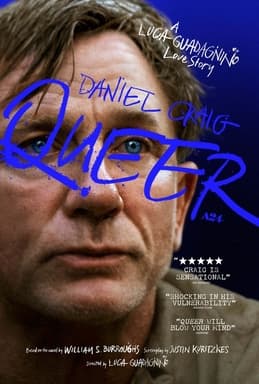
Guadagnino's second film of 2024 was the quieter one, the one with the more difficult source material, and the one that has settled, a year later, as the more specifically strange.
Fallen Leaves: Kaurismäki's Deadpan Romantic
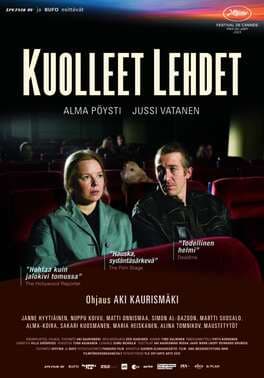
Aki Kaurismäki's 2023 film, out of retirement and better for it, is one of the shortest great films of the decade. An 81-minute case for the romantic comedy as serious cinema.