Challengers and the Year Guadagnino Made Sport Sexy
Two years after Challengers arrived in its pastel pressure-cooker, the film's trick is clearer: it is not really about tennis. It is about what love looks like when three people are too competitive to admit they love anything but competition.
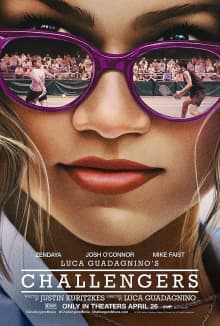
Poster / promotional material via Wikipedia, Challengers (film). Used under fair use for criticism and review.
A critic I like used to say that every good sports film has to, at some point, betray its sport. It has to stop caring who wins. Whatever the structural tension of the match, the final putt, the final pitch, the last hand of cards, the film has to be willing to lift its eyes off the scoreboard for a moment and let you see the person underneath. The sports film is, in the final reckoning, a character film. The sport is the weather.
Challengers, released in April 2024 and arriving in the home format by the end of that year, is a film that works by being extraordinarily aware of this rule and then refusing to play by it. Luca Guadagnino and screenwriter Justin Kuritzkes do not betray the sport. The sport is the character. All three of the film’s leads, Tashi Duncan, Art Donaldson, Patrick Zweig, have so completely rewritten themselves as competitors that there is nothing beneath the sport to be revealed. They want to win. They want to win against each other. They want to want.
Eighteen months later, this is the thing about Challengers that keeps aging well. It is not a sports film that reveals love underneath the sport. It is a love film that reveals more sport underneath the love.
What the structure is doing
The film’s structure is constantly praised, and rightly. It cuts between a final-set challenger tournament in New Rochelle and thirteen years of prior history between the three leads. But the structure works not because the flashbacks provide “context” for the tennis match. It works because the cutting pattern is an argument. Every flashback does a specific thing to the present: it sharpens or complicates a dynamic that the current match is playing out in shot selection.
The famous opening shot, the slow pull across the court as the match begins, is the film’s thesis made visible. We are being invited to watch tennis as a communication channel. And then for two hours we do watch tennis as a communication channel. Patrick serves at Art. Art returns at Patrick. Tashi, in the crowd, is conducting both of them. The rallies mean things. The score is beside the point.
This is the move that makes Challengers feel, sixteen months on, like a sports film that could only have been made by someone genuinely interested in how people watch sports. Guadagnino, by his own admission, was not a tennis person before making it. That helps, I think. He does not come to the sport with reverence. He comes to it as a formalist, noticing what the structure of a tennis match offers a filmmaker, the compressed time, the two-player focus, the way the ball is a literal physical metaphor for whatever the players are unwilling to say out loud.
The performances, re-examined
At release, there was a minor critical debate about whether Zendaya’s performance was the best of the three, the second, or the third. I read that debate at the time and I’m ready to say now: she is doing the hardest thing, and she is doing it cleanly.
The hardest thing, in a three-hander, is to play the character whose interiority is deliberately inaccessible. Tashi is a closed door in this film, not because Zendaya lacks range, but because the part requires her to be read rather than to reveal. Art and Patrick are characters the film can enter. Their faces are the vocabulary the film uses to tell you what they’re feeling. Tashi, by contrast, is a face that the camera watches the men watching. She is a focal point, an object of study, a weather system the other two are trying to navigate. And she knows it. And she uses it.
Watch, specifically, the diner scene late in the film. It is not a scene Zendaya dominates by volume. She is, for most of it, half-lit and deliberately still. The scene is dominated, if we’re counting dialogue, by the men. But your eye never leaves her, because Guadagnino has trained you, all film, to treat her as the meaning-maker. What she thinks about what the men are saying is what the scene is really about. The men don’t know this. She knows it. You know it. The film is operating on three viewing levels at once and holding them all.
Josh O’Connor’s Patrick, at this distance, also works better than I gave him credit for on first viewing. His performance is structured around a very specific kind of male loser, the talented one who stopped bothering, the one who still wins sometimes by accident, the one who resents the friends whose success he enabled. O’Connor plays him as a person who is not, finally, pathetic, because he is still capable of loving somebody imperfectly. The way he watches Tashi across a crowded room, fourteen years after they first met, it is one of the quiet best pieces of screen acting of 2024.
Mike Faist, as Art, has the least glamorous work of the three. He plays the nice one. The one who made the “right” choices. The one who loves his wife and his career and his sensible shoes. Faist’s performance is built out of gradient, he is, almost imperceptibly, less nice in every scene than he was in the one before. By the final match, the niceness is gone. The niceness was never quite real. This is an acting trick that’s hard to describe without overpraising. Go watch it again.
The Reznor-Ross score
Trent Reznor and Atticus Ross’s score is the other character in the film. If you have the soundtrack on Spotify, you know. Acid-housey, propulsive, obnoxiously on the nose in the best way. There’s a standard criticism of pop-scored films, that the music does the emotional work the film should have earned cinematically, but Challengers flips that. The music is the film’s pulse because the film is about pulse. About three bodies operating at a physiological edge for a decade. The score is not illustrating feelings. It is feelings.
Rewatched at home, the score dominates in a way it didn’t at the cinema, where the sub-bass was doing half the work on your chest. That redistribution is interesting. The film plays differently on a television. The emotional signal is still there. But you have to lean into it more.
What sport cinema can still do
The best thing Challengers has done, for the broader state of the sports film, is remind filmmakers that the sport is material, not decoration. Most sports movies treat their sport as a setting, a backdrop for the character drama we’re really there to watch. Guadagnino treats tennis as a language his characters speak, and the film rewards him for the commitment. A year and a half on, it is still the film I think about when I hear people say sports movies are a played-out genre.
They’re not. We’ve just been making them wrong.
Priya came to criticism sideways from theatre. She is patient with slow shows, short with bloated ones, and cheerfully vicious about lazy writing.
MORE BY PRIYA NAIR →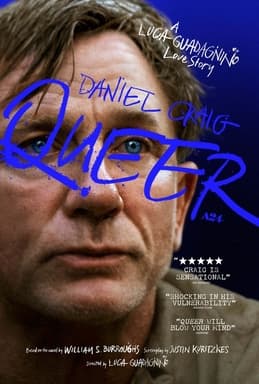
Queer: Guadagnino's Burroughs and the Case for Tenderness
Guadagnino's second film of 2024 was the quieter one, the one with the more difficult source material, and the one that has settled, a year later, as the more specifically strange.
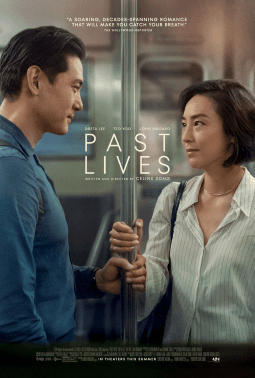
Past Lives: Celine Song's Quiet Argument About Time
Two Oscar nominations, a slow-burn awards run, and a second viewing at home. Celine Song's debut keeps revealing itself. An argument for the film that refuses its own climax.
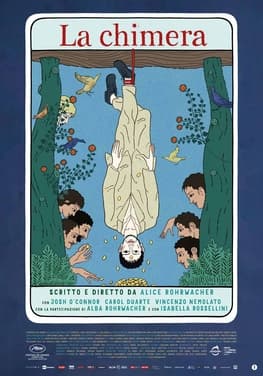
La Chimera: Rohrwacher's Ghost Story
Alice Rohrwacher's 2023 film about a British grave-robber in 1980s Italy is the kind of quiet, strange, specifically rewarding film that the American art-house circuit was once built to deliver. It still can.