Monster: Kore-eda's Tripled Narrative
Hirokazu Kore-eda's 2023 film, released in the US in late 2023 and on streaming through 2024, is a specifically disciplined three-act structural experiment. Also, quietly, one of the most important queer films of recent cinema.
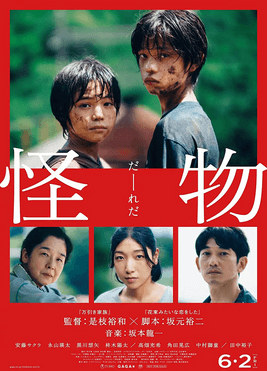
Poster / promotional material via Wikipedia, Monster (2023 Japanese film). Used under fair use for the purpose of criticism and review.
Hirokazu Kore-eda is one of the most consistent major filmmakers working in any language. His filmography, across thirty years, includes Nobody Knows (2004), Still Walking (2008), Like Father, Like Son (2013), Our Little Sister (2015), The Third Murder (2017), Shoplifters (2018, Palme d’Or), Broker (2022), and most recently Monster (2023).
Monster, which opened in a limited US theatrical run in late 2023 and reached streaming platforms across 2024, is a film that rewards specifically careful attention to its structure. It is also, in its specifically understated way, one of the most meaningful queer films of the current cinematic moment.
What the film appears to be
The film opens with Saori (Sakura Ando), a widowed single mother, growing increasingly alarmed about her young son Minato’s behaviour. Minato comes home from school with specific injuries. He says specifically strange things. He damages his own possessions. Saori concludes that Minato is being abused by his classroom teacher, Mr. Hori (Eita Nagayama), and escalates her complaints to the school administration.
The first act of the film, roughly 35 minutes, unfolds from Saori’s perspective. It has the specific shape of a specifically familiar type of drama: a mother fighting an institution that is covering up teacher misconduct. The emotional register is specifically righteous and specifically outraged. The viewer is specifically positioned to share Saori’s conclusions.
The film then resets. The same events are replayed from Mr. Hori’s perspective. Mr. Hori’s version is significantly different. He is not abusing Minato. He is being specifically misunderstood in specific ways by both the student and the school administration, and his attempts to correct the misunderstandings have the specific perverse effect of deepening them.
The film resets again. The same events are replayed from Minato’s perspective.
What is actually happening
What Minato’s perspective reveals, and what the first two perspectives specifically failed to represent accurately, is that Minato is in love with another boy, Yori, and is specifically confused and frightened by the feelings. His strange behaviour has been specifically the effect of processing a specific sexual awakening that his mother, his teacher, and his school are all failing to correctly interpret.
The final third of the film is specifically about Minato and Yori’s relationship, filmed with specific patience and specific tenderness. The earlier narratives, which the viewer had accepted as the film’s primary reality, are revealed to have been secondary. The primary reality, which neither adult perspective could access, was the interior life of the specific eleven-year-old children the film centred on.
Why the structure works
Monster’s tripled-narrative structure is not, in itself, formally unique. Rashomon (1950) and its many descendants have explored the same technique. What Monster does specifically is use the structure as a deliberate diagnostic of adult misreading of children.
The film’s specific argument, made cumulatively across its three acts, is that children are specifically opaque to the adults around them, and that adult attempts to interpret children’s behaviour will consistently and dangerously fail. The children in the film are specifically not confused about what they are experiencing. The adults are confused about what the children are experiencing, and the adults’ confusion has specific harmful consequences.
This is a specifically unusual argument for a mainstream film to make. Most dramas about children-and-adults are structured around adults correctly interpreting children at key moments. Monster is structured around the specific impossibility of the correct interpretation. Minato’s sexual awakening is something the adults cannot, specifically, see, and the adults’ specifically well-intentioned attempts to help Minato through behavioural changes they have misinterpreted actively obstruct Minato’s own emotional development.
The Sakamoto score
Ryuichi Sakamoto’s final film score, completed shortly before his death from cancer in March 2023, is the film’s specific emotional anchor. The score is specifically sparse: piano and strings, with long silences between phrases. It does not dramatise. It observes. The score is, in specific respects, doing the same structural work as Kore-eda’s direction: it refuses to editorialise and simply watches.
Sakamoto’s score for Monster is the last major piece of work he completed. The film is specifically dedicated to his memory.
The Yūji Sakamoto screenplay
Yūji Sakamoto (no relation to Ryuichi Sakamoto), who wrote Monster, won the Best Screenplay prize at Cannes 2023. His script is the specific architecture that makes the triple-narrative structure work. Each of the three perspectives is specifically internally consistent. Each contains specific information the others do not. The reconciliation across the three, which the viewer has to perform mentally across the running time, is the specific source of the film’s emotional payoff.
This is specifically hard screenplay construction. Most multi-perspective films of this type fall into specific traps (one perspective clearly privileged over others; specific information asymmetries that feel contrived; a reconciliation that feels mechanically tidy rather than emotionally earned). Monster avoids all of these traps. Each perspective feels organic. Each character’s specific reading of events is internally coherent. The reconciliation is emotional rather than expository.
Where it sits
Monster grossed approximately $15 million worldwide, mostly in Japan, with modest additional revenue from international art-house distribution. It was Japan’s submission for Best International Feature at the Academy Awards, where it made the shortlist but did not advance to final nomination.
The film’s afterlife will be, as with most Kore-eda films, steady and long. His films do not, typically, generate large opening-week attention. They accumulate audiences across years through streaming, recommendation, and specific re-release. Monster is already, by my estimation, one of the films from the 2023 slate that will be most consistently recommended a decade from now.
Watch it without reading more about it than you already have. Pay attention to the specific structure Kore-eda is using. Let the film do its tripled-narrative work. The film rewards patience and penalises spoilers.
Lena writes long-form essays on the films that will still be talked about in a decade. Previously at a defunct monthly whose name we do not speak.
MORE BY LENA ASHWORTH →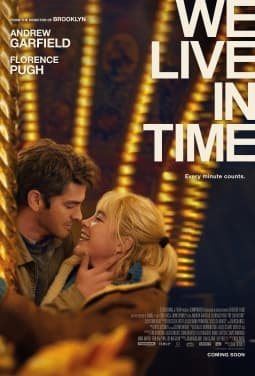
We Live in Time: Crowley's Non-Linear Gamble
John Crowley's third collaboration with A24 runs the ten-year relationship in a non-linear shuffle, and the shuffle is what makes the film survive its cancer-drama premise. Just barely, but it does.

Small Things Like These: Murphy's Quiet Indictment
Tim Mielants's adaptation of the Claire Keegan novella was reviewed as a modest Cillian Murphy vehicle. The careful reading is that the film's restraint is the indictment, and the restraint is harder to film than the indictment would have been.
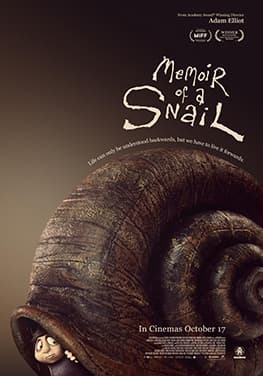
Memoir of a Snail: Elliot's Claymation Grief
Adam Elliot's second stop-motion feature took eight years to make and collected festival prizes from Annecy to Annapurna. The Australian argument is that his particular strain of misery-claymation is one of the country's more unusual exports.