Maria and Pablo Larraín's Closing Argument
Pablo Larraín's third and probably final entry in his trilogy of distressed-woman biopics is the most formally certain of the three, and the one least willing to flatter its subject.
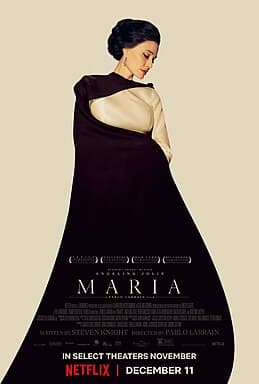
Poster / promotional material via Wikipedia, Maria (2024 film). Used under fair use for criticism and review.
Pablo Larraín’s Maria, released by Netflix in November 2024 after a Venice Film Festival premiere, closes a specific informal trilogy of biographical films that Larraín began with Jackie (2016, about Jacqueline Kennedy in the week after her husband’s assassination) and continued with Spencer (2021, about Diana Spencer at Sandringham during a single Christmas). The three films share a specific formal strategy, a specific approach to their central female subjects, and a specific refusal of the conventional biographical structure. Maria is the most completely realised of the three. It is also the one most viewers seem to find most difficult.
A year on, the difficulty is the thing worth thinking about.
What the trilogy is doing
Larraín’s trilogy is, in one sense, a specific corrective to the dominant biopic mode of American cinema. The standard prestige biopic (Walk the Line, A Beautiful Mind, The Imitation Game, etc.) compresses a subject’s life into a specific arc of achievement, crisis, and recovery, built around a particular central performance that the awards machinery is expected to recognise. The subject is rendered legible. The arc is satisfying. The performance is rewarded.
Larraín refuses all of this. Jackie takes place across roughly one week. Spencer takes place across three days. Maria takes place across the final seven days of Maria Callas’s life in 1977, with flashbacks into specific earlier moments of her career. The films are, in each case, organised around a specific temporal compression that refuses to summarise the subject. The films are about the specific interior experience of a famous woman at a specific moment of private crisis, and the crisis is never resolved within the film’s running time.
This is not a biographical project in the conventional sense. It is, more specifically, a portrait project. Larraín is making studies of women at the moment the specific cultural machinery that produced them begins to let them go.
What Maria is
Maria Callas, in the film’s specific framing, has been retired from the operatic stage for a number of years. She lives alone in a Paris apartment with her two staff, Feruccio (Pierfrancesco Favino) and Bruna (Alba Rohrwacher). She is medicated for various conditions. She is trying to return to singing. She is failing. She is, across the film’s seven-day running time, dying.
Angelina Jolie plays Callas. The casting was, on announcement, controversial: Jolie has a specific American public profile that sat at a specific distance from the kind of specifically European operatic material the film was taking as its subject. The casting, as it turned out, was the film’s most specifically defensible decision. Jolie’s particular public identity (the specific American celebrity who has, across her career, been processed through a specific tabloid machinery that is now largely over with) is a specific match for what the film needs from its lead.
Jolie, reconsidered
Angelina Jolie’s Callas is the performance the film is organised around, and it is a performance that the 2024 awards circuit did not fully register. Jolie did not receive an Oscar nomination for the role, which was, in my reading, a specific miscalculation by the awards voters.
What Jolie does is specific. She plays Callas as a woman who has, across roughly four decades, been entirely defined by the specific technical capacity of a voice that is now failing her. The film’s central dramatic problem is that Callas can no longer sing the roles she built her identity around, and is trying, in specific private rehearsal sessions with her longtime accompanist (Stephen Ashfield), to work out whether she can sing any version of anything at all. Jolie plays this specifically technical problem as a specific personal catastrophe, and she does it without over-acting.
The scene most worth flagging is a rehearsal of the “Casta Diva” aria from Bellini’s Norma. Callas attempts the opening phrase. Her voice, in the film’s rendering, catches on the ascending line. She stops. She starts again. She catches again. Jolie’s face across this sequence is the film. The performance is not about the failure of the voice as an external event. It is about the specific private experience of being unable to be oneself.
The singing in the film, it should be noted, is a specific technical blend of Jolie’s own voice and archival Callas recordings, mixed by the film’s music team under Larraín’s specific instruction. The blend is not always successful. The specific technical limits of the mixing are visible in a few sequences. But the overall effect is of a voice that is specifically approaching its own silence, and the effect serves the film.
Edward Lachman’s photography
Edward Lachman, whose extensive collaboration with Todd Haynes (Far From Heaven, Carol, Dark Waters) has produced some of the most specifically painterly American film photography of the last two decades, shoots Maria in a specifically desaturated 1970s Paris palette that privileges greys, pale golds, and specific interior darknesses. The Callas apartment is a specific interior space of particular claustrophobia. The exterior sequences (Callas walking in the Place du Trocadéro, Callas at a specific Left Bank restaurant) are shot in a specific flat grey light that refuses the specific pleasures of tourist Paris.
The photography is the third of Larraín’s biopics to be shot by a specifically distinguished cinematographer working in a specific painterly register. Jackie was shot by Stéphane Fontaine in a particular specific Camelot-era palette. Spencer was shot by Claire Mathon in a specific English-country palette. Maria extends this pattern into a specifically faded European art-cinema register that is, of the three, the most visually restrained.
The Pepe Larraín soundscape
The film’s specific soundscape deserves attention. Callas’s recorded voice, across her career, is used throughout the film not as conventional score but as a specific acoustic presence that Callas herself is aware of. She hears her past singing, and the past singing is the specific thing the present is measuring itself against. The film’s soundtrack is, in this specific sense, a conversation between two Marias: the Maria who was, and the Maria who is.
This is a formal choice that could easily have been clumsy. It is not. The specific discipline of the sound mix, which I believe was overseen by Johnnie Burn (the sound designer of The Zone of Interest), holds the distinction between present and remembered audio across the running time without once tipping into a specific sentimentality about the loss.
Where the trilogy lands
Larraín’s three films, taken together, constitute one of the specific important directorial projects of the last decade. The trilogy is a coherent argument about fame, womanhood, and the specific private costs of being culturally useful. Jackie is about the woman who was useful as a widow. Spencer is about the woman who was useful as a wife. Maria is about the woman who was useful as a voice. In each case, the film is about what remains when the specific cultural use has run out.
This is not a consoling argument. The three films are, in different specific registers, grief films. They do not provide catharsis. They do not resolve into redemption. They leave their subjects in a specific state of ongoing private struggle that the film’s running time does not attempt to fix.
Where it sits
Maria is, in my view, the most completely realised of the three Larraín biopics, and the one least likely to receive its proper critical reception in the short term. Netflix’s streaming release pattern compressed the theatrical window. The awards campaign, which focused on Jolie, did not successfully position the performance for the voters. The film’s specifically European art-cinema register was a poor fit for the specifically mainstream biopic category voters were filling out their ballots in.
Watch the film in the right frame. It is not a life of Maria Callas. It is a portrait of the last seven days, and the specific discipline of its temporal compression is the reason it works. Jolie is the reason it works even better than Larraín’s earlier two efforts.
Lena writes long-form essays on the films that will still be talked about in a decade. Previously at a defunct monthly whose name we do not speak.
MORE BY LENA ASHWORTH →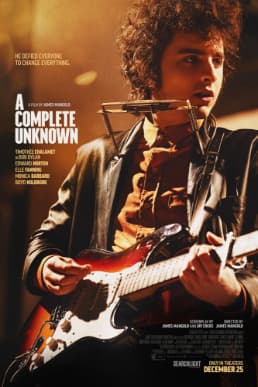
A Complete Unknown: Why the Dylan Biopic Works When Most Don't
A year after James Mangold's Dylan biopic arrived in the middle of a tired genre, the film's decisions keep looking smarter. An argument for the underrated music biopic of the decade.
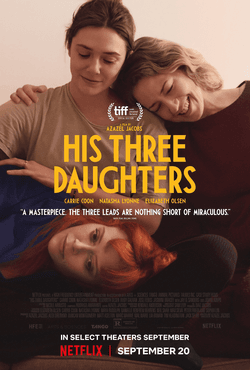
His Three Daughters: Azazel Jacobs's Chamber Grief
Azazel Jacobs built a three-hander around a Manhattan apartment, three sisters, and a dying father in the next room. The film is much better than Netflix's release pattern suggested.
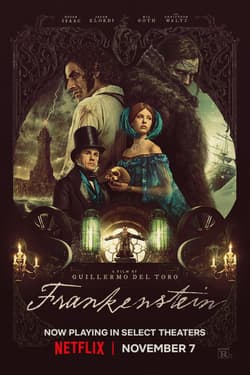
Frankenstein Cost $120 Million and Played Like a Secret
Del Toro's Frankenstein is built in two halves that only work if you sit through both in one go. Netflix released it as something you can pause.