His Three Daughters: Azazel Jacobs's Chamber Grief
Azazel Jacobs built a three-hander around a Manhattan apartment, three sisters, and a dying father in the next room. The film is much better than Netflix's release pattern suggested.
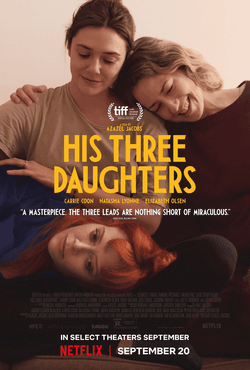
Poster / promotional material via Wikipedia, His Three Daughters. Used under fair use for criticism and review.
Let me stake this out early. His Three Daughters, which Azazel Jacobs wrote and directed, which premiered at Toronto in September 2023 and received a limited theatrical run followed by a Netflix drop in September 2024, is one of the two or three best American independent features of that calendar year and Netflix buried it. The release pattern, a perfunctory awards-qualifying window followed by a weekend when the film arrived on the service with almost no marketing behind it, meant that a significant number of people who would have loved this film never found it.
Eighteen months on, the film is still there to be discovered. It rewards the discovery.
The premise in one paragraph
Three adult sisters, Katie (Carrie Coon), Christina (Elizabeth Olsen), and Rachel (Natasha Lyonne), have gathered in their father’s Manhattan apartment for the final days of his life. He is not on screen for most of the film. He is asleep, or unconscious, or medicated, in a back bedroom. The three sisters have not spent concentrated time together in years. They are about to spend five days in roughly five hundred square feet of apartment. The film is what happens in that space.
Why the chamber form works here
The chamber film is a specific genre with specific demands. The apartment has to become a legible geography. The actors have to carry scenes across long dialogue runs with minimal coverage. The camera has to find a spatial logic that does not feel either stagey or restless. When the form works, it produces the kind of compressed emotional intensity that American cinema rarely attempts any more. When it fails, it feels like a filmed play with nowhere to go.
Jacobs makes it work, and the reasons are instructive. Sam Levy’s cinematography stays at a specific mid-close range throughout. The apartment is photographed as a set of interlocking rooms with consistent sight lines, so we always know where a character is standing relative to the others, even when they are off screen. The lighting is specifically daylight-sourced, changing across the five days in a way that gives the film its internal clock. When a scene is at two in the afternoon, we know. When it is at five, we know. The apartment earns its time.
The three performances
Carrie Coon’s Katie is the sister who has been on the ground for the last stretch of the father’s illness. She has the paperwork. She has the medical decisions. She has the specific exhaustion of a person who has been managing a death while pretending not to be. Coon plays Katie’s competence as a defensive structure rather than a personality. The scenes where the structure gives, the bathroom breakdown, the argument with Rachel about the refrigerator, are played without any reaching for the dramatic. Coon has been doing this kind of disciplined work for years, and she is, in my view, one of the three or four best American actors of her generation.
Elizabeth Olsen’s Christina is the character I found most surprising. Olsen has been, for the last decade, a Marvel asset first and an actor second, and the Marvel role has not given her much to do. His Three Daughters gives her room. Christina is the middle sister, the one with the youngest child and the longest distance from the family, and Olsen plays her as a woman who has trained herself into a specific kind of well-meaning present-tense availability that protects her from the full weight of what is happening. There is a scene where Christina describes her last conversation with her father, and Olsen plays the memory as something that has already been processed into a story the character tells herself, which is exactly the point.
Natasha Lyonne’s Rachel is the sister the film is most carefully protecting. Rachel has been living in the apartment. She has been caring for the father in the practical day-to-day sense. She is not Katie’s daughter by birth, she is the father’s daughter by a different mother, and the film surfaces this specific family fact late rather than early. Lyonne plays Rachel as a woman who has absorbed a specific family role (the one who smokes, who stays up late, who is always slightly adjacent to the family’s legitimate emotional life) and who has, across the years, built a real life inside that role rather than against it. Her scenes with Olsen in the kitchen are the film’s most generous exchanges.
The screenplay’s central move
Jacobs’s best structural decision is to delay the father’s explicit appearance until the film’s final minutes. For most of the runtime, the father is a presence in the next room, referred to, tended to, but not seen. The audience builds a picture of him from the specific ways the three sisters talk around him, correct each other about him, mis-remember him. The picture is inconsistent and partial, as any family’s composite picture of a parent always is.
When the father finally speaks, in a specific scene that I will not describe in detail, the film does something audacious. It gives him a sustained monologue, delivered in a specific register that the earlier material has not prepared us for. Some critics read this as a mistake, a tonal break, a reaching for a climax the chamber structure could not accommodate. I disagree. The monologue is the film’s argument that the father we have been constructing through the sisters’ talk is not the full person. The real person, when he arrives, surprises us. That is what happens when a parent dies. The version you have been living with turns out to be incomplete.
The dialogue-driven indie trap
His Three Daughters is the kind of film that could easily have turned into a writing showcase, all clever overlap and self-conscious rhythm, an American version of the specific Noah Baumbach mode that has been produced and overproduced across the last fifteen years. Jacobs declines the register. The dialogue is naturalistic in the specific sense that it does not quote novels. The sisters interrupt each other with actual interruptions rather than crafted ones. The conversations trail off. Subjects are abandoned. This is hard to write. It is harder to perform. The cast makes it feel easy.
The ending, which I will not spoil
The final movement of the film is the thing I most want to hold onto. Jacobs has built, across ninety minutes, a specific emotional pressure in an apartment, and the question is how he releases it. He does not release it cheaply. The ending is quiet. It is also, at the level of craft, extremely precise. The last shot of the film is a held image that I have been thinking about for months. It is the kind of ending the chamber form is specifically capable of producing when a director trusts it, and Jacobs trusts it.
The release problem
This is a film that Netflix paid $7 million for at the 2023 Toronto festival and then, having paid, seemed not to know what to do with. The service has a specific structural problem with films that require critical advocacy rather than algorithmic pickup, and His Three Daughters needed the former. The awards push was perfunctory. The marketing campaign was minimal. The film’s specific audience, the adults who go to see adult dramas in the middle of their cultural week, were not reached at the scale the film deserved.
I flag this not to relitigate the release decisions but because the pattern matters. The economics of the specific film His Three Daughters is, a $5 to $10 million chamber drama with three lead performances and a director working at his best, no longer supports a theatrical release at scale in the current American market. Netflix buying the film was, in that sense, a good outcome. The film exists. You can watch it. The company’s lack of follow-through is a separate question.
What to take from it
The specific achievement here is that Azazel Jacobs, working with three actors in a small space with a small crew, has made a film that carries more emotional weight than almost any theatrical drama of the last calendar year. He has done so without the prestige-drama infrastructure, without a serious awards push, and without the kind of release pattern that would have produced an easy word-of-mouth run.
Watch it on a weekend evening when you have two hours. Let the apartment become the world the film is asking it to become. Pay attention to the specific ways the sisters occupy the kitchen. The film is the best case for the chamber form as a living mode of American filmmaking, and Jacobs has written the template others should now be working from.
Marcus believes good criticism is an argument. He is almost always angry about something, usually for good reason. Horror is his first language.
MORE BY MARCUS VELL →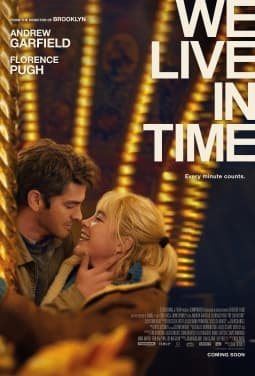
We Live in Time: Crowley's Non-Linear Gamble
John Crowley's third collaboration with A24 runs the ten-year relationship in a non-linear shuffle, and the shuffle is what makes the film survive its cancer-drama premise. Just barely, but it does.

Small Things Like These: Murphy's Quiet Indictment
Tim Mielants's adaptation of the Claire Keegan novella was reviewed as a modest Cillian Murphy vehicle. The careful reading is that the film's restraint is the indictment, and the restraint is harder to film than the indictment would have been.
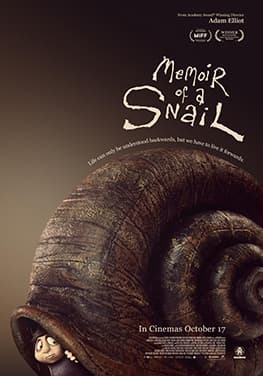
Memoir of a Snail: Elliot's Claymation Grief
Adam Elliot's second stop-motion feature took eight years to make and collected festival prizes from Annecy to Annapurna. The Australian argument is that his particular strain of misery-claymation is one of the country's more unusual exports.