A Complete Unknown: Why the Dylan Biopic Works When Most Don't
A year after James Mangold's Dylan biopic arrived in the middle of a tired genre, the film's decisions keep looking smarter. An argument for the underrated music biopic of the decade.
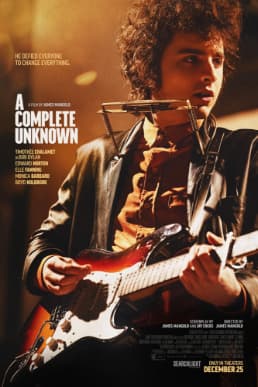
Poster / promotional material via Wikipedia, A Complete Unknown. Used under fair use for criticism and review.
I went into A Complete Unknown in December 2024 expecting to write a piece about the exhaustion of the music biopic. The genre had been, by that point, in a critical death spiral for nearly a decade. Bohemian Rhapsody had flattened the form into a greatest-hits delivery mechanism. Rocketman had complicated it briefly. Elvis had fragmented and intensified it. By 2024, the music biopic was the kind of film a serious critic was expected to treat as a foregone genre exercise, meaningful only in the specificity of whatever star performance was being offered that year.
A year later, I think A Complete Unknown is the best music biopic of the last fifteen years, and the argument has not been properly made. Let me try.
What the film declines to do
The first and most important thing about A Complete Unknown is what it refuses. The film covers only four years of Bob Dylan’s life, his arrival in New York in 1961 through his electric Newport Folk Festival performance in 1965. That is a vanishingly narrow slice. It excludes his childhood, his late-sixties motorcycle accident, his Christian period, his Never Ending Tour, his Nobel, his bizarre and interesting and mostly unreadable Chronicles Volume One. It ends before the Dylan the rest of the world thinks they know has fully arrived.
This is the film’s first and best decision. The temptation of the biopic is to be comprehensive. The temptation of the music biopic is to also be consoling, to assemble the life into a shape in which the subject’s various personas end up making a coherent story. James Mangold and his screenwriter Jay Cocks refuse both temptations. They do not try to assemble Dylan’s life. They assemble a specific argument about four years of it.
The argument, roughly: a man arrives in a scene that wants him to be a certain kind of thing, becomes that thing with frightening speed, and then, equally fast, equally deliberately, becomes something else. The film is about the pivot, and the pivot’s cost, and why the pivot was, on the terms the film establishes, necessary.
What Chalamet is doing
Timothée Chalamet’s performance has been discussed mostly in terms of his singing, which is excellent, and his vocal impressions, which are competent but not imitative. The more interesting thing he is doing is an observation performance. His Dylan is watching the room, constantly, and the performance is built around the micro-adjustments a young person makes when they realise they are being seen.
There’s a scene at the Gaslight Café, early in the film, where Dylan plays an acoustic song to a small crowd that includes Pete Seeger (Edward Norton) and, in the back, a young Joan Baez (Monica Barbaro). The camera tracks Dylan’s face across two verses. He is performing. He is also logging, in real time, which people in the room are paying the correct kind of attention. The performance is inside the song but one level above it. Chalamet makes this legible without making it cynical. The young man has something, and he knows he has something, and he is in the process of learning how to deploy it.
This is the performance the film is built around, and it is a kind of acting that doesn’t get Oscar votes because it is, intentionally, so small. You have to watch it carefully. You have to be willing to read micro-expressions. Chalamet’s Dylan is a person becoming one in front of you, and the becoming is not loud.
The Newport sequence
The film’s centrepiece is the 1965 Newport Folk Festival performance, in which Dylan famously went electric and was, depending on which witness you believe, booed, adored, or both. The staging of the sequence is one of the best things Mangold has directed. The film resists both the “pure heroic moment” framing and the revisionist “he was booed and it hurt him” framing. It gives you the performance as a genuinely ambiguous event. You can read the crowd’s reaction several ways. You can read Dylan’s composure several ways. The film does not tell you what to read.
This is formally risky. Biopics are supposed to clarify their subjects’ defining moments. A Complete Unknown refuses to. The Newport sequence is offered as itself, a piece of cultural history whose meaning has been argued about for sixty years and which this film is not going to try to settle. You watch it and you are not told what to think. I cannot tell you how rare this is in the contemporary biopic.
The supporting performances
Edward Norton’s Pete Seeger is the performance most under-discussed in reviews. Norton plays Seeger as a man of absolute rectitude whose rectitude is, precisely, his limitation, a person so thoroughly committed to the folk tradition as moral project that he cannot see why anyone would want to leave it. The performance is neither hagiographic nor satirical. Seeger is not wrong, in the film’s terms, to believe in what he believes in. He is simply not the one the 1960s is about to belong to.
Monica Barbaro’s Joan Baez is the film’s second-best performance. She plays Baez as a woman who arrived in a scene five years before Dylan did, who understands the scene’s rules and economics intimately, and who watches Dylan break those rules with a mix of fascination and exasperation. The scenes between Chalamet and Barbaro have the specific texture of two people who are sleeping together without particularly liking each other, and the film is honest about this in a way most music biopics are not.
Elle Fanning, as the Sylvie Russo character, a composite based on Dylan’s real-life girlfriend Suze Rotolo, whose name the film respectfully declines to use, has the hardest role. She has to play the person Dylan is leaving behind, without the film tilting into either “heartbroken woman” or “wronged partner” clichés. Fanning is working with a limited canvas and fills it carefully.
What it got right
Most music biopics make the mistake of treating the music as punctuation, illustration for the life being told. A Complete Unknown treats the music as the life. The songs are not hooks. They are the form in which Dylan is thinking. When he plays a new song for the first time, the film lets us watch him think through it; when he argues with a producer about a take, the film lets us hear what the argument is for. The music is not the soundtrack to the story. The music is the story.
The other thing A Complete Unknown got right, and this is the thing I keep returning to, is tone. The film is, quietly, a generous film. It does not reduce anyone, not Seeger, not Baez, not the folk audience, not the rock audience, not Dylan himself. It believes that the people involved in the story had reasons, most of them coherent, some of them incompatible. It is the film equivalent of good biography. It trusts its subject enough to let him remain opaque.
A year later, I think more people should see it. It is on streaming. Sit down with it. It is not, finally, a film about Bob Dylan. It is a film about what it looks like when a young person realises the shape they have been given is wearing out, and what they are willing to give up to get a new one.
That’s a film about all of us. Or at least about any of us who ever tried to become something.
Jules writes the kind of pieces that come from wandering somewhere and overhearing something. On Frame Junkie's masthead since the beginning.
MORE BY JULES OKONKWO →
Maria and Pablo Larraín's Closing Argument
Pablo Larraín's third and probably final entry in his trilogy of distressed-woman biopics is the most formally certain of the three, and the one least willing to flatter its subject.
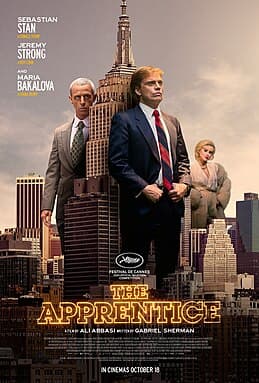
The Apprentice: The Trump Film Nobody Watched
Ali Abbasi's Trump origin story arrived in American theatres three weeks before the 2024 election, flopped, and has barely been discussed since. The film deserved better.
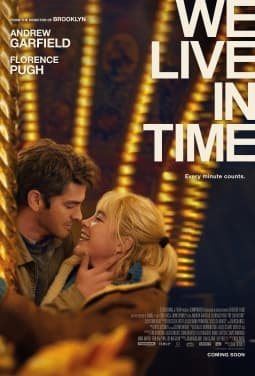
We Live in Time: Crowley's Non-Linear Gamble
John Crowley's third collaboration with A24 runs the ten-year relationship in a non-linear shuffle, and the shuffle is what makes the film survive its cancer-drama premise. Just barely, but it does.