Love Lies Bleeding: Rose Glass Goes Pulp
Rose Glass's second feature dragged the lesbian bodybuilder noir into A24 territory and got reviewed as a tonal mess. The case I want to make is that the tonal mess is the movie, and the movie earns it.

Rose Glass’s first feature, Saint Maud (2019), was a contained psychological horror about a hospice nurse’s unravelling, made for something under a million dollars by Film4 and British independents. It earned her the kind of international reputation that gets a British director brought across to make an American second feature, and Love Lies Bleeding is the American second feature. A24 produced and distributed; it opened in March 2024, grossed around $10 million globally, and was reviewed, by the larger American film press, as a tonal mess that didn’t know what it wanted to be.
I want to make the opposite case. The tonal mess is the film’s intentional shape, and Glass’s control of the shape is the film’s specific achievement.
What the film is
It is 1989. Lou (Kristen Stewart) runs a specifically grim New Mexico gym owned by her gun-running father, Lou Sr. (Ed Harris). Her sister Beth (Jena Malone) is in an abusive marriage to JJ (Dave Franco), a man on the edge of Lou Sr.’s criminal operation. Into the gym one morning walks Jackie (Katy O’Brian), an itinerant bodybuilder passing through town on her way to a major Las Vegas competition. Jackie and Lou fall into an immediate and specifically intense relationship. Jackie moves into Lou’s apartment. Lou supplies Jackie with injectable steroids from the gym’s specific off-the-books pharmacy.
Then JJ puts Beth in hospital. The film, from that point, is a crime story that escalates through increasingly extreme violence and increasingly unstable tonal registers across roughly its second half.
What Glass is doing
The tonal registers Love Lies Bleeding traverses include: queer romance, neo-noir crime thriller, 1980s pulp erotica, body-horror, full-on surrealist fantasy. The film moves between these registers without attempting to reconcile them. A scene will be a specifically earnest romantic interlude; the next scene will be a specifically brutal crime beat; the next scene will be a specifically surreal fantasy intrusion. Glass treats the tonal shifts as formal structure rather than as problems to be solved.
The mainstream reviews took the shifts as failures of tonal control. They are not. Glass is working within a specific cinematic tradition (the late-1980s and early-1990s pulp noir of David Lynch’s Wild at Heart, the Coen brothers’ Blood Simple, Kathryn Bigelow’s Blue Steel) in which tonal volatility is the point. The films in this tradition refuse coherent tonal registers because the characters in them are living specifically incoherent lives that a stable tonal register would flatten.
Glass’s additional move is to push the pulp logic into specifically physical extremity. The film’s depictions of violence, sex, and bodybuilding are unified by a specific attention to the body as a site of overt transformation. Jackie’s body changes across the running time under the influence of steroids, training, and crime. Lou’s body, at specific moments, shifts into registers the realist frame does not contain. The film’s final act makes this operation specifically explicit, and some viewers find the final act the film’s failure and other viewers find it the film’s logical completion.
The Stewart and O’Brian performances
Kristen Stewart, as Lou, is operating in the specific register she has refined across her post-Twilight career: closed-off, physically uncomfortable, specifically defensive. Lou is managing a set of inherited situations (a criminal father, a battered sister, a gym she has not chosen to run) and the management is visible in the performance as a specific low-level continuous exhaustion. Stewart plays exhaustion well. She has been playing variants of it since Personal Shopper (2016). In Love Lies Bleeding the exhaustion is specifically load-bearing.
Katy O’Brian, as Jackie, is the film’s breakout performance and the source of its physical momentum. O’Brian is a former fighter, actual competitor-level bodybuilder, and her casting is specifically embodied; Jackie’s body is O’Brian’s body, with the specific physical vocabulary that follows from the sport. The performance is not just a muscle-car. O’Brian plays Jackie with a specifically bright, specifically vulnerable affect that the physicality is at specific tension with. Jackie is a strong person who is also specifically lost, and O’Brian plays both registers without letting either dominate.
The Harris character
Ed Harris, as Lou Sr., plays a specifically grotesque Southwestern crime-patriarch whose gun-running operation is the film’s central institutional fact. Harris is working with prosthetic makeup that gives him an extreme, specifically vulture-like physical presence. The character is pulp through and through. Harris plays him at the specific register the pulp requires without either camping up the material or trying to soften it. The performance is a specifically committed late-career genre turn.
The Vegas sequence
The film’s physical climax is a specific Vegas bodybuilding competition sequence, intercut with escalating crime beats in New Mexico. The editing (by Mark Towns) treats the two threads as tonal opposites that the film is deliberately colliding. The competition is specifically bright, specifically staged, specifically theatrical. The New Mexico crime is specifically dim, specifically physical, specifically dirty. The intercutting amplifies the tonal collision the film has been staging across its full running time.
The competition sequence is also where Glass’s surrealist turn becomes explicit. Jackie’s body, on the competition stage, begins to transform in ways that the realist register of bodybuilding cinema would not permit. The scale of the transformation is specifically un-realist. Viewers who have been tracking the film’s tonal volatility up to this point will read the transformation as the specific payoff of the volatility. Viewers who have been waiting for the film to settle into a consistent register will, at this point, give up.
The Hot Line Miami register
I want to flag the specific videogame and graphic-novel sensibility that Love Lies Bleeding also carries. The film’s visual register (neon-and-sodium light, specifically saturated colour grades, specifically stylised violence) has something in common with the Hotline Miami videogames, with Ed Brubaker’s pulp crime comics, with the specifically stylised 1980s-set pulp that has been accumulating across media for the last decade. Glass is participating in that broader sensibility while making a film that is recognisably an A24 indie rather than a pastiche.
The distributor matters here. A24 has been, across the last decade, the primary American distributor willing to underwrite specifically volatile genre indies. Glass’s film is specifically an A24 film in the way that term now functions. Whether that is a good or bad thing is a conversation the company’s critics have been having for some time. I will only observe that Love Lies Bleeding is among the more interesting films the company has distributed.
Where it sits
Love Lies Bleeding will be re-watched across the next decade by audiences who find the tonal volatility the feature rather than the bug. It will be part of a specific canon (queer noir, bodybuilding cinema, 1980s-set pulp) that lies outside the mainstream prestige track. Glass’s next project, whatever it is, will continue to be worth watching. She is a specific sensibility rather than a specific project manager, and the sensibility is legible across both Saint Maud and this.
Watch it at night, with a specific drink, with no intention of sleeping afterwards. The film will not leave you in the mood for sleep.
Marcus believes good criticism is an argument. He is almost always angry about something, usually for good reason. Horror is his first language.
MORE BY MARCUS VELL →
Dream Scenario: Borgli's Cage Vehicle as Media Critique
Kristoffer Borgli's A24 feature used Nicolas Cage as the vehicle for a media satire that landed in late 2023 and has aged, through 2024 and into 2025, into a specifically sharper object than the reviews initially registered.
We Live in Time: Crowley's Non-Linear Gamble
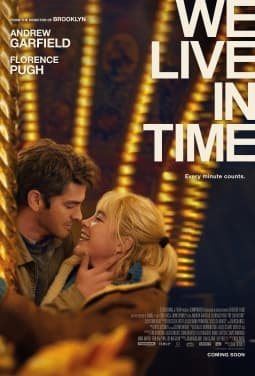
John Crowley's third collaboration with A24 runs the ten-year relationship in a non-linear shuffle, and the shuffle is what makes the film survive its cancer-drama premise. Just barely, but it does.

Problemista: Julio Torres's Visa Fable
Julio Torres's 2024 debut feature is a specifically strange American indie about a Salvadoran immigrant, a specifically difficult art-world widow, and a specifically failing visa petition. It is also, quietly, great.