La Chimera: Rohrwacher's Ghost Story
Alice Rohrwacher's 2023 film about a British grave-robber in 1980s Italy is the kind of quiet, strange, specifically rewarding film that the American art-house circuit was once built to deliver. It still can.
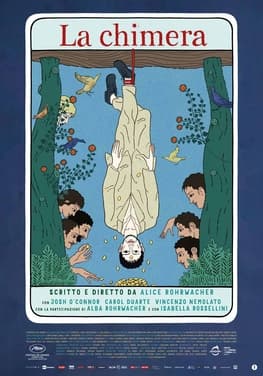
Poster / promotional material via Wikipedia, La chimera. Used under fair use for the purpose of criticism and review.
Alice Rohrwacher is, at this point, one of the three or four most distinctive European directors working in any register. Her previous films (The Wonders, 2014; Happy as Lazzaro, 2018) have established a specific cinematic grammar that combines Italian neorealism with a particular willingness toward magical-realism, specific attention to rural and working-class Italian life, and a formal patience that American audiences are increasingly unused to.
La Chimera, her fourth feature, played the festival circuit in 2023, received a limited US theatrical release in March 2024 via Neon, and has now arrived on streaming. It is, in its unassuming way, one of the best films of the last two years, and the kind of film the American independent-distribution ecosystem needs to continue supporting.
What the film is
Arthur (Josh O’Connor) is an English tombaroli, or grave-robber, operating in 1980s rural Italy. Tombaroli, in the specific historical moment the film depicts, were a recognisable underclass of criminals who looted Etruscan tombs across central Italy, selling the recovered artifacts to black-market dealers who funnelled them to European and American collectors.
Arthur works as the specifically-gifted member of a loose crew of tombaroli. He has a specific ability, never fully explained, to locate buried tombs by dowsing. He is also, across the film’s two-hour running time, grieving a recently-deceased woman he loved. The film interleaves his tomb-raiding with his grief, and increasingly suggests that the two are the same activity.
What Rohrwacher is doing
The film’s most striking feature is its formal looseness. Rohrwacher shoots in a specifically period-accurate 35mm, with specific attention to the golden-hour light of central Italian landscapes. The narrative moves in and out of realistic registers; characters sometimes speak directly to camera, sometimes break into specific song-and-dance sequences that are not precisely musical numbers but are something adjacent.
The film’s best single scene, for me, is a mid-film sequence in which Arthur and his crew are chased through a field by carabinieri. Rohrwacher shoots the chase in a specific comic register reminiscent of silent-film chase scenes, with specific under-cranked frame rates and deliberately slapstick choreography. The sequence is funny. It is also, structurally, the film’s clearest signal that the conventional realism the viewer expects from a grave-robber film is not what is being offered.
The Josh O’Connor performance
Josh O’Connor, following his work in The Crown, God’s Own Country, and more recently Challengers, is doing some of his best screen work here. His Arthur is a specific kind of quiet Englishman abroad: dishevelled, physically depleted, specifically out of place, and yet functional within the tombaroli economy in ways the film does not fully explain.
O’Connor plays Arthur across the running time as a man whose grief has become structural. He is, functionally, a ghost walking around among living people, performing the motions of criminal labour while waiting for the specific moment when he can rejoin the dead. The performance is almost entirely interior; Arthur speaks rarely and, when he does, in a specific deadpan that Rohrwacher plays for both comedy and pathos.
The Isabella Rossellini sequence
Isabella Rossellini, in a specific supporting role as the mother of Arthur’s dead love, delivers one of the quiet year-best performances of 2023. Rossellini’s sequence, roughly twenty minutes in the film’s middle, takes place in a gorgeous decaying Italian villa where she lives with several adult daughters. The scenes are staged as specifically theatrical set pieces, with the daughters addressing the camera directly and Rossellini presiding over the household with a specific faded-grandeur authority.
The sequence is, on first viewing, slightly disorienting. On second viewing, it is the film’s emotional foundation. The household is the specific site of Arthur’s grief, and Rossellini’s character is the specific figure who knows what Arthur has lost because she lost the same person.
The ending
I will not spoil the film’s final act in detail. I will say only that La Chimera commits to a specific metaphysical gesture in its closing sequence that some viewers will find the film’s most moving moment and that other viewers will find unearned. I am in the first camp. The film has been preparing the gesture across its full running time, and when it arrives, it lands.
What the distribution means
La Chimera, in the American context, is the specifically interesting commercial question. Neon picked it up at Cannes 2023 and released it in a limited 2024 theatrical run. The film grossed approximately $2.5 million in US theatres, which is modest in absolute terms but significant for a non-English-language indie of its register.
The specific importance of Neon’s commitment to films like La Chimera is that it sustains the specific American distribution pipeline for European art cinema that Focus Features, IFC Films, and the specialty arms of the major studios have been progressively withdrawing from. A24 handles a similar range of films, but A24’s profile is more heavily weighted toward American indie production. Neon’s specific international-distribution emphasis is, structurally, harder to replace.
Where it sits
La Chimera will not be widely watched. It will be loved by the approximately 150,000 Americans who see it across its theatrical and streaming runs. It is, for those specific viewers, one of the finest American-distributed imports of the current era.
Watch it on a Sunday afternoon, preferably in good light, with the subtitles on. Let Rohrwacher’s formal looseness do its work. Pay attention to the Rossellini sequence. The film will reward the patience.
Lena writes long-form essays on the films that will still be talked about in a decade. Previously at a defunct monthly whose name we do not speak.
MORE BY LENA ASHWORTH →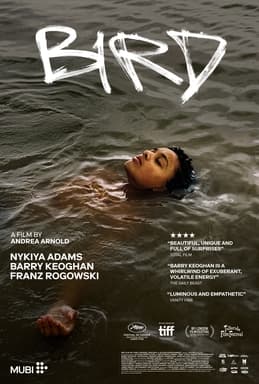
Bird: Arnold's Kent Fable
Andrea Arnold's fifth feature split the reviews, and the split was real. The retrospective argument is that the film's unexpected magical turn is not a failure of the social-realist grammar, it's what the grammar was always walking toward.
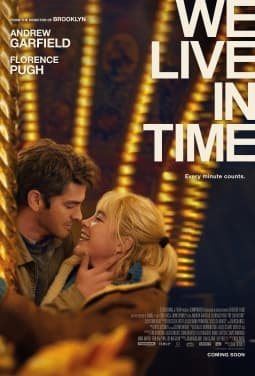
We Live in Time: Crowley's Non-Linear Gamble
John Crowley's third collaboration with A24 runs the ten-year relationship in a non-linear shuffle, and the shuffle is what makes the film survive its cancer-drama premise. Just barely, but it does.

The Brutalist: In Defence of the 3.5-Hour Epic
A year after The Brutalist swept its technical categories and divided audiences, its length has stopped looking like a gamble and started looking like the point. An argument for the long film in a short-film decade.