Bird: Arnold's Kent Fable
Andrea Arnold's fifth feature split the reviews, and the split was real. The retrospective argument is that the film's unexpected magical turn is not a failure of the social-realist grammar, it's what the grammar was always walking toward.
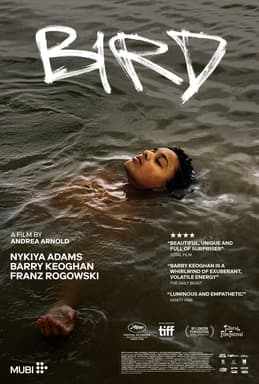
Poster / promotional material via Wikipedia, Bird (2024 film). Used under fair use for criticism and review.
I saw Bird at a Dendy cinema on a wet Tuesday in Sydney in late 2024 and came out of it arguing with the friend I saw it with, loudly, in the rain. She didn’t like the turn the film takes in its final third. I did. The argument has, in the months since, clarified itself for me, and I want to put the clarification down.
Andrea Arnold’s fifth narrative feature premiered at Cannes in May 2024, was distributed in the US by Mubi in November, and picked up a small but committed critical following while splitting the mainstream film press roughly in half. It grossed around $800,000 in the US theatrical run, which is par for a film of its register and makes the split look sharper than it was. The people who liked it really liked it. The people who didn’t went off.
What the film is
Bailey (Nykiya Adams) is twelve, mixed-race, living in a cramped council flat in North Kent with her half-brother Hunter (Jason Buda) and her young father Bug (Barry Keoghan), who is planning to marry his new girlfriend Kayleigh (Frankie Box) in a matter of days. Bailey’s biological mother Peyton (Jasmine Jobson) lives nearby with a violent new partner. Bailey is, as the film opens, specifically fed up with all of this. She takes her phone out to the marshland near the estate and, there, encounters a man in a long skirt who introduces himself as Bird (Franz Rogowski). He is looking for his own lost father.
The film, across 119 minutes, follows Bailey through the days before her father’s wedding. She negotiates her half-siblings’ lives. She intervenes in her mother’s situation. She shadows Bird across Kent as he tries to locate a family he has only partial information about.
Then, in the film’s last thirty minutes, the film turns.
The turn
I don’t want to spoil the specific shape of the turn. I will say that Arnold, across her previous work (Red Road, Fish Tank, American Honey, Cow), has built a reputation for social realism that works at a specifically documentary pitch. The camera is handheld. The performers are often non-professional. The emotional register is proximate rather than observational. The viewer arrives at Bird expecting that grammar and, for the first hour and a half, gets it.
The final act violates the grammar. What happens is not explained, is not resolved within a realist framework, and is, depending on your disposition, either the film’s most moving sequence or the moment the film loses its nerve. My friend was in camp two. I am in camp one.
Here is the argument for camp one. Arnold’s realism has always had a magical seam. Fish Tank has a scene in which Mia, the fifteen-year-old protagonist, dances with a horse at dawn in a way the realist register doesn’t quite contain. American Honey has passages of roadside strangeness that the road-movie framework doesn’t fully account for. Cow is a documentary, and yet. The magical turn in Bird is not a departure from Arnold’s sensibility. It’s the sensibility finally becoming visible.
The Adams performance
Nykiya Adams, who had not acted professionally before Bird, carries the film on her specific twelve-year-old shoulders. The performance is not technical in the way a child actor’s performance often is. Adams is not doing a part; she is being present, with Arnold’s camera, across a specifically demanding running time. What the performance gives the film is a specific refusal of sentimentality. Bailey is not cute. Bailey is not tragic. Bailey is a twelve-year-old with a phone and a specific amount of anger, moving through an environment that is testing her capacities.
Arnold’s method, which is to cast young non-professionals and to work with them in real locations over long shoots, produces a specific kind of performance that no other current British director quite matches. The performance is not acted; it is lived through, and the camera records the living through.
The Keoghan and Rogowski work
Barry Keoghan, as Bug, is the film’s second most interesting performance. Bug is twenty-nine; Bailey is twelve. The arithmetic tells you what kind of young father Bug was, and what kind of young father he still has to try to be. Keoghan plays Bug as specifically unready for the responsibilities his household has handed him. He is not irresponsible. He is not violent. He is simply too young for his life and aware of it. The performance has the specific generosity that Keoghan’s best work has (The Killing of a Sacred Deer, The Banshees of Inisherin) and none of the showiness that his lesser work can slide into.
Franz Rogowski, as Bird, is working in a different register. Rogowski is playing a character whose relationship to the realism of the film is specifically unstable. He is the film’s seam. The performance is physical, specifically European-arthouse in its willingness to use the whole body, and specifically attuned to the child performer he shares most of his scenes with.
The Kent landscape
Robbie Ryan, who has shot all of Arnold’s narrative features, gives North Kent a specific texture that refuses the conventional British-social-realism grey. The marshland is green. The estate is specifically coloured; graffiti, laundry, the pink of a plastic chair on a balcony. The light is southern rather than northern, even though the economic geography is working-class-British in a way that feels northern. Arnold has always been attentive to light. In Bird, the attention is at the front of the frame.
The Blur score
Arnold is a specific user of existing music. Her films have featured Nas (Fish Tank), Rihanna (American Honey), and various pop and hip-hop selections across the decades. Bird uses Blur heavily, with several Damon Albarn cues carrying structural weight. The choice is not incidental. The Albarn music, which has its own specific relationship to English suburban melancholy, is the film’s emotional scaffolding. The selection is precisely placed; the film earns its needle drops.
Where it sits
Bird will be argued about, and the argument will be a specific index of where a given critic sits on the question of when a realist director earns a departure from realism. I am on Arnold’s side. The film has the courage of its own instincts, and the final act is the instinct surfacing rather than betraying the surface.
Watch it with patience, at home, with the phone put away. Arnold is making some of the best British films of the decade, and this one is among them.
Jules writes the kind of pieces that come from wandering somewhere and overhearing something. On Frame Junkie's masthead since the beginning.
MORE BY JULES OKONKWO →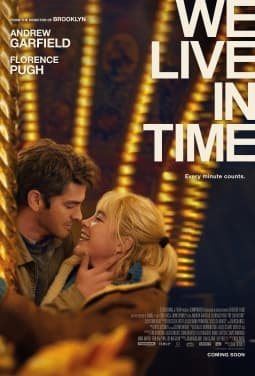
We Live in Time: Crowley's Non-Linear Gamble
John Crowley's third collaboration with A24 runs the ten-year relationship in a non-linear shuffle, and the shuffle is what makes the film survive its cancer-drama premise. Just barely, but it does.
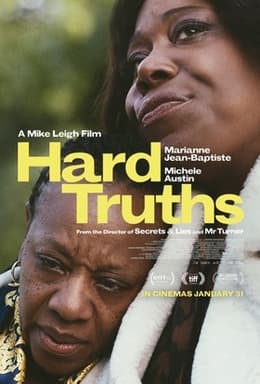
Hard Truths: Leigh's Return to Pansy
Mike Leigh's first film since 2018 reunited him with Marianne Jean-Baptiste for a character study of sustained anger. The argument is that the film is one of his best, and the conditions that produced it are the ones his method has been waiting to find.
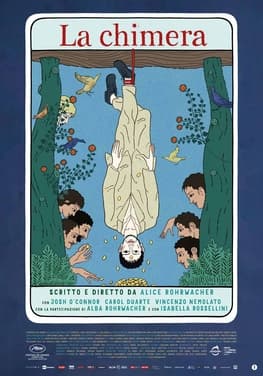
La Chimera: Rohrwacher's Ghost Story
Alice Rohrwacher's 2023 film about a British grave-robber in 1980s Italy is the kind of quiet, strange, specifically rewarding film that the American art-house circuit was once built to deliver. It still can.