Janet Planet: Annie Baker Goes to Film
Annie Baker's film debut is the rare coming-of-age film that refuses every coming-of-age convention. Just a specific eleven-year-old and her specific mother, one summer in western Massachusetts, 1991.
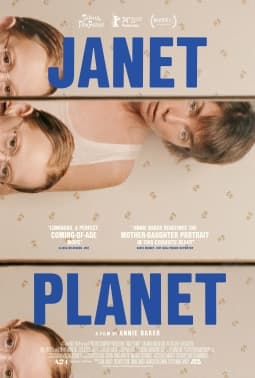
Poster / promotional material via Wikipedia, Janet Planet. Used under fair use for the purpose of criticism and review.
Annie Baker is one of the most important American playwrights of the last twenty years. Her plays (The Flick, The Aliens, John, Circle Mirror Transformation) have, across a career of roughly two decades, redefined what American theatre can do with silence, pause, and the specific textures of everyday speech. I have been waiting for her to make a film for about fifteen years.
Janet Planet, her directorial debut, released by A24 in June 2024, is the film I was waiting for. It is also, specifically, not the film I thought I was waiting for. The film is stranger, slower, and more specifically her own than I had anticipated.
What the film is
Lacy (Zoe Ziegler), eleven years old, lives with her mother Janet (Julianne Nicholson) in a specific rural farmhouse in western Massachusetts in the summer of 1991. Lacy is, as the film opens, calling her mother from summer camp to announce that she is going to kill herself if Janet does not pick her up. Janet picks her up.
The rest of the film, 113 minutes, is the summer that follows. Janet has three specific visitors across the summer, each representing a specific adult relationship she is in the process of navigating: a specific new boyfriend Wayne (Will Patton), an old friend Regina (Sophie Okonedo), and a specific cult-leader figure Avi (Elias Koteas) who exerts specific influence over Janet’s spiritual life. Across all three visits, Lacy is present, observing.
What Baker is doing
The film is structured as Lacy’s summer. It is filmed from specifically her perspective, in specifically her rhythm. Baker’s theatre is famously slow; her film is, as it turns out, even slower. Specific scenes run for four, five, six minutes with almost no event. Lacy builds a small fairy garden. Lacy watches her mother apply makeup. Lacy hears, from the other room, conversations she only partially understands.
This is not slow cinema in the specifically international-festival sense. It is specifically American-naturalist slow cinema, built from the specific rhythms of an eleven-year-old’s summer in a rural town without other children her age nearby. The specific stakes are the specific stakes of that summer: what she notices, what she thinks she understands, what she misinterprets.
The Zoe Ziegler performance
Zoe Ziegler, in her first screen role, is the specific foundation of the film. She plays Lacy with a specific watchful interior quality that most child actors cannot manage. Lacy is, across the running time, specifically thinking constantly. Ziegler plays the thinking without narrating it. You can see her take in information. You can see her arrange it. You can see her decide, at specific moments, to say something or to not say something.
The performance is the best child-lead work in any American film of the last several years. Baker has worked with Ziegler in a specifically disciplined way that has protected her from the specific performance-artificiality most child roles produce.
The Julianne Nicholson performance
Julianne Nicholson as Janet is doing specifically complementary work. Janet is, across the summer, a specific kind of mother: loving, specifically depressed in ways that are visible, specifically making decisions that are not obviously in her daughter’s interest. Nicholson plays Janet without resolving the character’s specific ambiguity. Janet is neither a good mother nor a bad mother. She is a specific actual mother of a specific eleven-year-old in a specific rural town in 1991 navigating a specifically difficult personal moment.
The film’s most formally interesting scenes are the conversations between Lacy and Janet, which Baker writes with specific theatrical precision. The two characters talk at each other with specific verbal rhythms that reveal their relationship without requiring any of it to be narrated.
The cult subplot
The Avi (Elias Koteas) character is the film’s specific dramatic complication. Avi is a specifically Buddhist-adjacent spiritual-group leader whom Janet has followed, with specific periodic intensity, for years. His arrival at the farmhouse is the specific event that most directly threatens Lacy’s summer. Lacy does not like Avi. Her reasons are specifically observant rather than specifically articulated.
Baker handles the subplot with specific restraint. The film does not melodramatise Avi or the spiritual-group context. Avi is a specific man whose specific interest in Janet is uncomfortable for reasons that Lacy, intelligently, registers before Janet does. The subplot resolves quietly.
Where it sits
Janet Planet grossed approximately $3 million in its US theatrical run, which is strong for a film at its release pattern. Baker has indicated, in interviews, that she intends to continue making films while also continuing to write for theatre. I hope both commitments are sustainable.
The film’s longer afterlife will be on streaming, where its specific patience may find audiences across the next several years. Watch it on a specific summer evening, with the expectation that you will need to adjust to its specific pace. The adjustment is the film’s gift.
Jules writes the kind of pieces that come from wandering somewhere and overhearing something. On Frame Junkie's masthead since the beginning.
MORE BY JULES OKONKWO →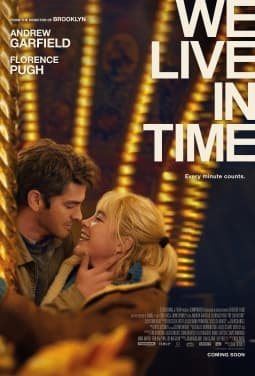
We Live in Time: Crowley's Non-Linear Gamble
John Crowley's third collaboration with A24 runs the ten-year relationship in a non-linear shuffle, and the shuffle is what makes the film survive its cancer-drama premise. Just barely, but it does.
A Different Man: Aaron Schimberg's Face-Swap Comedy
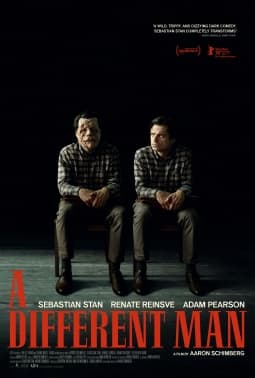
Aaron Schimberg's 2024 comedy about an actor who gets a medical procedure and regrets it is the year's strangest mid-budget indie, and the one whose specific comic machinery I keep returning to.
Dìdi: Sean Wang's Coming-of-Age Debut
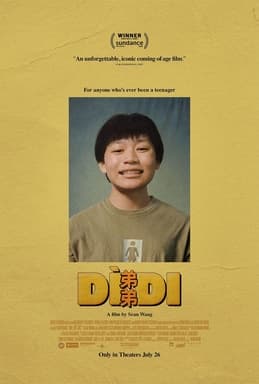
Sean Wang's 2024 debut feature is one of the best American coming-of-age films in years. Specifically about being thirteen, Taiwanese-American, and on MySpace in 2008.