Dìdi: Sean Wang's Coming-of-Age Debut
Sean Wang's 2024 debut feature is one of the best American coming-of-age films in years. Specifically about being thirteen, Taiwanese-American, and on MySpace in 2008.
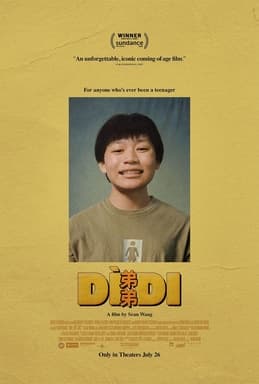
Poster / promotional material via Wikipedia, Dìdi. Used under fair use for criticism and review.
Sean Wang’s Dìdi won the Audience Award at Sundance 2024, received a warm theatrical release from Focus Features in July 2024, and has accumulated, across the subsequent year, a specifically devoted audience. It is, by my measure, one of the two or three best American independent debuts of the current decade, and the specifically freshest coming-of-age film in several years.
What the film is
Chris Wang (Izaac Wang), thirteen years old, lives with his mother Chungsing (Joan Chen), his older sister Vivian (Shirley Chen), and his specifically critical grandmother (Chang Li Hua) in a Taiwanese-American household in Fremont, California. The film is set in the summer of 2008, between Chris’s eighth-grade graduation and the start of high school.
Chris, nicknamed “Dìdi” (little brother) at home and “Wang-Wang” at school, navigates the specifically small catastrophes of American middle-school social life: a deteriorating friend group, a specifically painful crush, the emerging pressure to redefine himself before high school, the specific desire to be seen as specifically cooler than he is. The film is, in its surface register, a familiar coming-of-age tale.
What makes it specifically good
Dìdi is the rare coming-of-age film that is specifically attentive to the cultural particulars of its protagonist. Chris is not a generic American thirteen-year-old. He is a specifically Taiwanese-American thirteen-year-old, and the specific texture of his household life (the specific language mix of English and Mandarin and Taiwanese, the specific family dynamics around his grandmother, the specific attention his mother pays to his academic performance, the specific presence of his absent father abroad) is central to what the film is about.
Wang, who grew up in Fremont and whose actual mother plays Chungsing in the film, brings a documentary-adjacent authenticity to the family material. The scenes with Joan Chen as the mother are the film’s emotional spine. Chen plays Chungsing as a specifically thoughtful, specifically overextended woman whose maternal performance is visibly costing her across the running time.
The 2008 period specificity
The film’s setting in summer 2008 is not an incidental detail. Wang has reconstructed the specific digital culture of that moment with unusual fidelity: AIM conversations with specific period buddy-icon aesthetics, MySpace Top 8 drama, specific period music, specific YouTube aesthetics, specific Tony Hawk / skateboarding culture. The specificity matters because the social architecture of 2008 adolescence was specifically different from 2014 or 2024 adolescence, and the difference informs what Chris is navigating.
This is also the specific biographical window of Wang’s own adolescence. Wang is, in the film, excavating the specific version of himself he was in that summer. The excavation is done with specific affection and specific criticism, in approximately equal measure.
The Izaac Wang performance
Izaac Wang, no relation to the director, plays Chris with a specific emotional openness that is rare in young actors at his level. The character is required to cycle through specific embarrassments, specific small cruelties, specific longings, and specific reconciliations across the film’s running time. Izaac Wang plays all of these without the specific performative self-consciousness that most young leads fall into.
The specific scene in which Chris finally has a direct emotional exchange with his mother, late in the film, is the specific emotional payoff of the movie, and Izaac Wang carries the specific vulnerability the scene requires.
The skateboarding plot
A specific subplot involves Chris attempting to integrate into a specifically older group of skateboarders whose acceptance he is trying to earn. The skateboarders are, in the film’s framing, a specifically aspirational peer group whose approval Chris believes will convert him into the specifically cooler version of himself he wants to be.
The subplot’s specific resolution is one of the film’s best. Chris’s attempt to become part of the group fails, specifically embarrassingly, in ways that the film does not sentimentalise. The specific painfulness of the failure is the specific emotional truth of the adolescent-cool-kid pursuit, and Dìdi refuses to soften it.
Where it sits
Dìdi grossed approximately $5 million in its US theatrical run, which is a strong outcome for an indie debut at its release pattern. The film was widely predicted at Sundance to launch Sean Wang’s directing career, and that prediction has proved accurate; Wang is, as of this writing, in pre-production on his second feature.
Watch Dìdi with anyone in your life who was thirteen in America. The film will do specific emotional work they did not know they needed done. Pay particular attention to the mother-and-son scenes. Joan Chen’s performance is the film’s specific quiet miracle.
Priya came to criticism sideways from theatre. She is patient with slow shows, short with bloated ones, and cheerfully vicious about lazy writing.
MORE BY PRIYA NAIR →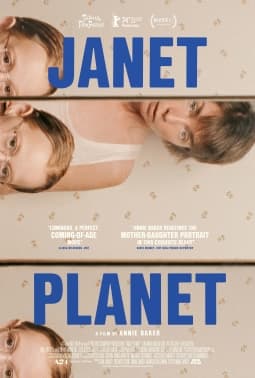
Janet Planet: Annie Baker Goes to Film
Annie Baker's film debut is the rare coming-of-age film that refuses every coming-of-age convention. Just a specific eleven-year-old and her specific mother, one summer in western Massachusetts, 1991.
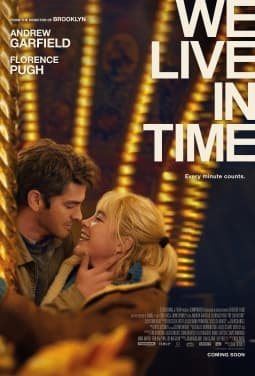
We Live in Time: Crowley's Non-Linear Gamble
John Crowley's third collaboration with A24 runs the ten-year relationship in a non-linear shuffle, and the shuffle is what makes the film survive its cancer-drama premise. Just barely, but it does.
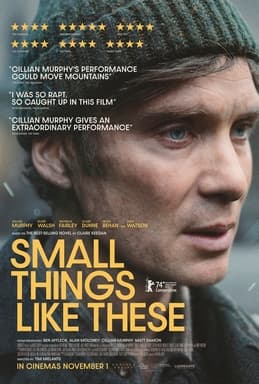
Small Things Like These: Murphy's Quiet Indictment
Tim Mielants's adaptation of the Claire Keegan novella was reviewed as a modest Cillian Murphy vehicle. The careful reading is that the film's restraint is the indictment, and the restraint is harder to film than the indictment would have been.