Cuckoo: Tilman Singer's Weird Alpine Fever Dream
Tilman Singer's second feature is one of the weirdest mid-budget horror films of the year, and one of the least bothered about making sense. An argument for the horror film that works on dream logic.
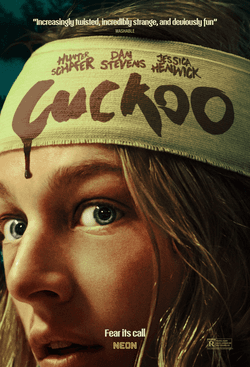
Poster / promotional material via Wikipedia, Cuckoo (2024 film). Used under fair use for criticism and review.
Cuckoo opened in US theatres in August and the reviews split cleanly in two. Roughly half the horror-attentive critics loved it; roughly half thought it was a beautiful-looking mess. I have now watched it three times, including once on a laptop and once in a cinema, and I want to make the case that both halves of the critical response are correct. The film is a beautiful-looking mess. It is also, as a mess, genuinely inventive.
What the film is
Gretchen, played by Hunter Schafer, is a seventeen-year-old American girl dragged by her father and stepmother to a resort in the Bavarian Alps. The resort is run by Herr König, played by Dan Stevens, who is Being Dan Stevens in a specific post-Beast mode: weird, formal, hyper-articulate, tonally unplaceable. The resort’s pattern is off. Guests are fine when they arrive and not fine when they leave. A young woman appears in the woods. A screeching sound disrupts time. Gretchen starts to notice.
What is happening at the resort involves, broadly, a species-adjacent biological conspiracy that is better experienced than explained, partly because the film itself is not entirely sure it can explain it. Tilman Singer, who made Luz in 2018, is operating in a specific tradition of continental European horror that is more interested in texture than story. Cuckoo is closer to Possession-era Żuławski than to Hereditary-era Ari Aster, and the critics who went in expecting Aster were not going to be satisfied.
Hunter Schafer, properly introduced
Hunter Schafer, who had been a supporting presence in Euphoria and Hollywood-adjacent fashion culture for several years, is here carrying a feature film for the first time, and she is good. Not great, not yet, but good in a way that promises great. Her Gretchen is a specific kind of American teenager, cut off from the country she is in, cut off from her father’s new family, cut off from the internet at the resort, cut off from anyone who will speak to her as an equal. Schafer plays the isolation across the first half of the film as a lived, physical condition, not an emotional state.
When the horror starts, Schafer’s work shifts. She becomes, fairly quickly, a horror-film protagonist with a specific physical register: not a runner, not a fighter, a watcher. She absorbs the film’s violence more than she responds to it, and the absorption reads as the character’s specific adolescent emotional architecture rather than as passivity.
What Dan Stevens is for
Dan Stevens as Herr König is the film’s most obvious pleasure. Stevens, post-The Guest and post-Godzilla x Kong, is at a career stage where he can play European-accented eccentrics in genre films and have specific fun with them, and Cuckoo gives him a role that lets the eccentricity run to the very edge of the viewable.
Stevens’ König is a Bond-villain cousin, but the film is not quite that genre. He is polite, sinister, helpful in wrong ways, apparently in charge of something the film keeps not letting us see in full. The performance is fun. It is also doing serious work for the film. König is the specific register of menace that lets us believe the resort is a complete, coherent, sealed-off environment, which is what the film requires.
The sound design
The single most impressive element of Cuckoo, in my view, is Simon Apostolou and Johannes Grehl’s sound design. The film’s key horror effect is an audio one, a specific piercing feminine vocalisation that disrupts the normal flow of time in the film, forcing certain scenes to stutter or replay. The effect is repeated, in different registers, across the running time.
The sound is genuinely unpleasant to experience in a cinema, in the best way. It is the kind of audio-horror effect that has not really been deployed in a mainstream horror film since the early 2010s, and it carries the film’s strangeness across sequences where the plot mechanics would otherwise fall apart.
Where the film is a mess
I want to be honest about what the film does not get right. The central cuckoo-biology conspiracy is legible in general terms but confused in specifics. Multiple sequences require characters to know, not know, or suspect different amounts of information with plot-driven inconsistency. A third-act confrontation in an underground clinic delivers its reveals with less staging than the film needed to earn them.
Some of this is, I think, fine. A horror film that operates on dream logic does not owe the viewer a complete worldbuilding audit. But Cuckoo occasionally reaches for dream logic as a cover for script shortcuts, and the reach is visible.
What it signals
Cuckoo was one of two or three horror releases of August 2024 that reinforced a specific point: mid-budget, director-driven European genre films are back in limited US distribution, and when they land they land hard. A generation of American horror directors (Aster, Peele, Schoenbrun, Perkins) now coexists with a parallel generation of continental horror auteurs (Singer, Ducournau, Bonello, Calvet) whose films do not always reach American theatres but, when they do, bring a different grammar.
Singer is one to watch. Luz was a promise. Cuckoo is a mess with a specific point of view. Whatever he does next, I want to be in the room for it.
Watch Cuckoo with good headphones, at night, on an empty stomach. The sound design will do the rest. The narrative wobbles will matter less than you are currently worried they will.
Marcus believes good criticism is an argument. He is almost always angry about something, usually for good reason. Horror is his first language.
MORE BY MARCUS VELL →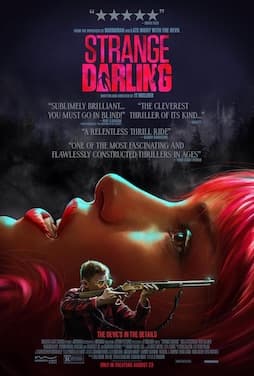
Strange Darling: A Formal Con in Six Parts
JT Mollner's non-linear indie thriller has a gimmick and knows it. A case for the film that uses its structural trick as an actual argument.
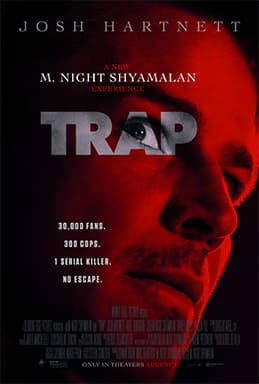
Trap: Shyamalan's Attention Problem
M. Night Shyamalan's August 2024 thriller had a genuinely great first act and two acts that could not sustain the premise. A year later, the unevenness is worth thinking about.
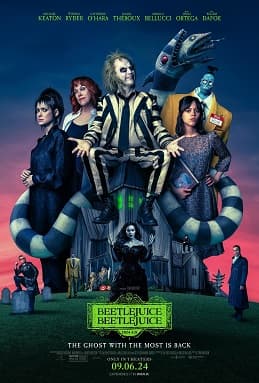
Beetlejuice Beetlejuice: The Rare Legacy Sequel That Remembers What the Original Was
Tim Burton returns to Beetlejuice after 36 years and makes a legacy sequel that actually works, mostly because he refused to make a serious one.