The Wild Robot: Animation, Still
Chris Sanders' adaptation of Peter Brown's novel is the best animated feature of the year and an argument for DreamWorks doing specifically what Pixar has stopped doing.
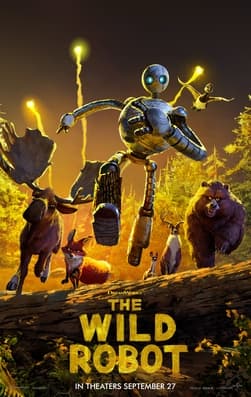
Poster / promotional material via Wikipedia, The Wild Robot. Used under fair use for criticism and review.
The Wild Robot, directed by Chris Sanders for DreamWorks and released in late September, is the best American animated feature of 2024 by a margin. I want to say this clearly and then argue for it.
The year has, in animation terms, been a strong one. Inside Out 2 was a commercial and critical success. Flow (the Latvian independent feature) did remarkable work with a minimal budget. Various Japanese features continued the strong decade. But The Wild Robot is, among all of them, the one that is attempting the largest formal-and-emotional project, and it mostly succeeds.
What the film is
Adapted from Peter Brown’s 2016 children’s novel, the film follows Roz, a domestic-service robot (voiced by Lupita Nyong’o) who, through shipping accident, ends up stranded on an uninhabited island. Her pre-programmed mission is to “complete tasks.” The island has no tasks she recognises. Over time, Roz adapts her programming to the specific ecosystem around her, eventually becoming the guardian of an orphaned gosling, Brightbill, whom she raises to flight.
The film runs 102 minutes. It has some dialogue (the animals speak, in a translation convention the film establishes within its first five minutes), but significant stretches rely on visual storytelling alone. The voice cast (Nyong’o, Pedro Pascal as the fox Fink, Catherine O’Hara as the opossum Pinktail, Kit Connor as Brightbill) is calibrated to support rather than dominate the visual work.
What Chris Sanders is doing
Chris Sanders has directed, across his career, Lilo & Stitch, How to Train Your Dragon, and The Croods, all of which are, at their best, specifically committed to a form of emotional storytelling that uses the full range of animation’s specific grammar (composition, colour, character design, movement rhythm). The Wild Robot is Sanders operating at the highest level of that grammar.
The film’s visual style, a specific mix of painterly background art and three-dimensional character animation, is an ambitious departure from the default photorealistic-CG register that has dominated American animation for a decade. The backgrounds read as if hand-painted. The characters are simplified but expressive. The film’s colour palette shifts with seasonal specificity.
This is a significant artistic choice. DreamWorks, across the last fifteen years, has gradually moved its house style toward Pixar-adjacent photorealism. The Wild Robot breaks that pattern. The film looks unlike any other American animated feature of recent vintage. This is the result of a specific decision by Sanders and the animation team to prioritise emotional clarity over visual-tech spectacle.
The Roz arc
The film’s central character is, across its running time, a specifically interesting construction. Roz begins the film as a programmed machine whose behavioural repertoire is rigidly task-oriented. Over the course of the film, she slowly develops what the film frames as a kind of non-programmed empathy, a specific capacity to recognise and respond to the needs of the creatures around her.
What makes this arc land, emotionally, is that the film does not sentimentalise the transformation. Roz does not, at any point, “become human.” She remains, throughout, a robot. Her acquired empathy is specifically her own (robotic) version of empathy, expressed in her own (robotic) physical grammar. The film honours the specific not-human-ness of its protagonist.
This is a harder thing to do than it looks. Most films about AI or robots learning to feel default to some kind of humanisation metaphor. The Wild Robot refuses this. Roz is a robot who learns to care for a gosling, and the caring is specifically a robot’s caring. The film’s best scenes depend on this distinction.
The emotional peak
The film’s peak emotional sequence, which arrives roughly at the two-thirds mark, is Brightbill’s first successful flight. The sequence is constructed around a specific build: Brightbill has been struggling. The other geese are migrating. Roz, despite her programming, has taught Brightbill everything she can. The flight must happen on its own terms.
Sanders stages the sequence as a long wordless passage, scored by Kris Bowers, that combines the hand-painted background style with specifically expressive character animation. The sequence is about six minutes long. I cried twice the first time I watched it, and once the second time.
This is the level the film is operating at. American animation has not, on a major studio scale, produced a sequence this emotionally direct and formally disciplined in years.
Where the film is weakest
One complaint. The film’s third act introduces an external conflict, a corporate retrieval crew looking for Roz, that the first two acts have not adequately prepared for. The conflict exists to generate action stakes that the film’s internal emotional stakes could, arguably, have generated on their own. The third-act action sequences are the weakest part of the film.
This is a structural compromise to commercial expectations for the form. American animated features require, at the eighty-minute mark, some form of external threat. The Wild Robot delivers the required threat, but the delivery reads as obligation rather than inspiration.
What the film changed
The Wild Robot was, commercially, a solid performer ($320 million worldwide on a $78 million budget). It was nominated for three Oscars, including Best Animated Feature, which it won. The Oscar was the correct call. DreamWorks, on the back of this film, has announced a sequel adapting Peter Brown’s second novel.
More broadly, the film is the clearest recent demonstration that American animation can still make films that are not, primarily, marketing-driven franchise products. The economic conditions that support such films are fragile. The Wild Robot’s success is a specific argument for continuing to support them.
Take your children. Take yourself. The flight sequence is the thing to wait for.
Lena writes long-form essays on the films that will still be talked about in a decade. Previously at a defunct monthly whose name we do not speak.
MORE BY LENA ASHWORTH →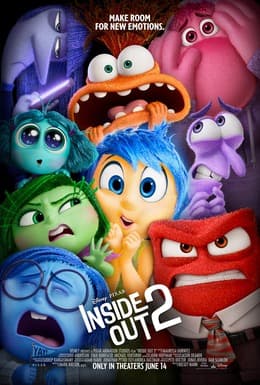
Inside Out 2: Pixar Figures Itself Out Again
Pixar's ninth sequel turns out to be, surprisingly, one of the studio's best films in a decade. An argument for the animation that grew up with its audience.
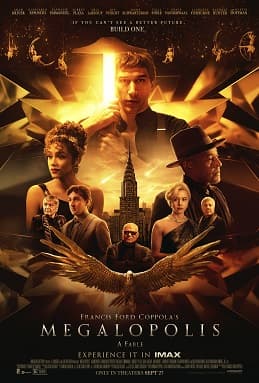
Megalopolis: Coppola's $120 Million Argument With Himself
Francis Ford Coppola self-funded his first film in thirteen years. It is nearly unwatchable in specific places and almost-great in others. The project is the point.
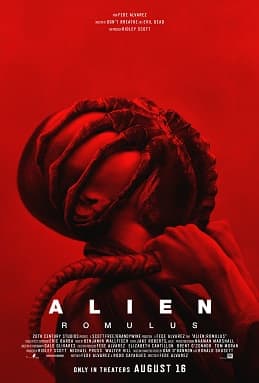
Alien: Romulus and the Legacyquel Problem
Fede Álvarez's Alien entry is a competent piece of horror filmmaking that wants, urgently, to remind you of other films. The reminders are where it falters.