Alien: Romulus and the Legacyquel Problem
Fede Álvarez's Alien entry is a competent piece of horror filmmaking that wants, urgently, to remind you of other films. The reminders are where it falters.

Poster / promotional material via Wikipedia, Alien: Romulus. Used under fair use for criticism and review.
Alien: Romulus opened in August and did more or less what the studio needed it to do: $350 million worldwide, generally positive reviews, a revival of Fox-era Alien energy for a post-Disney cinematic environment. Fede Álvarez, who directed, had already demonstrated with Don’t Breathe (2016) and Evil Dead (2013) that he can make a taut, kinetic, set-piece-heavy horror film inside a legacy franchise.
Romulus is, at its best, exactly that kind of film. Cailee Spaeny’s Rain Carradine is a competent horror protagonist. The claustrophobic geography of the derelict station is well-staged. The practical creature effects, particularly in the middle third, are genuinely revolting in the good way. The pacing, in the middle hour, is as efficient as studio horror gets.
But Alien: Romulus has a specific problem, and it is the problem of the contemporary legacyquel: the film is organised around reminding you that it is part of the franchise, and the reminders keep breaking the film it is otherwise trying to be.
The scavenging problem
Within the first twenty minutes of Romulus, we have a reference to Weyland-Yutani, a reference to the events of Alien (1979), a reference to the xenomorph lifecycle. Within forty minutes, we have a recreated version of a character from Alien appearing via CGI, played ostensibly by a now-deceased actor. Within ninety minutes, we have a sequence that is, structurally and visually, a direct recreation of the chestburster scene from Alien, set on a colonial-era table, in a style meant to evoke the original.
Some of these homages work. Some do not. The ones that work tend to be small, atmospheric, or craft-based: the ship’s interior design, the specific way the corridors are lit, the sound of the xenomorph-hiss. The ones that do not work tend to be large, dialogue-based, or character-based: the CGI resurrection, which is one of the most uncomfortable fan-service gestures I have seen in a major studio release; the direct quotations of lines from the 1979 film, which land as nostalgia cues rather than as organic dialogue.
The underlying problem is that every time Romulus stops to remind you of Alien or Aliens, it is interrupting the film Romulus could have been. Álvarez has good filmmaking instincts. When he is allowed to direct his own horror film, using the Alien universe as a sandbox rather than as an obligation, the film comes alive. When the film starts making you watch it watch its parents, it slows down.
Cailee Spaeny’s project
Cailee Spaeny, coming off Priscilla and just before her extraordinary work in Civil War, delivers a solid, occasionally excellent horror lead performance. Rain is a specific type of protagonist: young, under-equipped for what happens to her, morally serious but not preachy, willing to do hard things because the alternative is dying. Spaeny plays the trajectory cleanly.
The best Rain scenes are in the last third, when the film lets her stop reacting to external events and start making decisions. The specific choice she makes in the film’s climax, which I will not spoil, is the kind of genuine moral weight that the Alien franchise at its best has always been capable of.
Spaeny is doing the Sigourney Weaver-legacy work without trying to be Sigourney Weaver, which is the right approach. Weaver’s Ripley was a specific working-class noncom figure, refined across four films, who cannot be recaptured. Spaeny’s Rain is a different kind of protagonist, younger, less professional, more fragile, and Spaeny lets the role be its own.
The David Jonsson contribution
David Jonsson, playing Andy, a synthetic in the crew, is the film’s single best performance. Andy has a specific arc, which I will treat in general terms: his programming is altered at a key point, and the altered version is meaningfully less kind than the original. Jonsson plays both versions with a specific precision, the original as a slightly-slow, slightly-trusting helper; the altered as a coldly rational agent of another party’s interests. The transition, which the film stages gradually, is the most formally interesting acting in the film.
Jonsson had been mostly known for Industry before this, and his Romulus work confirms that he is one of the more interesting young actors working. Whatever he does next, I will turn up for.
Where the film broadly fails
The film’s final act, once the crew reaches the human-xenomorph hybrid section (you know the sequence I mean if you have seen it), is where everything that has been working for the film collapses. The hybrid creature is a design decision I cannot defend, either in terms of its visual coherence or in terms of the plot-mechanical work it is asked to do. The sequence leaves the film’s tight cave-horror register and enters a register of generic body horror that the film has not otherwise been operating in.
I am told Álvarez has said, in interviews, that the hybrid sequence is a callback to Alien Resurrection (1997). This is perhaps the first time in cinema history that a filmmaker has publicly cited Alien Resurrection as a positive reference. The sequence is the weakest in Romulus, and I do not think it is a coincidence.
What the franchise now needs
Alien: Romulus’s commercial success means the franchise will continue. Noah Hawley’s Alien: Earth television series, already shot and pending release, is, on the evidence of its promotional material, taking the franchise in a different direction. Whatever comes next, I would argue, needs to stop scavenging. The Alien universe is large enough to host new stories that are not commentaries on old stories. The Romulus formula, callbacks plus kinetics, will produce diminishing returns fast.
Álvarez himself is a capable director. If he makes another horror film outside the franchise’s scavenging logic, I am interested. Inside the franchise, the question is how many callbacks the audience will continue to pay to see.
Watch Romulus with the sound loud. Pay particular attention to the first and middle hours. Tune out the fan service. The film underneath is better than the film advertises itself as.
Marcus believes good criticism is an argument. He is almost always angry about something, usually for good reason. Horror is his first language.
MORE BY MARCUS VELL →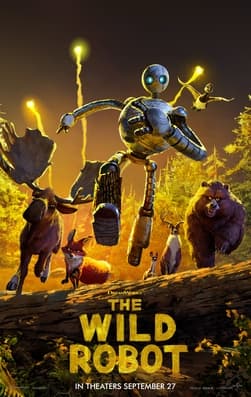
The Wild Robot: Animation, Still
Chris Sanders' adaptation of Peter Brown's novel is the best animated feature of the year and an argument for DreamWorks doing specifically what Pixar has stopped doing.
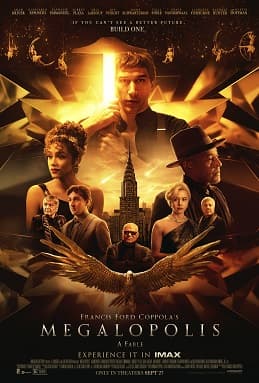
Megalopolis: Coppola's $120 Million Argument With Himself
Francis Ford Coppola self-funded his first film in thirteen years. It is nearly unwatchable in specific places and almost-great in others. The project is the point.
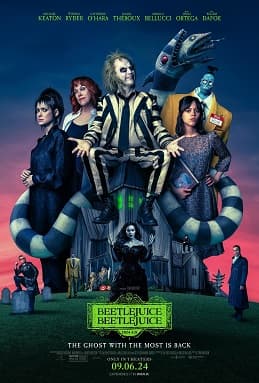
Beetlejuice Beetlejuice: The Rare Legacy Sequel That Remembers What the Original Was
Tim Burton returns to Beetlejuice after 36 years and makes a legacy sequel that actually works, mostly because he refused to make a serious one.