The Warriors Was a Hit That Its Own Studio Treated as a Threat
A $4 million picture grossed about $22.5 million, and Paramount still spent the spring of 1979 pulling its own advertising. The Warriors is a case study in a studio mistaking its audience for the film.
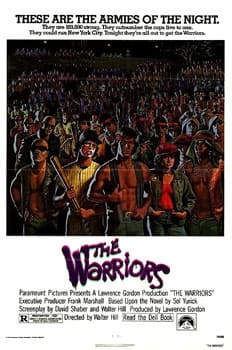
Poster via Wikipedia, The Warriors (film). Used under fair use for criticism and review.
Let me get one thing out of the way. The Warriors was not a flop. It cost a reported $4 million, opened in around 670 cinemas in February 1979, took nearly $3.5 million in its first three days, and finished with roughly $22.5 million worldwide. Any studio executive would take that return on a street-level genre picture with no stars. Paramount took it too, and then behaved for a few weeks as if it had been handed something radioactive.
That gap, between a film that worked and a studio that panicked, is the story of The Warriors. It is also the best argument I know for treating marketing as a separate crime from the movie it is attached to.
What the film actually is
Walter Hill’s picture is a chase. Nine members of a Coney Island gang, the Warriors, travel to a mass meeting in the Bronx, watch the most powerful gang leader in the city get shot, and are blamed for it. The rest of the film is a night-long trek home across a hostile New York, with every other gang alerted by radio and one DJ (only her mouth is ever shown) narrating the manhunt.
It is, structurally, a Western with a subway map. Sol Yurick’s 1965 novel took its skeleton from Xenophon’s Anabasis, an army stranded deep in enemy country and fighting its way home, and Hill, who had written The Getaway and directed Hard Times, kept that shape and stripped away everything else. Andrew Laszlo’s cinematography does the same: nocturnal, saturated with sodium and neon, the carriages and platforms lit like a stage set. The gangs wear costumes. The Baseball Furies come on in face paint and bats. Nobody in the film is trying to be documentary.
This matters because the film’s reputation for violence is much larger than its violence. It is a picture about a team trying to get back to its own ground, and the thing it keeps returning to is loyalty under pressure, which is about as old-fashioned as a subject gets. Michael Beck’s Swan is a war-chief who is less interested in winning than in not losing anyone else. James Remar’s Ajax is the film’s honest villain, a man with a temper and no plan, and David Patrick Kelly’s Luther, clinking bottles between his fingers and singing “Warriors, come out to play”, is one of the great small antagonists of the decade.
The DJ deserves a sentence of her own. Played by Lynne Thigpen, she appears only as a mouth against a microphone, and she works as the film’s chorus, relaying the manhunt to the city in a calm, amused voice while the gangs close in. She is the one character who knows how the whole night fits together, and the film is wise enough to keep her out of the street. It gives the story a narrator without making the story talk about itself.
The reaction was to the audience, not the film
Paramount did not pull its advertising because of something on the screen. It pulled it because of something in the car park. In the first weeks of release there were reports of fights and vandalism around screenings, and of killings: a teenager shot at a drive-in in Palm Springs, another stabbed at a cinema in Oxnard, a brawl and an assaulted manager at a theatre in Pasadena. These were real and terrible events. They were also events that took place among young audiences who were turning out in numbers, for a film that the studio itself had sold as a gang picture.
That is the part Paramount did not want to own. The advertising had leaned on the threat. The marketing promised gangs, and Luther’s “Warriors, come out to play” became a chant in the queue. The studio then did what studios do when a campaign succeeds too loudly: it removed the campaign. It stopped advertising, and, according to accounts of the period, exhibitors were released from their bookings if they did not want the risk.
It worked as a retreat and failed as a strategy. A picture that had been sold as dangerous and then abruptly withdrawn from view is a picture that people want to see more. Being pulled from sight did more for the cult than any trailer.
The long afterlife
The cult is genuinely deserved, and it grew in the one place studios cannot control, which is rental shelves and late-night television. The film’s look has been imitated for decades. The coda on the beach at Coney Island, dawn coming up grey, is among the quieter endings in a genre that usually closes with a gunshot. The soundtrack, Barry De Vorzon’s synthesisers and Joe Walsh’s “In the City” over the credits, now reads as period shorthand for a New York that audiences want back and would not actually want to live in.
Hill himself returned to the film in 2005 with what was billed as an “Ultimate Director’s Cut”, opening it with comic-book panels and a little more stylisation. I find that mildly regrettable. The 1979 cut did not need a framing device to tell you it was a fable. Its fable-ness was the point.
What The Warriors leaves behind is a tidy lesson for anyone in the business of selling films. If you design a campaign to sell menace to teenagers, you cannot be shocked when teenagers bring it. The picture itself was never the problem. It was a hit that its own studio mistook for a threat, and it has outlasted the panic by about forty-seven years.
Marcus believes good criticism is an argument. He is almost always angry about something, usually for good reason. Horror is his first language.
MORE BY MARCUS VELL →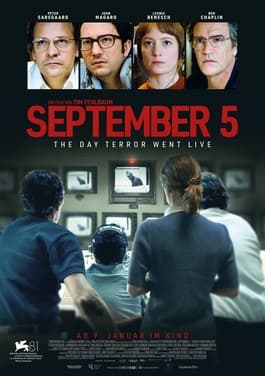
September 5 and the Control Room Film
Tim Fehlbaum's procedural about the ABC Sports team covering the 1972 Munich hostage crisis narrows its field of vision to a single control room. The narrowing is the film's argument, and it holds.
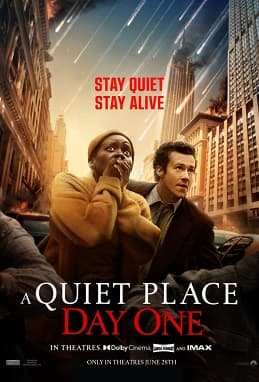
A Quiet Place: Day One, and the Discipline of a Small Apocalypse
Michael Sarnoski's Quiet Place prequel is a studio horror release built to break the franchise's scale rules, and the smaller it stays, the better it works.
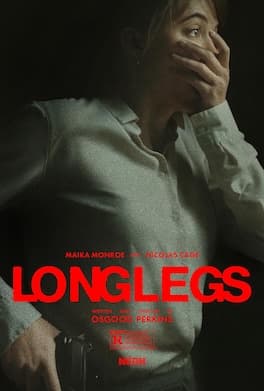
Longlegs: What Perkins Was Really Doing
A year after Longlegs' extraordinary marketing run turned into an extraordinary opening weekend, the film looks smaller than the hype suggested and stranger than the backlash allowed.