Sorry, Baby: Eva Victor's Debut
Eva Victor's Sundance-premiering debut is the early breakout of the 2025 indie year, and a specifically careful film about a specifically difficult subject.

Eva Victor’s Sorry, Baby premiered at Sundance 2025, where Victor won the Directing Award in the US Dramatic Competition. A24 acquired the film at the festival and released it theatrically in July 2025. It is, as of early 2026, the clearest indie breakout of the year, and the rare debut that delivers on the specific promise Sundance audiences responded to.
I want to write about it now, before the awards-season discourse fully forms, because the film is worth describing on its own terms.
What the film is
Agnes (Eva Victor), a young academic teaching at a small college in Massachusetts, has experienced a specific traumatic event several years earlier. The film is structured in five non-chronological chapters, each taking place at a specifically named year (“The Year with the Bad Thing,” “The Year with the Good Sandwich,” and so on), that collectively trace the aftermath of the event across approximately a decade.
The film is, in its specific handling of its central subject, unlike any treatment of similar material I have seen. Victor, as writer-director-star, has chosen a specifically understated register that neither dramatises the trauma nor minimises it. The traumatic event is not depicted on screen. Its specific nature is clarified, in a single quiet conversation, roughly thirty minutes into the film.
Why the register works
Most films about the aftermath of sexual trauma operate in one of two registers. Either they stage the trauma explicitly and build the film’s emotional architecture around the viewer’s processing of the event, or they treat the event as a specifically heavy absence that the film’s atmosphere is shaped around.
Sorry, Baby does neither. Victor’s Agnes is not, across the film, defined by the traumatic event. She is a specific academic with specific friends and specific professional commitments and specific domestic routines. The event is one thing that has happened to her. The film’s specific argument is that the aftermath of the event is integrated into Agnes’s continuing life in specifically unremarkable ways, and that the specific unremarkability is its own form of difficulty.
The film’s emotional weight builds through specific accumulation rather than through specific climax. Small scenes recur with specific variations across years. A specific routine Agnes develops in one chapter appears, subtly modified, in a later one. The viewer’s understanding of what Agnes has been living through develops specifically slowly, across 99 minutes.
The Victor performance
Eva Victor’s performance as Agnes is specifically distinctive. Victor was previously known primarily as a comedic performer (Twitter, Billions, various stand-up and video work), and the comic instincts are still visible in the performance, but they have been specifically retuned for the film’s register. Agnes is funny in specific ways: wry, self-aware, occasionally absurd. The humour is not a coping mechanism. It is simply her personality, and the film allows it to coexist with the specifically serious material.
What Victor does specifically well is play Agnes across the multiple time periods without signalling which period we are in through conventional markers. Agnes at 28, 30, 32, and 36 looks approximately the same physically. What changes is the specific quality of her attention, her specific rhythms of speech, the specific texture of her relationship to her own interior life. Victor modulates all of these across the non-chronological chapters with specific precision.
The Naomi Ackie pairing
Naomi Ackie plays Lydie, Agnes’s specifically closest friend across the full timeline of the film. The two actors have a specific real-life friendship that is visible in the on-screen relationship. Lydie is not, in the film’s framing, a plot device or a narrative convenience. She is a specifically full person with her own specifically developing life, and her relationship with Agnes develops across the chapters in specifically realistic ways that the film does not force into dramatic shape.
The specific scenes of Agnes and Lydie simply existing together (eating, driving, cooking, sitting on a porch) are the film’s structural foundation. The specific friendship is what makes Agnes’s continued life possible. The film is specifically clear about this.
The cat
I need to mention the cat. Agnes acquires, in one of the later chapters, a specific cat. The cat is a specifically well-cast animal performer whose screen presence is, without exaggeration, one of the film’s specific emotional anchors. Victor has given the cat specific screen time that pays off in a specifically extraordinary late sequence I will not describe further.
The cat is also, in the closing credits, given a specific acknowledgement by name. It is, across the film, doing specific animal acting that few films commit to at this level.
Where it sits
Sorry, Baby is, as of mid-January 2026, positioned to be one of the specifically-discussed indie films of the 2025 awards cycle. Victor has received specific attention as a first-time director. A24 has been giving the film the specific distribution attention that suggests they believe in its longer commercial life.
Watch it if you have access to the specifically measured emotional stakes it operates at. The film is not difficult to watch in any conventional sense. It is specifically careful in ways that reward specifically careful attention. Victor is, on this first feature, someone we should be watching closely.
Priya came to criticism sideways from theatre. She is patient with slow shows, short with bloated ones, and cheerfully vicious about lazy writing.
MORE BY PRIYA NAIR →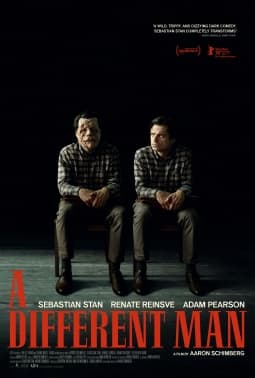
A Different Man: Aaron Schimberg's Face-Swap Comedy
Aaron Schimberg's 2024 comedy about an actor who gets a medical procedure and regrets it is the year's strangest mid-budget indie, and the one whose specific comic machinery I keep returning to.
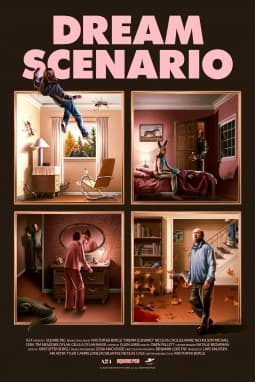
Dream Scenario: Borgli's Cage Vehicle as Media Critique
Kristoffer Borgli's A24 feature used Nicolas Cage as the vehicle for a media satire that landed in late 2023 and has aged, through 2024 and into 2025, into a specifically sharper object than the reviews initially registered.
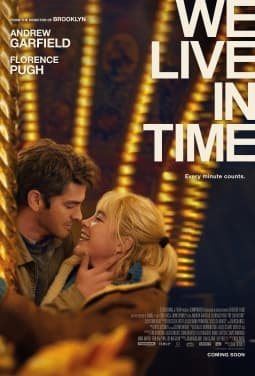
We Live in Time: Crowley's Non-Linear Gamble
John Crowley's third collaboration with A24 runs the ten-year relationship in a non-linear shuffle, and the shuffle is what makes the film survive its cancer-drama premise. Just barely, but it does.