Sinners: Coogler's Vampire Western and the Return of the Studio Auteur Movie
Ten months on, Ryan Coogler's 1930s Mississippi vampire film doesn't just still hold up, it looks like the clearest sign in years that the studio auteur movie is not dead. A field report from inside the juke joint.
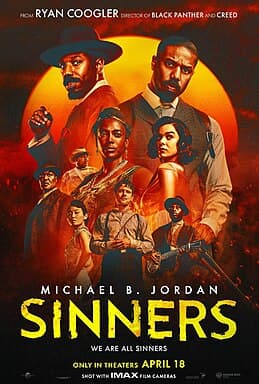
Poster / promotional material via Wikipedia, Sinners (2025 film). Used under fair use for criticism and review.
There is a type of film that the American studios used to make regularly, and that they mostly stopped making about fifteen years ago. Call it the studio auteur movie. Mid-to-large budget. Driven by a single filmmaker with a specific vision. Marketed as an event but structurally a character piece. Not part of a franchise. Not a sequel. Not a remake of anything in particular. The kind of film that used to come out in a given summer and be the cultural story of that summer, Jaws, Apocalypse Now, The Blues Brothers, Do the Right Thing, Heat, The Sixth Sense, There Will Be Blood, Inception. The list has gotten shorter with every passing decade.
Ryan Coogler’s Sinners, which opened in April 2025 on a reported $90 million budget and grossed something like $360 million worldwide, is the purest entry in that tradition that an American studio has released in the 2020s. It is also, as a matter of record, a genre horror film about vampires attacking a Black juke joint in 1932 Mississippi. Those two facts are not unrelated.
The deal Coogler got
The first thing to notice, and it’s not really about the film but it explains the film, is the deal Coogler got from Warner Bros. Reports during pre-production said Coogler had negotiated first-dollar gross, final cut, and, most unusually, reversion of the rights back to him after twenty-five years. I don’t know if every detail of those reports is accurate. I do know that the film bears all the signatures of a filmmaker who was told, by a studio he had already made three billion-plus dollars for via the Black Panther films, that he could make whatever he wanted.
He made a vampire movie. A very specific, very demanding, period-accurate, musically-committed vampire movie, set on a single day and night in a single place, with almost no concession to the contemporary genre moves that a studio horror film is expected to make.
No demonic jump scares. No final-girl franchise setup. No “what if the vampires are actually a metaphor for X” speech ladled on top of what is already, obviously, a film about what happened to Black Americans in the Jim Crow South. The film trusts its audience to do the work. That trust is the thing studio filmmaking has most thoroughly lost, and Sinners is a kind of manifesto in defence of getting it back.
The juke joint
Structurally, Sinners is a siege movie. For most of the film’s second half, the action is confined to a single location: a freshly-opened juke joint run by the Smokestack twins (both played by Michael B. Jordan, doing the best work of his career), populated by a small ensemble of musicians, patrons, lovers, and hangers-on. Something arrives. Not all at once. Slowly, wrongly, and by the time the characters in the juke joint understand what is happening, it is too late.
Siege films live or die by whether the location itself can sustain two hours of pressure. Coogler and his production team have built a juke joint that could sustain a miniseries. The geography is immediately legible, kitchen, bar, stage, dance floor, porch, back door, and is used, across the film’s long central set piece, with the kind of spatial discipline that you associate with Carpenter’s Assault on Precinct 13 or Romero’s Dawn of the Dead. You always know where the threat is. You always know what exit is closed. You always know which wall the music is coming from.
The music is not incidental. The music is the film’s substance. A long, legitimately transcendent set piece in the middle of the film, you will know it when you see it, collapses time and place. The musicians of the present and the ancestors and descendants of their tradition appear simultaneously in the juke joint. The camera moves through them. The editing does not cut. It is the best thing Coogler has directed, and one of the best single sequences in any American film of the last ten years. It is also, I realise as I write this, the thing that first reviewers struggled to describe without sounding like they were overreaching. I understand the restraint. I refuse to match it. The sequence is transcendent.
Jordan as the twins
Michael B. Jordan plays identical twins, Smoke and Stack, and the film does not flinch from the demand this places on the performance. The twins are not interchangeable. They do not have the “one is nice and one is mean” delineation that lesser double performances lean on. They are two versions of the same man who have been shaped by slightly different decades into slightly different instruments. The details are small and they are everywhere. Stack walks differently. Smoke eats differently. The way each one holds a bottle is specifically theirs.
What this does for the film, practically, is give it two centres of gravity. Horror films usually collapse onto a single protagonist as the threat tightens. Sinners has a bifurcated protagonist, and that bifurcation is doing thematic work. When the film asks, as it increasingly does, what a Black man in 1932 Mississippi has to do to survive, to protect his people, his property, his dignity, the answer it offers is that he has to be two people. One to take the hit. One to return it.
On why this mattered
You can read Sinners as a horror film, which it is. You can read it as a film about Black musical tradition, which it also is. You can read it as a character study of two brothers, which it likewise is. But the reading that I find most useful, eighteen months after first seeing it, is the industrial one.
Sinners is what happens when a studio lets a filmmaker with a particular voice do a particular thing with a substantial budget. The film is not crowd-tested. It does not look like any other studio horror film. Its opening half is patient. Its violence, when it arrives, is not the kind of violence that cuts well into a trailer. Its politics, such as they are, are embedded in the fabric of the film rather than spoken aloud in monologues. It trusts you to read it. That trust is worth fifty better-funded franchise entries.
The film’s performance at the box office, particularly its legs into its second and third weekends, which was the story of 2025’s April-May window, was the market returning an obvious verdict: audiences, given an ambitious genre film made with conviction, show up. They don’t need it to be a sequel. They don’t need it to be safe.
What comes next
I don’t know what the industrial aftershocks of Sinners will be. I can see two possibilities. One, and the one I’d prefer: studios take the film’s success as a mandate to greenlight more director-driven event movies on reasonable budgets. Two: studios take the film as a Coogler-specific anomaly and continue the franchise-default strategy that was already starting to show strain.
I am not, by disposition, an optimist about how studios learn lessons. But Sinners is still in the culture. People quote it. The juke-joint sequence is being taught in film schools already, at least informally. The film earned its place in the canon the hard way, by being better than the category it was marketed in.
That’s all a studio auteur movie is supposed to do. Coogler has reminded everyone what the deal looks like when it works.
Marcus believes good criticism is an argument. He is almost always angry about something, usually for good reason. Horror is his first language.
MORE BY MARCUS VELL →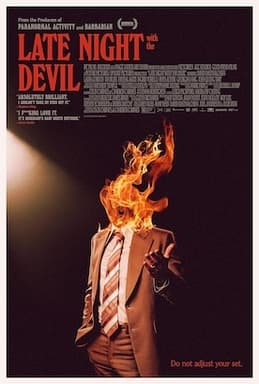
Late Night with the Devil: Found-Footage 1977
Colin and Cameron Cairnes's Australian indie horror, shot as a 1977 late-night TV broadcast gone wrong, is the rare genre exercise whose formal commitment pays off at every level.
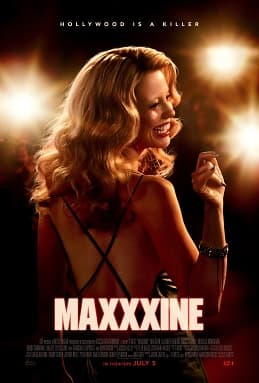
MaXXXine and the Trilogy Problem
Ti West closed his X/Pearl/MaXXXine trilogy in July 2024 with a film that tries to be several kinds of movie at once. A year later, only some of them worked.

The Substance and the Body Horror Renaissance
Eighteen months after Coralie Fargeat's prosthetic-heavy fable drew both Oscar nominations and walkouts, the strange alchemy of The Substance has only clarified. The film is less about Hollywood than it looks, and more about what we're allowed to say with bodies on screen.