Late Night with the Devil: Found-Footage 1977
Colin and Cameron Cairnes's Australian indie horror, shot as a 1977 late-night TV broadcast gone wrong, is the rare genre exercise whose formal commitment pays off at every level.
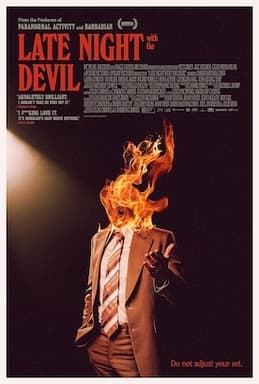
Poster / promotional material via Wikipedia, Late Night with the Devil. Used under fair use for the purpose of criticism and review.
Late Night with the Devil, the Australian indie horror film written and directed by Colin and Cameron Cairnes, was released in March 2024 in the US by IFC Films and Shudder. It was produced on a reported $2 million budget. It grossed approximately $12 million worldwide. It was, for the specific audiences who found it, one of the year’s more committed genre exercises, and for the broader horror-attentive critical community, one of the year’s quiet pleasures.
What the film is
The conceit, established in the opening minutes through a specific voice-over narration, is that the film is a complete-broadcast recording of the Halloween 1977 episode of a fictional late-night talk show called Night Owls with Jack Delroy. Jack Delroy (David Dastmalchian) is a second-tier American television personality whose ratings have been declining for years. He has booked, for the Halloween broadcast, a specific line-up of guests designed to generate ratings: a supposed psychic (Fayssal Bazzi), a sceptic debunker (Ian Bliss), a parapsychologist (Laura Gordon), and the parapsychologist’s young patient (Ingrid Torelli), a survivor of a demonic-cult incident who is, per the film’s logic, specifically possessed.
The film is structured as the full ninety-minute broadcast, plus specific off-air footage captured between commercial breaks that the show’s camera crew was not supposed to film. The off-air sequences are presented in black-and-white, with specific visual degradation suggesting they were recovered from abandoned archive reels.
Why the formal commitment works
The Cairnes brothers’ specific achievement is that they commit completely to the 1977 talk-show register. The set design reproduces a period-specific talk show environment with specific care: wood-panelled backdrop, specific orange-and-brown colour scheme, specific period graphics, specific period-appropriate camera grammar (limited cuts during interviews, specific zoom lenses, specific audio mixing).
The performances, particularly Dastmalchian’s Jack Delroy, are calibrated to the specific register of a 1977 talk show host. Delroy is not modern. He does not speak, gesture, or react in modern television registers. Dastmalchian has clearly studied the specific vocal and physical mannerisms of Merv Griffin-era and Tom Snyder-era hosts, and his performance is accurate enough that the fiction remains unbroken for the full running time.
The Dastmalchian performance
David Dastmalchian, who has spent most of his career as a specifically reliable character actor in larger productions (The Dark Knight, Ant-Man, Prisoners, The Suicide Squad), gets his first leading feature role here, and he delivers the film. Delroy is a specific kind of American television personality: ambitious, compromised, specifically lonely in ways that the broadcast format does not permit him to express.
Dastmalchian plays Delroy across the film’s ninety minutes as a man whose specific professional commitments are consuming him. The specific ambition that got him the show is the specific ambition that will, across the course of the Halloween broadcast, destroy him. The performance is sustained across long takes with minimal cutaways, which is specifically harder than most contemporary leading roles require.
The horror escalation
The film’s horror beats escalate across the broadcast. The early segments are specifically televisual horror: psychic tricks, séance performances, paranormal demonstrations calibrated for 1977 television audiences. The mid-broadcast segments introduce specific actual supernatural phenomena that the broadcast is not prepared to handle: the young patient begins to exhibit specific physical symptoms that exceed the parapsychologist’s ability to explain, and the broadcast’s production team is forced to decide in real time whether to cut to commercial or let the footage continue.
The escalation culminates in a final-act sequence I will not spoil. The sequence is specifically well-staged and specifically disturbing. The film earns the escalation by having paid specific attention to its 1977 broadcast register for the preceding seventy minutes.
The AI controversy
A specific controversy accompanied the film’s release: the Cairnes brothers used AI-generated imagery for three specific “commercial break” interstitial images that appear in the middle of the broadcast. The images are on screen for approximately five seconds total across the film. The specific use of AI in the images generated a significant discourse about the film’s credibility as an independent production.
I found the controversy disproportionate at the time, and I find it more disproportionate in retrospect. The AI-generated interstitials are specifically unimportant to the film’s achievement. The film’s specific formal commitment to 1977 television aesthetics is overwhelmingly the work of the Cairnes brothers’ practical-effects production. The AI interstitials are, at most, a minor production shortcut on specific elements that audiences barely register.
Where it sits
Late Night with the Devil is, in its specific success, an argument for what indie horror can still accomplish at the $2 million budget tier when filmmakers commit fully to a specific formal premise. The Cairnes brothers’ next project will arrive with significantly larger resources. I hope they retain the specific formal discipline this film demonstrates.
Watch it at night, with a specific willingness to surrender to the 1977 register. The film rewards patience. The final act is worth the wait.
Marcus believes good criticism is an argument. He is almost always angry about something, usually for good reason. Horror is his first language.
MORE BY MARCUS VELL →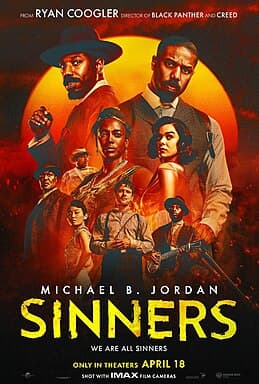
Sinners: Coogler's Vampire Western and the Return of the Studio Auteur Movie
Ten months on, Ryan Coogler's 1930s Mississippi vampire film doesn't just still hold up, it looks like the clearest sign in years that the studio auteur movie is not dead. A field report from inside the juke joint.
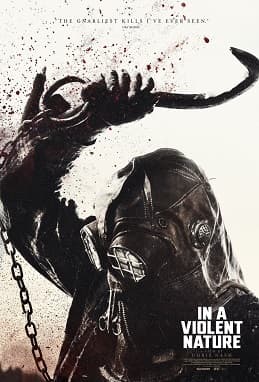
In a Violent Nature: The Slasher from the Wrong Side
Chris Nash's debut takes the slasher apart from the killer's point of view, and the radical formal choice is also the reason the film divides its audience. I want to argue for it.
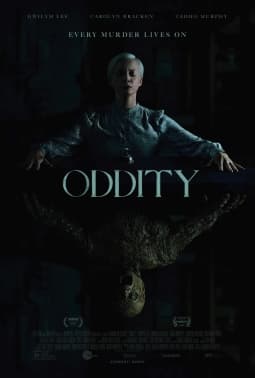
Oddity: McCarthy's Puppet as Grief
Damian McCarthy's second feature is the best pure-horror indie of 2024, and the clearest argument going for what micro-budget Irish genre cinema can do when it commits to a single effect and doesn't blink.