MaXXXine and the Trilogy Problem
Ti West closed his X/Pearl/MaXXXine trilogy in July 2024 with a film that tries to be several kinds of movie at once. A year later, only some of them worked.

Poster / promotional material via Wikipedia, MaXXXine. Used under fair use for criticism and review.
Ti West’s X/Pearl/MaXXXine trilogy was, from the jump, one of the more interesting exercises in American genre filmmaking of the decade. Three films, shot in quick succession, all centered on Mia Goth, each operating in a different sub-mode of horror. X (2022) was the pastiche slasher, a loving reconstruction of the Chainsaw-era rural horror film. Pearl (2022) was the prequel-as-character-study, a lurid Technicolor melodrama about the young version of X’s antagonist. MaXXXine (July 2024) was supposed to close the arc by following Goth’s Maxine Minx, the survivor of X, into 1980s Hollywood.
The problem with MaXXXine, which I am saying a year on with less regret than I felt at the time, is that it wants to be four different films simultaneously, and the one that works is the one West seems least interested in.
The four films inside the film
MaXXXine is, in no particular order:
- A Hollywood satire about the 1980s horror-film industry.
- A giallo homage, complete with black-gloved killer and neon-drenched set pieces.
- A revenge thriller about Maxine’s past catching up with her.
- A character study of a sex worker turned actress trying to survive the transition.
Each of these is a legitimate film. At least two are films I would pay to see. The issue is that MaXXXine tries to give us all four in 104 minutes, and the connective tissue between them is insufficient. The film keeps switching registers when the register it just left was starting to work.
What works: Mia Goth
Let me put this plainly. Mia Goth, across this trilogy, has turned in one of the most impressive three-film runs of any actor in this decade. In X she played a sex worker trying to make a porn film; in Pearl she played a would-be murderer descending into delusion in a 1918 farmhouse; in MaXXXine she plays the adult version of the X survivor, now a professional actress in 1985 Los Angeles, with a past she cannot escape.
The specific thing Goth has been doing across all three films is making every one of her characters’ violence legible as a response to a specific kind of patriarchal constraint. Her performances are not feminist lectures. They are working demonstrations, frame by frame, of what happens to women inside systems designed to extract from them. It is, in its own genre-film way, some of the smartest acting of the decade.
In MaXXXine, specifically, she is playing a character who has learned, correctly, that she will never be safe, and the performance is about the ongoing labour of maintaining the armor required to live anyway. The scenes of her auditioning for the “serious” horror director, played by Elizabeth Debicki, are masterclass acting, small, interior, precisely calibrated.
What doesn’t work: the plot
The film’s main narrative engine, about a serial killer targeting Maxine’s friends and a detective investigating the case, is where the film most obviously falters. The killer’s identity, when revealed, is structurally underwhelming, and the film’s final ten minutes resolve the threat with a plot mechanic that feels borrowed from a worse film.
I do not think this is a problem of West’s writing, exactly. I think it is a problem of the trilogy’s shape. MaXXXine was always going to have to close the arc, and closing the arc means returning to the threat pattern of X, which was about rural violence against the porn crew. Relocating that threat to 1980s Los Angeles requires either a new kind of villain or a forced return to the old one. West chose the forced return, and the film pays the cost.
The 1980s is the character
What does work, almost throughout, is the film’s staging of 1980s Los Angeles as a living environment. The production design, by Tom Hammock, is extraordinary. The neon-noir palette, the hair, the specific texture of the period’s porn industry, the moment-to-moment feel of a city on the cusp of its AIDS-era self-reckoning: all of this is precisely observed. The film has a sense of place that most genre films at this budget never develop.
The scenes inside the “Bates Motel” set recreation, where Maxine is filming the low-rent slasher the film positions as her big break, are the film’s best sustained sequence. They function as both satire and love letter to the specific 1980s horror ecosystem that made the Pearl/Maxine triology possible in the first place. West is, visibly, having fun.
The Kevin Bacon problem
Kevin Bacon’s private investigator John Labat is the film’s single miscast performance, and I say this with no pleasure. Bacon plays Labat in a broad Southern-accented register that keeps tipping into caricature. The character exists to be menacing. Bacon plays him as if the film is occasionally a comedy, which it is not quite committed to being. The tonal mismatch sits in the middle of the film and warps the scenes around it.
Debicki, by contrast, who plays the serious-director-auditioning-Maxine role, is calibrated perfectly. Her scenes sing. The film would have been better if Debicki had been given more screen time and Bacon less.
What the trilogy leaves
The X/Pearl/MaXXXine trilogy is, in aggregate, a significant achievement. It gave us three hours of Mia Goth doing some of the best American genre acting of the decade. It demonstrated that an independent distributor, A24 in this case, can sustain an interconnected horror franchise at modest budgets. It produced, in Pearl, one of the best character-study horror films of the 2020s.
MaXXXine, as closing chapter, is the least of the three. That is a legitimate criticism. It is also not a disqualifying one. Watch the trilogy in order, across three nights. The Goth performance is the argument, and it rewards the full journey.
Marcus believes good criticism is an argument. He is almost always angry about something, usually for good reason. Horror is his first language.
MORE BY MARCUS VELL →
Sinners: Coogler's Vampire Western and the Return of the Studio Auteur Movie
Ten months on, Ryan Coogler's 1930s Mississippi vampire film doesn't just still hold up, it looks like the clearest sign in years that the studio auteur movie is not dead. A field report from inside the juke joint.
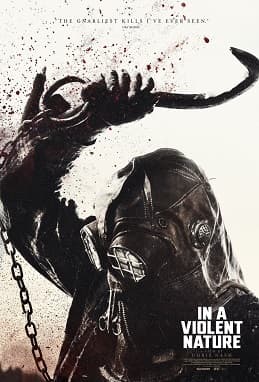
In a Violent Nature: The Slasher from the Wrong Side
Chris Nash's debut takes the slasher apart from the killer's point of view, and the radical formal choice is also the reason the film divides its audience. I want to argue for it.
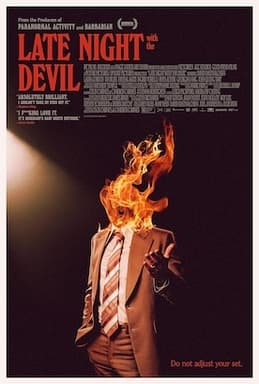
Late Night with the Devil: Found-Footage 1977
Colin and Cameron Cairnes's Australian indie horror, shot as a 1977 late-night TV broadcast gone wrong, is the rare genre exercise whose formal commitment pays off at every level.