One of Them Days Gets a Working Friendship Right
Lawrence Lamont's debut landed in January 2025 with SZA and Keke Palmer centred inside a rent-day comedy that remembered how buddy pictures actually move.
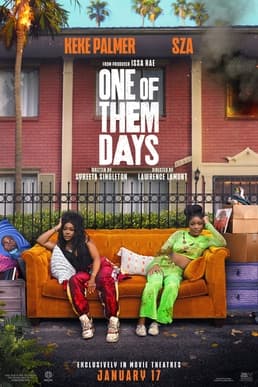
Poster / promotional material via Wikipedia, One of Them Days. Used under fair use for criticism and review.
I went to One of Them Days on a Wednesday afternoon at a near-empty Dendy session in early February, and I walked out feeling like I had seen the first picture of 2025 that knew what it was doing. The film opened on 17 January in the US under Sony Pictures, directed by Lawrence Lamont from a screenplay by Syreeta Singleton, with SZA and Keke Palmer as the leads. It earned approximately $11.6 million in its opening weekend, finished its theatrical run above $50 million domestically, and cost a reported $14 million to make. These are the specific numbers that have kept it in conversation longer than its press coverage initially suggested it would be.
I want to talk about the film rather than the numbers. The film deserves the kind of attention the box-office reporting does not quite get around to, because it is doing something hard inside a genre that has been misfiring for years.
What the film is
The plot is straightforward. Dreux (Palmer) and Alyssa (SZA) are roommates in Los Angeles, rent is due, Alyssa’s boyfriend has taken the money, and the two of them have to spend a day hustling enough cash together to avoid eviction. The day-in-the-life comedy structure is a specific tradition (Friday, Go, Harold and Kumar, the first Half Baked), and Lamont and Singleton know the tradition they are working inside. The film is not trying to reinvent the form. It is trying to execute it, specifically and cleanly, and that is what most films inside this shelf fail to do.
What separates One of Them Days from the shelf immediately below it is the specificity. The Los Angeles the film shoots is specific (neighbourhoods, laundromats, corner stores, a very particular rent-day energy). The characters’ specific money problems are specific (Alyssa’s boyfriend is a specific kind of working hustler, Dreux’s job prospects are a specific kind of gig-economy slog). The specific comic beats are written to land inside that world rather than on top of it. I think this is Singleton’s script doing most of the work. I also think Lamont has kept his cast inside the specificity rather than letting them pull the comedy toward performance.
SZA and Keke Palmer
I came to the film specifically because I wanted to see what SZA would do with an actual lead role, and she surprised me. She is not a trained film actor, and the film’s opening scenes show her working through the specific register the form asks for. But by the film’s second act she has settled into Alyssa specifically, and the performance registers as a real character rather than a musician-trying-acting stunt. Alyssa is daffy, warm, slow-reading her boyfriend in ways the film turns into specific comedy, and SZA plays her without condescending to her. The specific generosity in the performance is the quality the film most depends on.
Palmer is doing different work. Dreux is the engine of the film’s plot, the one who is solving problems while Alyssa complicates them, and Palmer has to carry the picture’s energy without dominating it. She does this by specifically under-playing the comedy when it would be easy to over-play. Dreux’s frustrations land because Palmer keeps her recognisable rather than pushing her into exasperation-caricature. The two actors have the specific screen chemistry buddy comedy depends on and cannot be manufactured. You either have it or you do not. They have it.
The comic register
The specific comedy the film runs is conversational, situational, and physically grounded. The jokes are not constructed as set-pieces. The jokes are constructed as the specific exchanges that happen between two specific people across a specific day. Lamont lets scenes breathe longer than a lot of current comedy would. A sequence midway through the film, where Dreux and Alyssa visit an ex to collect a favour, runs without a cut to safety through what would normally be two or three comedic beats, and the extended duration is what makes the scene work. The joke compounds. The discomfort compounds. The resolution is funnier for the compounding.
The film’s debts are specific. It is working inside the Friday register most visibly (Ice Cube and Chris Tucker’s original, not the sequels) and there is a specific affection for the way Friday treated its Inglewood setting as a coherent and loved world rather than as a comic backdrop. Lamont is not pastiching Friday. He is working inside the tradition the film opened, and the working is respectful rather than imitative.
The supporting bench
The supporting cast is doing specific work that lifts the film out of its two-hander structure. Janelle James appears as a specific kind of wealthy neighbourhood figure, and the James register (sharp, specific, funny on a word-level basis) sits well inside the film’s rhythm. Katt Williams has a brief sequence as an evangelical street preacher, and Williams does what Williams does, which is to take a three-minute scene and do something that is still being re-played on clip compilations six weeks after the film’s opening. Maude Apatow appears in a specific cameo that threads the film’s racial and class observations through a specific comedic register. Joshua Neal and Aziza Scott fill out the boyfriend and ex roles with care.
None of these supporting parts feel wasted. That is, in comedy at this scale, specifically unusual. Most comedies burn their supporting benches on single-beat cameos that do not earn the talent booked. Lamont writes and shoots the supporting cast as part of the film’s specific world rather than as scene-adjacent decoration.
What the film gets right about rent
I keep returning to a specific thing the film does that I want to mark. The rent pressure at the centre of the plot is real inside the film. The film does not treat the rent-day urgency as a narrative-convenience device. It treats the urgency as the specific economic reality the characters live inside. The jokes happen on top of the urgency rather than instead of it. The laughs are, specifically, the kind of laughs you have about a situation you have actually been in, not the kind of laughs you have about a situation the movie is asking you to pretend is real.
This register is very hard to find in current studio comedy, which has either collapsed into IP-adjacent genre mixing or settled into a specifically placeless high-concept register where the jokes could happen anywhere. One of Them Days is not placeless. It is set in a place, and the place shapes the comedy in specific ways. The place is what lets the film’s ending (which I will not spoil) work.
The box office, and what it signals
I said at the top that I wanted to talk about the film rather than the numbers. I want to briefly return to the numbers now, because they matter for a specific reason. A $14 million comedy opening to $11.6 million and closing above $50 million is the specific profile the industry has been saying does not exist any more. The mid-budget theatrical comedy, which held the centre of the American studio release calendar for roughly three decades, has been in structural decline since at least 2017. One of Them Days is the first picture in approximately two years to suggest the form might still have life inside specific conditions.
The specific conditions are: a known cast with a specific audience (SZA’s music following, Palmer’s career-long goodwill), a script built for a specific demographic with precision rather than breadth, and a director willing to keep the scale inside the material. Sony released the film with a theatrical-first strategy rather than burying it inside a streaming-service content pipeline. The release worked. Whether any other studio takes the specific lesson is the open question.
What stays
I have been thinking about the film for six weeks. This is, for a buddy comedy, a long time. The thing I keep returning to is the specific generosity the film has for its two leads. The film likes Dreux and Alyssa. It treats them as specific and valuable people whose friendship is the thing the film wants to honour. The rent-day plot is the excuse. The friendship is the subject.
Buddy comedies at this scale have been failing for years because most of them do not, in fact, like their buddies. The actors perform the affection the scripts cannot construct, and the gap shows. One of Them Days does not have the gap. Palmer and SZA are playing a friendship the script knows specifically how to write, and the whole film is built on the specific shape of that affection.
Go see it if it is still in cinemas somewhere near you. The film is the kind of comedy the medium does not make often enough, and the fact that it has worked commercially is the best news the year has produced so far.
Jules writes the kind of pieces that come from wandering somewhere and overhearing something. On Frame Junkie's masthead since the beginning.
MORE BY JULES OKONKWO →
Dream Scenario: Borgli's Cage Vehicle as Media Critique
Kristoffer Borgli's A24 feature used Nicolas Cage as the vehicle for a media satire that landed in late 2023 and has aged, through 2024 and into 2025, into a specifically sharper object than the reviews initially registered.

Anora's Best Picture Win, Defended
A year after Sean Baker's fourth feature took five Oscars including Best Picture, the predictable backlash has arrived on schedule. Here's why the Academy, improbably, got it right.
Problemista: Julio Torres's Visa Fable
Julio Torres's 2024 debut feature is a specifically strange American indie about a Salvadoran immigrant, a specifically difficult art-world widow, and a specifically failing visa petition. It is also, quietly, great.