Oddity: McCarthy's Puppet as Grief
Damian McCarthy's second feature is the best pure-horror indie of 2024, and the clearest argument going for what micro-budget Irish genre cinema can do when it commits to a single effect and doesn't blink.
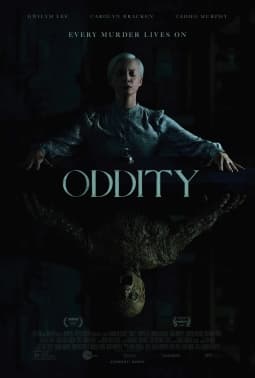
Poster / promotional material via Wikipedia, Oddity (film). Used under fair use for criticism and review.
Oddity is the best horror film of 2024. I am going to argue that first, before I describe what happens in it, because the film’s actual narrative is the kind of thing that reads thin in summary and lands heavy on screen, and I want the order of priorities to be clear.
Damian McCarthy’s second feature, following Caveat in 2020, was released by IFC Films and Shudder in July 2024 in the US. It grossed around $1.8 million theatrically, has since done strong numbers on the Shudder streaming tier, and has collected a specific cult audience in the nine months since. McCarthy is, as of this writing, Ireland’s most interesting working horror director, and the film is a specific argument for what a budget in the low-single-digit millions can still accomplish in a genre the studios have largely abandoned.
What the film is
Dani (Carolyn Bracken) is brutally murdered in the opening scene, in a remote renovated farmhouse in rural Ireland. She is killed by an intruder who may or may not have been connected to a specific patient from the psychiatric hospital where her husband Ted (Gwilym Lee) works. A year passes. Ted is living in the farmhouse with a new partner, Yana (Caroline Menton), and is preparing to sell the property.
Dani’s twin sister Darcy (also Carolyn Bracken), a blind clairvoyant who runs a specific curiosity shop dealing in cursed objects, arrives at the farmhouse uninvited. She has brought with her a life-size wooden mannequin of a man. She asks Ted’s permission to stay the night with the mannequin. Ted, who is specifically keen to get rid of her, reluctantly agrees.
The mannequin sits in the living room for most of the film.
Why the mannequin works
The mannequin, which McCarthy and his production designers built as a single practical object, is the film’s central effect. It is roughly six feet tall, jointed at the major limbs, carved with a specific approximate male face. It does not move. It does not speak. It sits in the chair McCarthy positions it in, and the camera returns to it at measured intervals.
The formal discipline of the film is the refusal to cheat the mannequin. McCarthy does not use digital effects to animate it. He does not cut to fake POV shots. He does not play tricks with focus or movement. The mannequin is a static object that the film trusts to accumulate dread across its running time. The dread accumulates because the film refuses to pay it off in the cheap ways lesser horror films would.
This is specifically rare in contemporary horror. The current dominant mode is the jump-scare cascade, in which the film’s effects are bursts of sound and movement positioned to trigger startle responses. McCarthy is operating in the older register: dread as a continuous condition that the film maintains through long takes, silence, and the refusal of movement. The mannequin is the film’s embodiment of that register. It is menacing because it does nothing.
The Bracken double performance
Carolyn Bracken plays both twin sisters. Dani in flashback; Darcy across the film’s present-day. The two performances are specifically distinguished. Dani is brighter, more conventionally warm, more physically at ease. Darcy is the harder assignment: she is blind, she is socially difficult, she is specifically unafraid of the atmosphere the mannequin generates because she is operating on different sensory evidence than the other characters.
Bracken plays Darcy with a specific physical stillness that is, in itself, menacing. She moves deliberately. She holds specific poses. The blindness is handled without either sentimentality or showiness; Darcy is not vulnerable, and she is not supernatural. She is specifically perceptive in ways the hearing-and-seeing characters around her are not.
The double casting is a device McCarthy uses cleanly. The flashbacks to Dani are shot to establish who she was; the present-day scenes with Darcy never let the viewer forget who she was related to. The performances do the necessary distinguishing work without leaning on costume or makeup.
The Ted performance
Gwilym Lee, as Ted, plays the film’s pivot character. Ted is Darcy’s antagonist, the husband who may or may not have been involved in Dani’s death, the specifically polished man whose polish the film is interested in pressuring. Lee plays Ted as specifically charming in ways that do not yet look sinister, until the film’s middle section begins to redistribute what the viewer understands about his role in the opening murder.
The redistribution is the film’s dramatic engine. The horror is not, in fact, the mannequin. The horror is the mannequin’s specific presence as witness to whatever Ted may or may not have done, and the specific question of what a wooden object can know. McCarthy is working in a tradition (M.R. James, the late nineteenth-century ghost story) in which objects can be specifically aware of the humans around them without being conventionally animate.
The Irish landscape
Colm Hogan shot the film. The farmhouse setting is a real renovated building in rural Ireland; the surrounding landscape is wet, green, specifically unlit at night. McCarthy uses the landscape sparingly; most of the film takes place inside the farmhouse, in rooms that are specifically small and specifically lit. The interior cinematography is the film’s primary visual achievement. McCarthy and Hogan treat the farmhouse as a specific geography the viewer learns across the running time. By the final act, the viewer knows the specific relation of the living room to the hallway to the bedroom to the glass-walled conservatory extension, and the knowledge is load-bearing for the final act’s payoffs.
The ending
I will not describe the final act in any detail. I will say that the payoffs McCarthy has been constructing across the running time land, and land with specific physical precision. The mannequin does, eventually, become involved in the events of the film. The manner of the involvement is the film’s specific achievement, and I will not spoil the staging. The payoff has been set up with the film’s characteristic restraint, and it arrives without the film’s breaking its established formal rules.
Where it sits
Oddity is the film that makes me most optimistic about Irish genre cinema’s near future. McCarthy is working at a budget tier that allows a specific autonomy; he is writing, directing, and controlling his projects without the studio-note system American genre directors of his generation have to navigate. The films he is making are specifically his films. Caveat, his first, is a specific object I have not re-watched and probably will not; it is a minor work. Oddity is a major one.
The broader industrial observation is that Shudder, as a streaming platform, is currently the strongest patron of this kind of micro-budget horror. McCarthy, along with directors like Rose Glass (Saint Maud, before her studio move), Prano Bailey-Bond (Censor), and Chris Nash (In a Violent Nature), is part of a cohort whose work the platform has been funding and distributing. It is a specifically productive moment for the form.
Watch Oddity alone, late at night, with the lights low and the phone away. The mannequin does its work.
Marcus believes good criticism is an argument. He is almost always angry about something, usually for good reason. Horror is his first language.
MORE BY MARCUS VELL →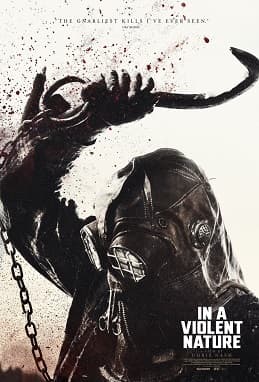
In a Violent Nature: The Slasher from the Wrong Side
Chris Nash's debut takes the slasher apart from the killer's point of view, and the radical formal choice is also the reason the film divides its audience. I want to argue for it.
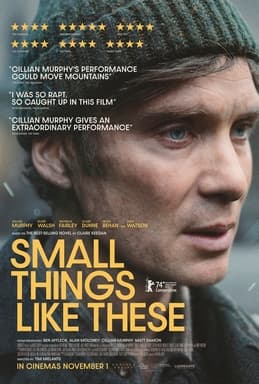
Small Things Like These: Murphy's Quiet Indictment
Tim Mielants's adaptation of the Claire Keegan novella was reviewed as a modest Cillian Murphy vehicle. The careful reading is that the film's restraint is the indictment, and the restraint is harder to film than the indictment would have been.
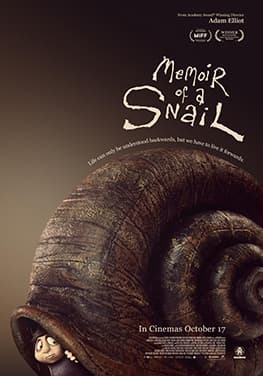
Memoir of a Snail: Elliot's Claymation Grief
Adam Elliot's second stop-motion feature took eight years to make and collected festival prizes from Annecy to Annapurna. The Australian argument is that his particular strain of misery-claymation is one of the country's more unusual exports.