Nightbitch and the Limits of Literal Metaphor
Marielle Heller's adaptation of Rachel Yoder's novel arrived through Searchlight in December, and the thing it cannot decide is how much of the dog to show. The indecision is the film.

Poster / promotional material via Wikipedia, Nightbitch (film). Used under fair use for criticism and review.
Marielle Heller’s Nightbitch, adapted from Rachel Yoder’s 2021 novel of the same name, had a limited theatrical release from Searchlight on 6 December 2024 and arrived on Hulu shortly after. The film stars Amy Adams as a stay-at-home mother, credited only as Mother, who begins to suspect she is turning into a dog. The novel is a short, fiercely interior piece of domestic horror. The film keeps the premise and softens the argument, and the softening is what most of the critical conversation has circled since release.
A season out, and with the streaming numbers now doing whatever they do behind the Disney wall, the film sits in a specific and interesting position. It is Heller’s first feature since Can You Ever Forgive Me? in 2018 and A Beautiful Day in the Neighborhood in 2019. It is Adams’s most committed lead performance in at least five years. And it is the clearest recent example of a prestige American studio drawing up an adaptation that treats its source material as a pitch rather than a problem.
The source and the shift
Yoder’s novel is written almost entirely from inside Mother’s head. The prose is clipped, funny, rage-flecked. The dog transformation is ambiguous on the page; the reader is never given the certainty of whether Mother is actually growing fangs and coarse black hair along her spine or whether she is having a specific kind of psychic break that the book’s narration is collaborating with. The ambiguity is the book’s structural commitment. You cannot resolve it and still have the book.
Heller’s adaptation resolves it. In the film, the transformation is filmed, shown, eventually accepted by the narrative itself. Mother runs through the suburbs on four legs. She buries a rabbit in the garden. Other neighbourhood mothers at the library reveal that they, too, have passed through the canine phase. The literalisation is a defensible choice for a commercial feature, but it forces the material into a register it does not fit. What was interior and uncertain on the page becomes, on screen, a mild magical-realist comedy with body-horror flourishes and a redemption arc.
The redemption arc is the problem. Yoder’s novel ends in an ambiguous holding pattern. The film ends with a reconciliation, a return to speech, a career resumption. It is the ending a studio notes process would produce, and it flattens the argument the film’s first hour has been building.
Adams’s performance, despite the script
Adams plays Mother as someone who has been holding the specific weight of unpaid domestic labour for long enough that her body has begun registering the accounting. The performance is physical in a way Adams’s recent work has not been. Her movement changes across the film, first stiffened, then looser, then genuinely canine in ways the film treats as comic but Adams plays seriously. Her face in the mirror scenes, where Mother examines herself and the camera stays on Adams for uncomfortably long takes, does the work the script does not.
Scoot McNairy, as Husband, is given less to work with. The novel’s husband is a structural absence, a man who travels for work and fails to see the domestic crisis unfolding at home. The film gives McNairy more screen time than the novel gave the character and less to do. His third-act apology scene is the script at its most conventional, and McNairy plays it as written, which is the only choice available to him.
The supporting cast, particularly Zoe Kazan, Mary Holland, and Archana Rajan as the other mothers at the library, do specific work inside the tonal narrowness the film permits them. Kazan in particular finds a register, slightly too-bright motherhood with a tooth underneath, that the film would have benefited from borrowing more widely.
Heller’s direction
Heller has always been a director of interior rooms. The Diary of a Teenage Girl, Can You Ever Forgive Me?, A Beautiful Day in the Neighborhood, all three are films about characters whose inner lives are larger than the spaces they are permitted to occupy. Nightbitch is nominally the same project. The Mother’s suburban house is the film’s dominant location; the kitchen, the nursery, the back garden, the specific small geography of unpaid care.
What is missing is the directorial confidence of those earlier films to trust a register and hold it. The film keeps flinching. A scene will start in the uncomfortable specific mode the material needs, Mother staring at the mess on the kitchen floor at midnight with a look that reads as homicidal, and then the scene will be undercut with a voiceover joke, or a needle drop, or a cutaway to the toddler being cute. The tonal flinch is persistent across the runtime, and it is the single clearest indicator that the film was being cut for a broader audience than its material could tolerate.
The DP is Brandon Trost, who shot Heller’s previous two features. His visual work here is competent without being distinctive. The suburban palette is intentionally muted. The night sequences, which should be where the film’s horror register lives, are lit more decorously than the material asks for. Searchlight clearly did not want an R-rated body-horror film. They wanted a December dramedy with awards plausibility. The compromise is on screen.
The novel’s argument, displaced
What Yoder’s novel is about, at the level of argument, is the specific rage of the middle-class American mother whose career has been absorbed by an infant she loves and whose partner has not meaningfully reorganised his life around the same domestic project. The dog metaphor is a way of making that rage legible without reducing it to complaint. The novel works because the metaphor is never resolved into either symbol or fact. It stays in the uncomfortable middle.
The film, by resolving the metaphor into fact, also resolves the rage into plot. Mother becomes a dog. The other mothers are also dogs. Together they hold a nocturnal solidarity. Husband eventually understands and supports Mother’s reclamation of her art career. The rage is processed. The film has a satisfying ending.
The problem is that the rage, in the material, is not a problem to be processed. It is a condition being reported. The novel knows this. The film does not, or knows it and decided the viewer would not accept it.
The awards context, for what it is worth
Adams was nominated for a Golden Globe (Comedy or Musical, Lead Actress) and did not win. The film was not an Oscar presence. Searchlight’s December release strategy, which worked for Poor Things the previous year, did not convert here. The reviews were mixed at release, trending mildly negative, with the sharpest criticism centred on the adaptation choices I have been describing. The general viewer reception, visible in the Letterboxd and audience-score aggregates, was warmer. The film plays to people who have not read the novel. It frustrates people who have.
What the film leaves
Nightbitch is not a bad film. It is a compromised one, and its compromises are specific and legible. Heller has made better work before and will make better work again. Adams’s performance is the thing to hold on to. The decision to literalise the metaphor is the thing to keep arguing about.
The wider lesson, insofar as one exists, is about what happens when a small, angry, interior book is bought by a studio for adaptation. The studio process is not designed for ambiguity. It is designed for resolution. The book’s refusal to resolve is the book’s argument. The film’s resolution is the film’s concession. Both are comprehensible. The concession is the more expensive of the two.
Watch it once, read the novel, and note the difference. The difference is where the interesting argument lives.
Lena writes long-form essays on the films that will still be talked about in a decade. Previously at a defunct monthly whose name we do not speak.
MORE BY LENA ASHWORTH →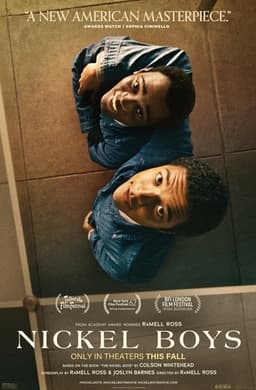
Nickel Boys: Ross's First-Person Adaptation
RaMell Ross adapted Colson Whitehead's Pulitzer-winning novel through a first-person camera almost continuously across two hours. The argument is that the formal gamble is the adaptation, and the adaptation is, so far, the film of the awards year.
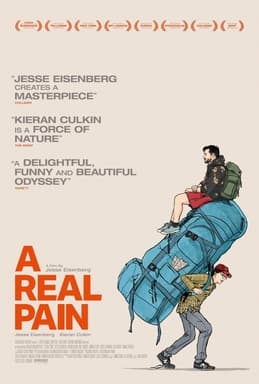
A Real Pain: Jesse Eisenberg's Two-Handed Script
Jesse Eisenberg's second film as director is a tightly written cousins-on-a-trip movie that uses its ninety minutes to say something particular about inheritance, grief, and the specific tolerances of family.
A Real Pain: Eisenberg's Cousins Movie
Jesse Eisenberg's second feature as director-writer is a specifically small, specifically patient Polish heritage-tour film, and the film it most resembles is a Broadway play that someone has somehow filmed correctly.