My Old Ass: Megan Park's Summer Movie with Actual Time
I took my younger sister to see Megan Park's second feature thinking it would be a throwaway, and we walked out crying. The retrospective case is that it is the sharpest coming-of-age indie of the year, and I'll fight about it.
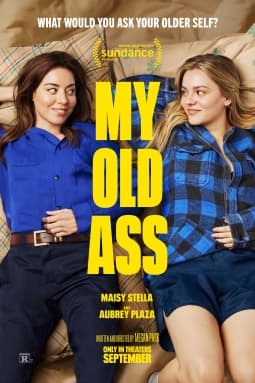
Poster / promotional material via Wikipedia, My Old Ass. Used under fair use for criticism and review.
I went into My Old Ass expecting a high-concept coming-of-age premise played out across ninety minutes of streaming-ready warmth. Elliott, eighteen, takes mushrooms with her two best friends the summer before leaving for university and hallucinates a conversation with her thirty-nine-year-old self, played by Aubrey Plaza. The older Elliott gives her younger self some specific advice. The specific advice turns out to matter.
I went in expecting that. What I got was one of the best-written coming-of-age indies of the last five years.
What the film actually is
Megan Park, writer-director, gives Elliott (Maisy Stella) a specific material life before the film introduces its high concept. Elliott works the summer on her family’s cranberry farm in Muskoka, Ontario. She has two best friends, Ruthie (Maddie Ziegler) and Ro (Kerrice Brooks). She has a younger brother she is about to leave behind. She has a mother (Maria Dizzia) she is currently annoyed with. She has a specific set of queer romantic attachments, including a girl she has been seeing at the lake house across the water.
The film’s first twenty minutes establish all of this with specific economy. Stella is in almost every frame. The camera (Kristen Correll shooting Muskoka in a specifically golden summer light) establishes the place as a real geography rather than a picturesque backdrop. The sister characters have specific dimensions. The queer relationships are not the plot engine and are not held up for display; they are simply how Elliott’s summer life is shaped.
Then the mushrooms happen, and older Elliott shows up, and the film starts playing its structural cards.
What Park is doing
The older-self conceit could have been played as the whole film. It is not. Older Elliott appears in three specific sequences, and then mostly operates via text messages on younger Elliott’s phone. The film refuses to let the high concept dominate the running time. What dominates the running time is the specific texture of Elliott’s last summer before leaving home, and the specific emotional geometry of a boy named Chad (Percy Hynes White) whom older Elliott has warned younger Elliott to stay away from.
The Chad thread is where the film gets properly interesting. The warning has been delivered with specific emphasis. Younger Elliott, who is queer, does not expect to meet a boy she will be in danger of being interested in. She then meets Chad, who is working on the farm for the summer, and the film’s central comic-and-emotional tension is whether she will or won’t follow her older self’s advice.
What makes the tension work is that Park has refused to make the answer obvious. Chad is specifically not a bad person. He is charming, kind, specifically attentive to Elliott in ways that are earning her attention in return. The warning from older Elliott is not about Chad’s moral failure. It is about something the film reveals gradually, across the running time, that has to do with what happens to Chad rather than with who Chad is. The ethical question (whether younger Elliott should stay away from someone she likes, on the basis of future knowledge about what will happen to him) is the actual subject of the film.
The Stella performance
Maisy Stella, previously known for the country-music-soap Nashville in which she and her sister played the teen daughters of Connie Britton’s character, is the specific reason the film works. Stella plays Elliott as a specifically fully-realised eighteen-year-old: self-aware, specifically horny, specifically aware of her own intelligence, specifically afraid of the transition the summer is building toward. The performance is not a star-making turn in the conventional sense. It is a performance of specific presence, and the presence carries the film.
Stella’s specific chemistry with the supporting cast is the film’s other engine. Her scenes with Maddie Ziegler and Kerrice Brooks have the texture of actual teenage friendship: the specific overlapping speech, the specific physical comfort, the specific weird private jokes. The friendship is not a backdrop. It is the film’s emotional scaffolding.
The Plaza appearances
Aubrey Plaza, as older Elliott, is specifically good in her limited screen time. The role could have been played at a specific detached-ironic register that would have undermined the film. Plaza plays it at a specific register of tired-but-still-loving that reads as someone looking back at a specifically painful summer with the exact mixture of affection and warning that the film requires. The performance is not showy. It is specifically emotionally accurate, and the accuracy is what makes the film’s premise land.
The specific comedic beat of younger Elliott having older Elliott saved in her phone under a specifically unprintable contact name is the film’s signature running joke. It is a joke that would not work without Plaza’s specific delivery when the phone calls connect.
The Chad thread
Percy Hynes White plays Chad with a specific earnestness that is the correct register for the film’s operation. Chad is not a rogue. He is not dangerous. He is a specifically decent boy whose specific appeal Elliott has to navigate against the warning. White plays the decency without playing into the film’s plot machinery; the performance does not tip what the warning is actually about until the film decides to reveal it.
The film’s treatment of Elliott’s queer identity through this thread is the thing I want to flag most carefully. The film does not frame Elliott’s attraction to Chad as a reversal or a correction of her queer identity. It frames it as a specifically complicating fact of actual desire as it operates across a lifespan. Elliott is queer. Elliott is also attracted to Chad. The two facts are allowed to coexist without the film turning either into a thesis. That kind of treatment is specifically rare in American teen cinema, and My Old Ass handles it cleanly.
The final act
The film’s final act reveals the specific content of older Elliott’s warning. I will not describe the revelation. I will say that it is specifically earned, that it lands with a physical force the film’s breezy opening did not promise, and that the closing sequence is a specifically moving scene on a lake that left both me and my sister quietly devastated at a specifically public cinema in a specifically awkward way.
Where it sits
Amazon MGM distributed My Old Ass through its specialty channels. It grossed around $6 million in theatres, which is modest but respectable for its register. Its streaming afterlife on Prime Video has been specifically strong. Park’s follow-up, whatever it is, will be worth watching. She is a director who knows how to make the small personal-indie comedy do specifically large emotional work, and American independent cinema has been short on this particular capacity for some time.
Watch it with someone you love, in summer, with the windows open. It will ruin your evening in specifically the right way.
Jules writes the kind of pieces that come from wandering somewhere and overhearing something. On Frame Junkie's masthead since the beginning.
MORE BY JULES OKONKWO →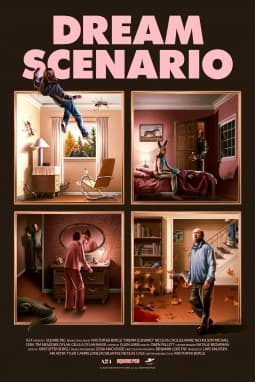
Dream Scenario: Borgli's Cage Vehicle as Media Critique
Kristoffer Borgli's A24 feature used Nicolas Cage as the vehicle for a media satire that landed in late 2023 and has aged, through 2024 and into 2025, into a specifically sharper object than the reviews initially registered.

In a Violent Nature: The Slasher from the Wrong Side
Chris Nash's debut takes the slasher apart from the killer's point of view, and the radical formal choice is also the reason the film divides its audience. I want to argue for it.
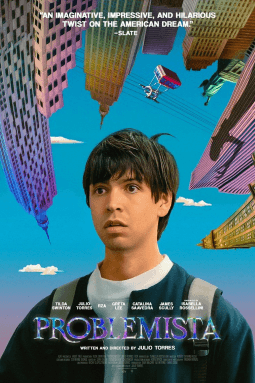
Problemista: Julio Torres's Visa Fable
Julio Torres's 2024 debut feature is a specifically strange American indie about a Salvadoran immigrant, a specifically difficult art-world widow, and a specifically failing visa petition. It is also, quietly, great.