Hundreds of Beavers: The Silent-Era Revival Nobody Expected
Mike Cheslik's 108-minute silent slapstick about a 19th-century fur trapper fighting mascot beavers is one of the strangest American indie films of the decade. It is also one of the funniest.
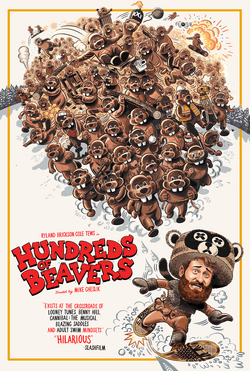
Poster / promotional material via Wikipedia, Hundreds of Beavers. Used under fair use for the purpose of criticism and review.
Hundreds of Beavers is, by any measurable metric, a film that should not exist in 2024. Mike Cheslik’s indie comedy, made for a reported $150,000 over six winters, is an almost-entirely-silent black-and-white slapstick feature about a 19th-century fur trapper’s escalating war with a colony of beavers played by actors in mascot costumes. It runs 108 minutes. It has approximately twelve lines of dialogue. It is, I want to argue, one of the funniest American films of the decade.
What the film is
Jean Kayak (Ryland Brickson Cole Tews), an applejack merchant in snow-bound 19th-century Wisconsin, is reduced to wilderness living after his distillery is destroyed. He begins, across the film’s running time, to teach himself fur trapping. His progress is punctuated by specific escalating conflicts with the local beaver population, which is depicted throughout by performers wearing specifically cheap-looking beaver mascot costumes.
The film is structured as a specifically stacking series of silent-film slapstick set pieces. Each set piece introduces a new comic mechanism, exhausts it, and moves on. The pacing is specifically deliberate: approximately three new gags per minute for the full running time. The comic momentum, once it builds, is relentless.
Why the film works
Hundreds of Beavers succeeds because it commits fully to its silent-film grammar. Cheslik and his collaborators have studied the specific visual vocabulary of Buster Keaton, Charlie Chaplin, and Harold Lloyd, and they deploy it without winking. Physical comedy is staged with specific geographic clarity. Reaction shots are held for specific durations. Title cards appear at specific rhythm points.
The film is not, strictly, a silent film. It has a specific orchestral score (composed by Chris Ryan) and a specific stylised sound design. But the visual-comedy register is the real silent-film register, and the commitment to that register is what elevates the film above gimmick.
The escalation
The film’s specific strategy is to escalate. Jean starts with one beaver. He progresses to several beavers. By the midpoint he is navigating a specifically labyrinthine beaver-society structure that the film has constructed with unexpected narrative density. By the final act, the scale of the conflict is specifically operatic.
The escalation works because each stage introduces new comedic mechanisms rather than repeating the previous ones. Beavers appear as trapped prey, as commercial commodities, as guards, as bureaucrats, as judges, as architects. The mascot costumes never change, but the comic function of the costumed performers shifts radically across the running time.
The Tews performance
Ryland Brickson Cole Tews, the film’s co-writer and star, is doing committed physical comedy at a level that is specifically rare in contemporary American film. The performance is almost entirely physical. Tews has a specifically rubbery body that responds to comic beats with specific Keaton-adjacent timing. He falls well. He runs well. He reacts well.
Tews is also, importantly, not arch. The performance is specifically earnest. Jean takes his own plight seriously across the film’s escalating absurdities, and the specific earnestness is what makes the absurdities land comedically.
The production story
Hundreds of Beavers was filmed over six winters in Wisconsin. The production schedule was dictated by specific weather requirements and by the film’s extremely low budget. Specific technical constraints (no crane, no dolly, no professional lighting package for much of the shoot) were handled through specific practical-effects workarounds that give the film its specific texture.
The film was workshop-released in 2022, hit the festival circuit in 2023, and received theatrical release through the specifically unconventional distributor Vinegar Syndrome in early 2024. It has since been available on streaming platforms and has built a specific cult audience through word-of-mouth.
Where it sits
Hundreds of Beavers is not going to be widely watched. It is the kind of film whose audience finds it slowly, recommends it insistently, and returns to it repeatedly. Its commercial revenue will continue to trickle in across specific streaming and physical-media windows for the next decade. It will, I suspect, be one of those films that a specifically disproportionate percentage of working American comic filmmakers cite as an influence in subsequent interviews.
The broader industrial point is that Hundreds of Beavers demonstrates what can still be made at the $150,000 budget tier by filmmakers with a specific vision and a specific willingness to commit to unconventional material across years of production. This is the specific ecosystem that American indie cinema needs to continue supporting. Hundreds of Beavers is the argument for it.
Watch it with friends. Eat popcorn. Laugh. The film does not reward solemn critical attention. It rewards surrender to its specific comic rhythm.
Marcus believes good criticism is an argument. He is almost always angry about something, usually for good reason. Horror is his first language.
MORE BY MARCUS VELL →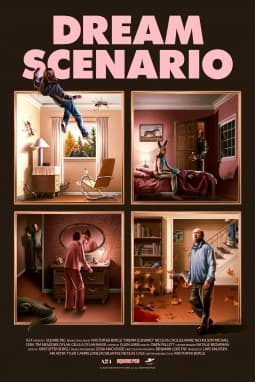
Dream Scenario: Borgli's Cage Vehicle as Media Critique
Kristoffer Borgli's A24 feature used Nicolas Cage as the vehicle for a media satire that landed in late 2023 and has aged, through 2024 and into 2025, into a specifically sharper object than the reviews initially registered.
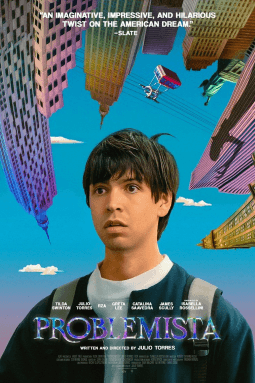
Problemista: Julio Torres's Visa Fable
Julio Torres's 2024 debut feature is a specifically strange American indie about a Salvadoran immigrant, a specifically difficult art-world widow, and a specifically failing visa petition. It is also, quietly, great.
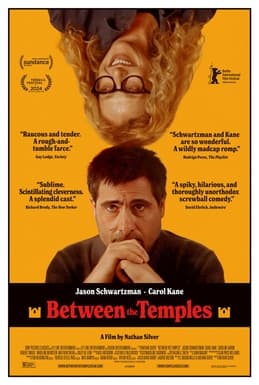
Between the Temples: Nathan Silver's Cantor
Nathan Silver's improvisational comedy about a grieving cantor and his retired music teacher is the specifically strangest American indie comedy in years. I keep coming back to it.