Furiosa and the Death of Mid-Budget Action
Almost two years on, Furiosa's $175m worldwide gross still looks like the most depressing box-office story of the 2020s. Not because the film is bad, it is not, but because of what its failure reveals about the economics of the action film.
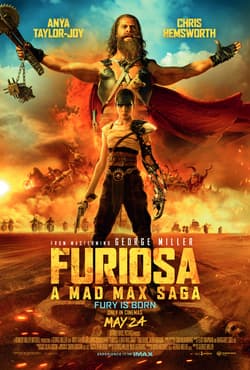
Poster / promotional material via Wikipedia, Furiosa: A Mad Max Saga. Used under fair use for criticism and review.
The most revealing fact about Furiosa: A Mad Max Saga is not anything that happens inside the film. It’s the number $175 million, which is what the film grossed worldwide against a reported $168 million production budget. Add prints, advertising, and the distributor’s cut, and Furiosa, a film by a seventy-nine-year-old director working at the absolute height of his powers, starring the most exciting young actress of her generation, prequel to one of the most critically adored action films of the century, lost somewhere north of $100 million.
That is not a failure of filmmaking. It is a failure of the market the filmmaking was released into.
The film itself, briefly
Let me deal with the film on its own terms first. Furiosa is extraordinary. George Miller and his long-time editor and co-writer Margaret Sixel, returning nine years after Fury Road, made a film that could easily have been a soulless victory lap, a two-hour origin expansion of the most iconic character from the most iconic action film of the last fifteen years. It is not that. It’s a five-chapter epic, more deliberately structured than Fury Road, more morally interested in its villains, and more willing to sit in its own stillness.
Anya Taylor-Joy inherits a role originated by Charlize Theron and does not try to compete with Theron’s take. Her Furiosa is younger, less damaged, more watchful. The choice serves the film’s central interest, which is less in Furiosa as a heroic figure and more in the long, slow education of a person who will eventually become one. The film is patient about this. Some of its best sequences, the chapter set largely in the citadel, the wordless desert-chase that runs through the middle of the second act, the late scene in the vault, work at a register that is closer to a novel than to a standard action film.
Chris Hemsworth’s Dementus is the other major achievement. Miller has given Hemsworth a villain who is not, finally, a symbol of evil but a study in petty human grievance at apocalyptic scale. Dementus is a man who was not respected enough by the world he inherited and has decided to make the rest of the world pay for the discrepancy. Hemsworth, released from the obligation to be charming, plays him with a specific sour tiredness that is new in his filmography.
The set pieces are Miller’s best staged since Fury Road, which is to say they are among the best staged in the last three decades of English-language cinema. The “stowaway” sequence alone, where Furiosa rides underneath a moving war rig for most of the second act’s climax, is a masterclass in geography, editing rhythm, and character action communicated through physicality rather than dialogue. It is the kind of thing American action cinema cannot do any more.
Why nobody saw it
Here is where I get angry. Furiosa opened on a Memorial Day weekend in May 2024 and made $26 million in the United States, its opening frame. Fury Road had opened on the same holiday corridor nine years earlier and made $45 million on its first frame. Both films were rated R. Both films had strong early reviews. Both films had major studio marketing.
What happened in the intervening nine years? Several things, none of which have to do with the quality of Miller’s filmmaking.
First, audiences changed. Or rather, audience behaviour changed. The R-rated action film without franchise anchoring has, over the last decade, become an endangered category. Audiences under thirty-five, particularly, increasingly do not go to films they have not been primed to go to by a multi-year franchise build. Fury Road benefited from nostalgia for a 1980s Mel Gibson property that thirty-somethings remembered. Furiosa does not have that specific kind of anchor. It is a spinoff of a film that was a revival. Two layers of franchise, neither of which is a franchise in the modern sense.
Second, the theatrical window has shortened. Furiosa was on digital within thirty-one days of release. Viewers who are casually curious about an action film now have a reliable expectation that they can watch it at home within a month of release. For a film whose selling point is theatrical scale, and no filmmaker working today is more committed to theatrical scale than Miller, that is a specific, fatal discouragement to opening-weekend theatrical attendance.
Third, and this is the hardest thing to write about with any clarity, the marketing did not work. I say this having watched every piece of Furiosa marketing that Warner Bros. put out. The trailers looked like Fury Road, which was a problem. Audiences who had seen Fury Road had already had that experience. Audiences who hadn’t, weren’t going to be recruited by a trailer that visually said “more of this.”
The film underneath the marketing was not “more of this.” It was something different, slower, sadder, more episodic. But the marketing did not know how to sell that, because the marketing did not trust audiences to be interested in that.
The bigger story
Furiosa’s box-office failure is part of a cluster of 2024–25 disappointments, Megalopolis, The Fall Guy, Horizon: An American Saga Chapter One, Megalomania and Beetlejuice Beetlejuice (the latter a rare survivor), that together tell the story of a theatrical market that has stopped being able to reliably monetise mid-to-high-budget, non-franchise adult films.
This is genuinely bad news, and not just for the studios. A filmgoing culture that can only support sequels and animations is a culture that loses its capacity to fund the films that break through and become the next generation’s reference points. Without the mid-budget auteur film, the top of the food chain dries up too. The director who was going to make the next great franchise entry first needs to have made three or four “smaller” films. If the studios stop funding those, they don’t get the next generation.
What survives
The argument I want to land on, eighteen months out, is that Furiosa’s commercial failure should not alter its critical standing. The film is excellent. It will age into the canon. In ten years it will, I suspect, be more regarded than it was in 2024, not less, because the industrial conditions that suppressed its opening were conditions of 2024, not conditions of cinema.
Go see it. It’s on streaming. Watch it on the biggest television in your household. Turn the lights off. Let Miller do his work. The film’s failure in the theatrical market does not require that it fail in your living room.
It won’t.
Marcus believes good criticism is an argument. He is almost always angry about something, usually for good reason. Horror is his first language.
MORE BY MARCUS VELL →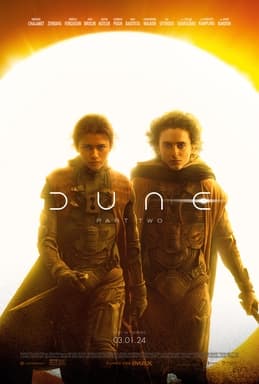
Dune: Part Two and the Anti-Hero Blockbuster
A year and a half on from the sequel, the case for Dune: Part Two is less about its scale and more about its refusal. An argument for the blockbuster that does not entertain.

The Substance and the Body Horror Renaissance
Eighteen months after Coralie Fargeat's prosthetic-heavy fable drew both Oscar nominations and walkouts, the strange alchemy of The Substance has only clarified. The film is less about Hollywood than it looks, and more about what we're allowed to say with bodies on screen.
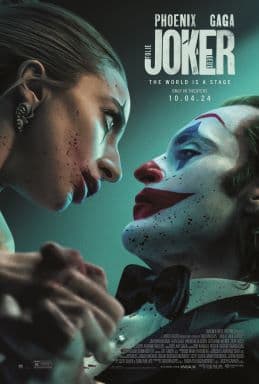
Anatomy of a $200M Musical Flop: What Killed Folie à Deux
Eighteen months after Todd Phillips' much-hated sequel opened to a $37 million weekend and a 30% audience score, it is time to autopsy the corpse. The film isn't good. It also isn't quite what you've been told.