Zodiac Is a Film About Jurisdiction
The Zodiac killer is the least present figure in Zodiac. What the film dramatises instead is how knowledge fails to travel between desks, counties and decades.
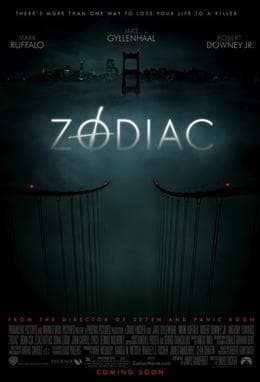
Poster via Wikipedia, Zodiac (film). Used under fair use for criticism and review.
The most quoted feature of Zodiac is its length, and the second is its refusal to name a killer with certainty. Both are accurate and both point at the wrong thing. The film’s real subject is not a man who sent ciphers to newspapers in the late 1960s. It is the machinery that received them: several police forces, three newspapers and a handwriting analyst, each holding a piece of the case and none able to hand it cleanly to the next.
David Fincher released the film in March 2007, through Paramount in the United States and Warner Bros. overseas, on a reported budget of around US$65 million. The worldwide gross is usually given somewhere in the mid-eighties of millions; treat the figures as contested. It was not a hit. It has been, for most of the years since, the film Fincher’s admirers reach for when they want to argue he is a serious director and not only a brilliant one.
The case is split across borders
James Vanderbilt’s screenplay draws on two books by Robert Graysmith, Zodiac (1986) and Zodiac Unmasked (2002), and it takes from them a fact that the true-crime genre usually treats as an obstacle: the killings were committed in different places. A shooting in Vallejo, an attack at Lake Berryessa in Napa County, a cab driver shot in San Francisco. Each belongs to a different force with its own files, its own detectives and its own reasons for not wanting to share.
Fincher stages this administratively. Mark Ruffalo’s Dave Toschi in San Francisco and Jake Gyllenhaal’s Graysmith at the Chronicle are the nominal leads, but the film keeps returning to offices, where detectives from different forces compare notes and discover how little of it fits together. The thriller’s usual pleasure, the sense that someone is getting closer, is replaced by the dull, specific dread of a case being filed rather than solved.
A film shot to look like its paperwork
Harris Savides photographed the picture largely on digital cameras, the Thomson Viper among them, and the choice is easy to misread as a technical flex. It is closer to a house style for the world of the film. The newsroom, the police station and the cinema lobbies all carry the same slightly cool, evenly lit look of a place where people work under fluorescent tubes for years. Donald Graham Burt’s production design places the late 1960s and 1970s in carpet, wood-grain and paper, and the camera lingers on the paper.
Angus Wall’s editing does the rest. The film runs 157 minutes in its theatrical cut (the director’s cut adds a few more), and the pacing is built from a procedural rhythm: an event, a pause, a memo, a delay, a year. The title cards that jump ahead through the decades are not decoration. They are the film’s argument that time, here, is the main character, and that it does not behave like the time in a thriller.
The killings that are staged as scenes
Fincher does stage the attacks as full set-pieces, and they are the film’s most discussed passages for a reason. They are shot with a patience that has nothing to do with excitement. The daylight attack at Lake Berryessa is played out in sunshine, in a field, at a pace that makes every gesture clear and none of them stylish. The cab murder in San Francisco is similarly stripped of anything that would help the audience feel they are watching a movie. These scenes are frightening because they are plain. They are also the last time the film lets itself dramatise the killer directly.
After that the killer becomes a voice on a telephone, a handwriting sample, a rumour about a man in Vallejo. The film moves to the one place where he exists for the characters: in the files.
What Graysmith’s obsession is actually for
It would be easy to read Gyllenhaal’s cartoonist-turned-amateur-sleuth as a study in obsession, and the film invites that reading by letting the home life fall apart around him. But the obsession is not irrational, in the film’s terms. It is the only response available to a man who has noticed that no institution is going to put the pieces together. Toschi is pulled away by the department; Robert Downey Jr.’s Paul Avery is pulled away by his own collapse; Graysmith, who has no institution, is the only one left who can follow the thing across the lines.
That is why the ending is not a letdown. A scene in which Graysmith comes face to face with the man he believes is responsible is quiet, glancing and unresolved, and the film has built an entire structure to make that the right ending. The closing cards, which note that the suspect died without ever being charged, do not feel like an evasion. They feel like the last entry in a long file.
Why it keeps getting rediscovered
Zodiac has aged well because the genre around it has aged badly. A decade and a half of true-crime podcasts, streaming documentaries and obsessive web sleuthing have taught audiences to want the answer and to feel cheated when they do not get it. Fincher’s film is the corrective. It argues that the story of an unsolved case is the story of the people who could not solve it, and that the real horror is not a masked man but a system in which every individual does their job and the job still does not get done.
That is a serious claim for a studio film to make, and it is made with a craftsman’s discipline and no sermon at all. It is the reason the picture belongs in the same conversation as All the President’s Men, the film it most openly resembles: a newsroom, a long investigation, a set of facts that will not close. The difference is that All the President’s Men gets its man. Zodiac gives us the file.
Lena writes long-form essays on the films that will still be talked about in a decade. Previously at a defunct monthly whose name we do not speak.
MORE BY LENA ASHWORTH →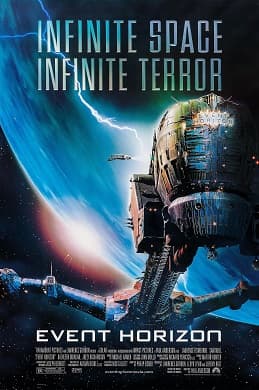
Event Horizon Was Finished by a Calendar, Not a Director
Event Horizon lost money in 1997 and has been defended ever since, usually for the wrong reasons. The film that survived is a haunted house with a gravity drive for a cellar.
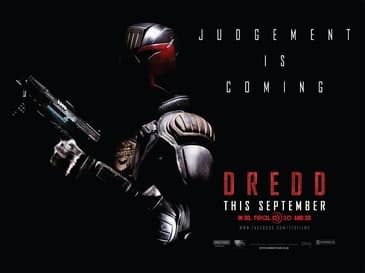
Dredd Was Sold as a Gimmick and Built as a Siege
Dredd lost money in 2012 and has been winning arguments ever since. The film that failed and the film that lasted are the same film, and the reason is one tower block.
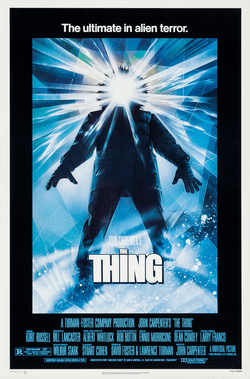
The Thing Was Not Rejected in 1982. It Was Mis-Sold.
John Carpenter's The Thing earned back its budget and was savaged anyway. The record says the film was not the problem. The poster, the tagline and the weekend it opened were.