Dredd Was Sold as a Gimmick and Built as a Siege
Dredd lost money in 2012 and has been winning arguments ever since. The film that failed and the film that lasted are the same film, and the reason is one tower block.
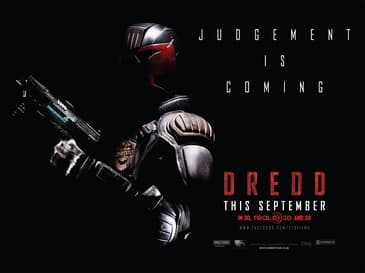
Poster via Wikipedia, Dredd (film). Used under fair use for criticism and review.
Let me get one thing out of the way. Dredd did not fail because audiences were wrong, and it did not succeed later because audiences were right. It failed because it was sold as something it was not, and it lasted because it was, from its first frame, exactly the film it appeared to be at the end.
The facts of the failure are not complicated. Lionsgate released Pete Travis’s film in September 2012 off the back of a reported budget in the neighbourhood of US$45 million. The opening weekend in the United States was reported at roughly US$6 million, and the worldwide gross is usually given somewhere between US$35 million and US$41 million depending on the source. Treat those numbers as contested; the direction is not. It lost money. The 1995 Stallone film, Judge Dredd, which the new one was explicitly built to erase, made far more at the global box office on a bigger budget and is by every measure the worse picture.
The marketing was the problem
I say this with no pleasure, because the marketing of Dredd was not stupid, only wrong. The campaign leaned on the 3D release and on a slow-motion drug effect (the “Slo-Mo” high that dilates a character’s perception to a fraction of a second per second). It sold the film as a visual stunt: look at the water droplets, look at the light, look at the faces. The stunt is real. The sequences were shot on high-speed cameras and they are some of the most beautiful ultraviolence of the decade. A stunt is a poor thing to sell a siege film on, and it left the film’s actual virtue, which is discipline, out of the trailer.
The audience that wanted a gimmick got a grim, procedural 95-minute lockdown. The audience that wanted a grim, procedural 95-minute lockdown never heard about it.
What the film actually is
Alex Garland’s screenplay sets the whole picture inside Peach Trees, a 200-storey slum block in a Mega-City One that the film mostly refuses to show. Judge Dredd (Karl Urban) takes a rookie psychic, Anderson (Olivia Thirlby), to investigate a triple homicide. The block’s warlord, Ma-Ma (Lena Headey), seals the building and puts a bounty on both judges. The rest is floors.
That is not a budget compromise dressed up as an idea. It is the idea. A film that is nothing but the ascent of one building can be about the architecture of power with no explanatory scene: every level is a rung in the criminal hierarchy, and Dredd has to kill his way up it. The cinematographer, Anthony Dod Mantle, gives each floor a lighting logic of its own, and the colour grows more hostile the higher the film climbs. It was shot largely in South Africa, around Cape Town and Johannesburg, and the real concrete does a lot of the work that a studio set would have been tempted to decorate.
The helmet
The single most important decision was the smallest. Dredd never takes his helmet off. Urban acts for ninety-odd minutes with a jaw and a mouth, and gets from it a range that most actors spend their faces to achieve. The refusal is a rebuke to 1995, where the helmet came off early, but it is also a rule the film sets for itself and keeps. Within that rule, the story gets a lot of its authority. Dredd is not a man with a secret. He is an office that walks.
Paul Leonard-Morgan’s score, all grinding synth and low-register menace, underlines the same discipline. It never courts the audience. It tells them what the building sounds like.
Why it lasted
Dredd’s afterlife is a case study in how a film becomes a cult object in the home-video age. The people who found it on disc and streaming found a lean action picture of a kind the major studios had stopped making at mid-budget: a single location, a tight clock, a clear antagonist, a body count that serves the plot. It aged well because it was never dependent on the thing it was marketed on, the 3D, and because the genre it belongs to (the siege film, with Assault on Precinct 13 and The Raid as its closest neighbours) is one where limits are the feature.
A sequel was talked about for years and never arrived. That is the real cost of the failure. It is not that the film lost money. It is that the film proved the idea, and then the idea had nowhere to go.
Marcus believes good criticism is an argument. He is almost always angry about something, usually for good reason. Horror is his first language.
MORE BY MARCUS VELL →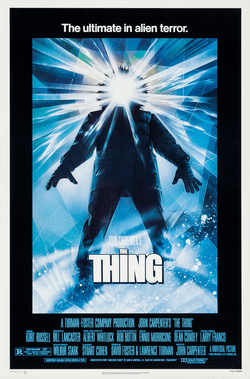
The Thing Was Not Rejected in 1982. It Was Mis-Sold.
John Carpenter's The Thing earned back its budget and was savaged anyway. The record says the film was not the problem. The poster, the tagline and the weekend it opened were.
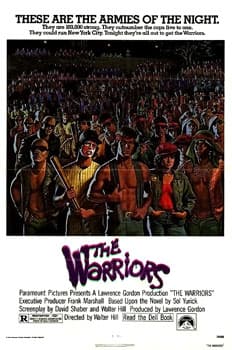
The Warriors Was a Hit That Its Own Studio Treated as a Threat
A $4 million picture grossed about $22.5 million, and Paramount still spent the spring of 1979 pulling its own advertising. The Warriors is a case study in a studio mistaking its audience for the film.
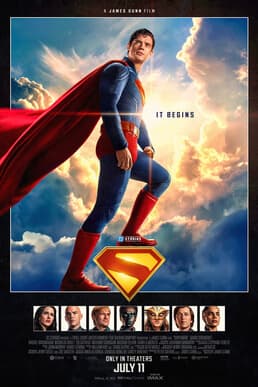
Superman Had to Launch a Universe and Be a Film at Once
James Gunn's Superman was carrying a whole rebuilt DC on its back and still had to be a movie for two hours. It managed both, and the strain shows in exactly one place.