The Tortured Poets Department: Taylor Swift's Unedited Record
Taylor Swift's eleventh studio album, released as a double in April, is the longest piece of popular music she has ever put out, and the most urgently in need of an editor.
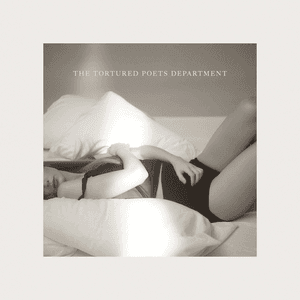
Poster / promotional material via Wikipedia, The Tortured Poets Department. Used under fair use for criticism and review.
The Tortured Poets Department, released on 19 April, is the Taylor Swift album that arrived as a record and, two hours later, as a different, double-length record. Swift announced at the moment of release that what had been a 16-song album was in fact “The Tortured Poets Department: The Anthology,” a 31-song double set. It became, within twenty-four hours, the most commercially successful album release of the decade, and within seventy-two hours, the album about which the most frantic critical disagreement was happening on the internet in years.
I have now listened to the album, in its 31-song full form, seven times. I want to try to say something useful about it that is not primarily about the commercial event.
The argument about editing
The dominant critical complaint about Tortured Poets is that the record is too long. At 31 songs and two hours three minutes, it is, by popular-album standards, enormous. The complaint is correct. The album would be a stronger artistic statement at 14 songs. It would probably be Swift’s best album at 10.
The complaint also, I would argue, misses the point of what Swift is doing at this stage of her career.
Swift has, since Midnights (2022), positioned herself not primarily as a pop-album artist but as a public diaristic artist whose records function as real-time processing of her personal life for an audience that is in active conversation with that life. The audience wants the processing in full, not the curated-for-critics version of the processing. The economic model (streaming, fan engagement, merchandise) rewards volume. The editorial model (Swift deciding what goes on the album) rewards completeness over craft.
Tortured Poets is what happens when those two models are fully aligned. The record is, deliberately, unedited. It is the output of a writer who has stopped pretending to be in conversation with an editor and is now writing directly for her readers.
What is actually on it
The album covers, across its 31 songs, Swift’s abbreviated relationship with Matty Healy of The 1975, which occurred in the brief window between her long-term relationship with Joe Alwyn ending and her current relationship with Travis Kelce beginning. A sizeable portion of the record is devoted to this Healy period. A smaller portion is devoted to the Alwyn relationship’s ending. A smaller portion still is about the Kelce relationship’s beginning.
The Healy songs (most notably “Fresh Out the Slammer,” “But Daddy I Love Him,” “I Can Fix Him (No Really I Can),” “Clara Bow,” “The Manuscript”) are the record’s most emotionally raw material. They are also, not coincidentally, the most commercially successful material. They are about a man Swift’s audience broadly disliked, a man who was then publicly shamed for the relationship, a man who has himself moved on. The specific emotional register of these songs is the register of a woman who knows the relationship was ill-advised, knows her audience knows it, and is documenting the experience anyway.
This is interesting material. It is not, on most tracks, interestingly produced or arranged. Jack Antonoff’s production, which has been Swift’s dominant sonic architecture since 1989 (2014), has now become a specific problem for her records. Antonoff’s palette, layered synths, pulsing dynamics, cathartic build-drops, is so familiar on a Swift record that it has stopped being able to distinguish one song from another. Song after song on Tortured Poets reaches for the same specific emotional swell at the same specific point in the song structure.
Where the album works
The tracks that work best on Tortured Poets are the ones Aaron Dessner produces (“The Manuscript,” “The Bolter,” “Peter,” “The Albatross”). Dessner’s work with Swift on folklore (2020) and evermore (2020) established a specific folk-adjacent palette that lets Swift’s writing breathe in ways the Antonoff palette does not. The Dessner tracks on Tortured Poets are genuinely affecting pieces of writing and arrangement, and they are mostly buried in the second half of the double album where fewer casual listeners will reach them.
“The Manuscript,” the final song of the full set, is a writerly summation that almost makes the preceding two hours cohere. It is also the song that most clearly demonstrates what Swift could have done with a 14-song version of this record: a quiet, literary, specifically-referential set of reflections on the recent past, produced with restraint.
Where the album’s excess is the point
I want to give the record its best reading. The excess is, on one possible reading, part of the argument. Swift is saying: this is what being inside a public-facing breakup and rebound at global celebrity scale actually sounds like. It is repetitive. It is self-contradictory. It keeps returning to the same material from slightly different angles. It is too much, because the experience was too much.
If you accept this reading, Tortured Poets is a successful formal experiment: an album-as-journal, designed to be lived in rather than skimmed.
I can sustain this reading intellectually. I cannot quite sustain it musically. The record, as an object for repeat listening, suffers from the lack of editing in ways that hurt the songs individually, not just the album’s pace.
What comes next
Swift has now released, by her own count, four albums in less than five years (Midnights, the re-recorded Speak Now and 1989, and Tortured Poets, plus of course the ongoing re-recordings). The pace is unprecedented for a pop artist of this stature. The question is whether the pace is sustainable without further erosion of editorial discipline.
I am a Swift listener. I will be at the next record. I also hope, genuinely, that the next record is shorter, more specific, and produced in more conversation with an editor than Tortured Poets was. The writer in her deserves it.
Put it on shuffle. Skip “Florida!!!” Come back for “The Manuscript” last. The shape of a better album is in there somewhere.
Jules writes the kind of pieces that come from wandering somewhere and overhearing something. On Frame Junkie's masthead since the beginning.
MORE BY JULES OKONKWO →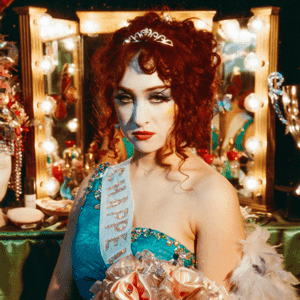
Chappell Roan: The Slow-Motion Pop Star
Chappell Roan's album came out in September 2023. Her stardom arrived in summer 2024. The eleven-month gap is the interesting thing.

Hit Me Hard and Soft: Billie Eilish Grown Up
Billie Eilish's third album is a quieter, longer, more patient record than the one she was commercially expected to make. It is also, easily, her best.
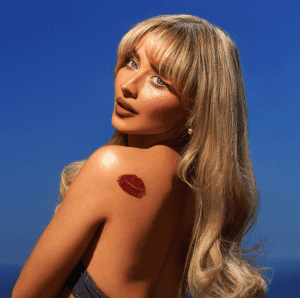
Short n' Sweet: Sabrina Carpenter's Fully-Funded Year
A year on from Short n' Sweet, Sabrina Carpenter is the first pop star of her generation who has successfully metabolised the Disney-pipeline training into something that is not, finally, Disney.