Chappell Roan: The Slow-Motion Pop Star
Chappell Roan's album came out in September 2023. Her stardom arrived in summer 2024. The eleven-month gap is the interesting thing.
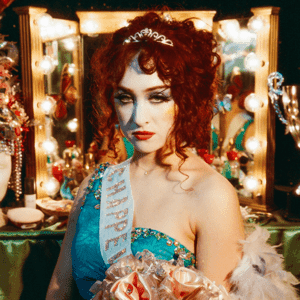
Poster / promotional material via Wikipedia, The Rise and Fall of a Midwest Princess. Used under fair use for criticism and review.
The most interesting cultural-economic question of the summer was: why did Chappell Roan become a global pop star eleven months after her debut album came out?
The Rise and Fall of a Midwest Princess, Roan’s first full-length record, was released by Island/Amusement on 22 September 2023. It was well-received at the time. It sold moderately. It accumulated its core audience of younger queer women, mostly in North America, over the autumn and winter. Roan toured in support of it through early 2024. And then, in April and May of this year, something shifted.
By June, “Good Luck, Babe!,” her non-album single, was a top-10 hit globally. By July, the album tracks that had been cult favourites eleven months earlier, “Red Wine Supernova,” “Pink Pony Club,” “HOT TO GO!,” “Femininomenon,” were in the global top 40. By August, Roan was headlining festivals, generating the summer’s most-discussed Lollapalooza crowd, and fielding the specifically intense fan behaviour that attends pop stardom at its most chaotic phase.
What happened?
The TikTok account is not the full answer
The easy answer is TikTok. A specific dance associated with “HOT TO GO!,” widely propagated on the platform in late spring, drove new listeners to the rest of the catalog. The hit-to-catalog pipeline did its work. The back-catalog numbers started to move. The label re-launched the campaign. The concert circuit restructured around her.
This is broadly true and I do not want to discount the mechanics. But the “TikTok surfaced the catalog” story is incomplete, because it does not explain why this catalog, and not the hundreds of other catalogs TikTok surfaces every week without the same commercial result. What made Roan’s specifically 2023 album become the breakout pop object of 2024?
The craft answer
The short answer is that the album is extraordinarily well-written. Roan (legal name Kayleigh Amstutz) and her long-time producer Daniel Nigro have made an album that is, in its writing and arrangement, one of the three or four best pure pop records of the last five years. The melodies are big, memorable, and specifically structured; the hooks are relentless; the production is maximalist in a specific late-80s gay-disco register that has been out of fashion long enough to be unfashionable-again-which-makes-it-fashionable; the lyrics are witty in ways that most pop writing is not permitted to be.
The Rise and Fall of a Midwest Princess is, to be blunt, a better-written album than most of the 2023 pop releases that got larger commercial reception at the time. The eleven-month lag is partly the time it took the culture to catch up to what was, from the beginning, clearly a major pop-writing talent.
The drag answer
The slightly more interesting answer is that Roan’s stage persona, specifically the drag-adjacent camp iconography she deploys in her live performances, took time to establish as a recognizable cultural object.
Roan has been explicit in interviews that her performance style is drawn from queer drag tradition. The wigs, the makeup, the specific gestural vocabulary she uses on stage: these are not marketed-from-above pop-star iconography. They are specifically drag iconography adapted for a pop-concert context.
This adaptation is, culturally, a non-trivial move. Drag has been, across the past decade, a mainstream cultural object via RuPaul and the RuPaul extended franchise. But drag-as-vocabulary-for-pop-stardom is a more recent development, and it required a generation of pop audiences to have assimilated the drag vocabulary before a performer could deploy it at this level of commitment.
Roan’s moment was partly a craft moment (the record is excellent) and partly a cultural-timing moment (the audience was finally ready for the specific iconography she was offering). The eleven-month lag is the time it took the cultural timing to catch up with the craft.
The backlash-in-real-time
An interesting development through August and September: Roan’s star power has begun to generate, in real time, the specific backlash pattern that attends mainstream pop stardom. The intensity of the fan culture has spilled into the kind of parasocial-stalker behaviour that other pop stars (Swift, Eilish) have had to manage at various stages of their careers. Roan has responded, publicly, with a specific firmness that is unusual for a pop star at her career stage: she has set specific behavioural boundaries with fans, publicly stated that certain categories of fan behaviour are not acceptable, and declined to perform at certain events.
The response has not been uniformly well-received. Some sections of the culture have framed Roan as “ungrateful” for the speed of her ascent. Other sections, including me, have found her boundary-setting entirely appropriate and, frankly, pedagogically useful: she is showing a cohort of younger fans what a pop star is allowed to require of them.
What comes next
Roan has indicated she is working on a second album. The question, as with every artist whose first album becomes culturally canonical, is how to follow up without either repeating the formula or abandoning it.
I am optimistic. Roan’s specific combination of writing craft and performance commitment suggests that the first album was not a lightning-strike event but the opening statement of a serious career. Whatever she does second will, if it is good, show us what the full career looks like.
Put on The Rise and Fall of a Midwest Princess from beginning to end. Pay particular attention to “Casual,” “My Kink is Karma,” and “Kaleidoscope,” which are the album’s best-written songs and the ones that did not cross over. They are, in many ways, the heart of the record.
Jules writes the kind of pieces that come from wandering somewhere and overhearing something. On Frame Junkie's masthead since the beginning.
MORE BY JULES OKONKWO →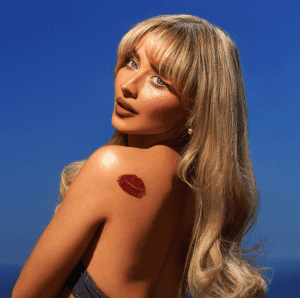
Short n' Sweet: Sabrina Carpenter's Fully-Funded Year
A year on from Short n' Sweet, Sabrina Carpenter is the first pop star of her generation who has successfully metabolised the Disney-pipeline training into something that is not, finally, Disney.
Hit Me Hard and Soft: Billie Eilish Grown Up
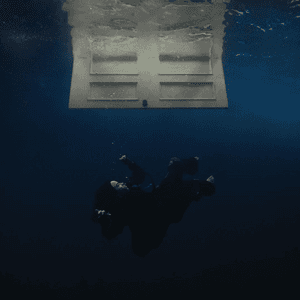
Billie Eilish's third album is a quieter, longer, more patient record than the one she was commercially expected to make. It is also, easily, her best.
The Tortured Poets Department: Taylor Swift's Unedited Record
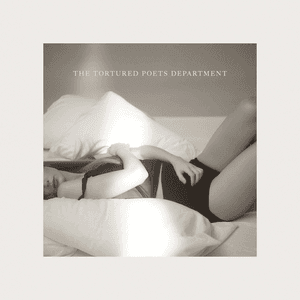
Taylor Swift's eleventh studio album, released as a double in April, is the longest piece of popular music she has ever put out, and the most urgently in need of an editor.