Superman Had to Launch a Universe and Be a Film at Once
James Gunn's Superman was carrying a whole rebuilt DC on its back and still had to be a movie for two hours. It managed both, and the strain shows in exactly one place.
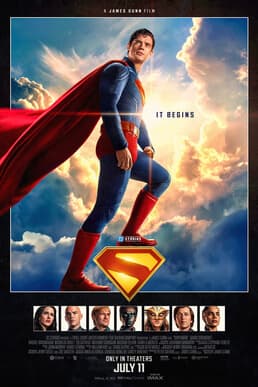
Poster via Wikipedia, Superman (2025 film). Used under fair use for criticism and review.
Let me get one thing out of the way. Superman is a good film, and it is a good film under conditions that should have sunk it. Warner Bros released James Gunn’s picture on 11 July 2025 as the first feature of a rebuilt DC Studios, which meant it was never allowed to be just a Superman movie. It was a company’s balance sheet with a cape on. That it plays, most of the time, like an actual film is the achievement. Where it strains is the seam between those two jobs, and the seam is worth naming, because the strain is the story of every launch picture now.
No origin, and thank God
Gunn’s smartest decision is the one he made before the cameras rolled: he skipped the origin. When the film opens, David Corenswet’s Superman has been operating publicly for three years, has already lost a fight, and is bleeding in the snow while Krypto drags him home. We do not watch the rocket land. We do not watch the Kents find the baby. We meet a Superman who is already a fixture and already contested, and the film trusts you to know the rest, because everyone alive already does.
This is the correct call and it is not a small one. The Snyder era treated Superman as a burden to be brooded over, a god learning to tolerate humanity. Gunn treats him as a person who has decided, without much agonising, that helping is simply what you do. Corenswet plays the decency straight, no wink, which is harder than it sounds and is the reason the film has a centre at all.
The crowding
Here is the cold layer. Superman is not only a Superman film. It is the soft launch of an entire slate, and you can feel the slate pressing on the edges of every scene.
Nathan Fillion turns up as Guy Gardner with a bowl cut and a bad attitude. Edi Gathegi plays Mr Terrific and quietly walks off with several sequences. Isabela Merced is Hawkgirl. Anthony Carrigan is Metamorpho. There is a “Justice Gang,” there is a pocket-universe prison, there is a fictional war between two countries the film needs you to care about on short notice. Every one of these is a seed for something else, and the film has to service them while also telling one clean story about one man. It mostly gets away with it, because Gunn is genuinely good at juggling ensembles, which is the skill that carried the Guardians films. But there are stretches where Superman is doing corporate throat-clearing, and you can tell, because the picture goes slightly slack whenever the plot remembers it has a universe to sell.
Luthor as the argument
Nicholas Hoult’s Lex Luthor is the film’s best idea and the thing that keeps the crowding from winning. Hoult plays him not as a mad scientist but as a tech-money resentment machine, a man who has decided that an alien with unlimited power is an insult to human achievement and has the resources to make the world agree. He runs a smear operation. He manufactures consent. He weaponises a corrupted message from Superman’s Kryptonian parents, twisting it to suggest they sent their son to rule rather than to live among us.
That is a genuinely current villainy, and it gives the film its spine: the fight is not really about heat vision, it is about whether a public can be talked out of trusting the most trustworthy person in the room. Superman’s answer, when it comes, is to reject the Kryptonian inheritance and claim the Kansas one, to say plainly that he is the son of Jonathan and Martha Kent and that the choice is the identity. It is a sentimental beat. Gunn earns it because he has spent the whole film refusing to be embarrassed by sincerity.
The money, and what it proves
Now the part I am contractually obliged to care about. Superman cost a reported two hundred and twenty-five million dollars, opened north of one hundred and twenty million domestically, and cleared a reported six hundred million worldwide. Treat those grosses as contested, as always, but the shape is not in doubt: the film worked, and it worked at a scale that justified the bet on relaunching the whole enterprise around it.
What it proves is narrower than the victory-lap coverage suggested. It does not prove that audiences want a shared universe again. It proves that audiences will show up for a well-made film about a decent man if you stop apologising for the decency. The universe is the thing Warner needs Superman to have proven. The film itself proved something simpler and more durable: earnestness, done with craft, still opens.
The seam, one more time
The risk sits in exactly the place the strain showed. Every future DC film now inherits Superman’s cast of seeded characters, and the temptation will be to let the connective tissue swallow the individual pictures, the way it swallowed Marvel’s middle years. Gunn got away with the crowding here because the crowding was new and because Corenswet’s Superman was strong enough to hold the frame against it. That will not scale forever. A launch film can carry a universe on its back once. The films after it have to be allowed to be films, or the whole thing calcifies into homework, and we have all seen exactly how that ends.
Marcus believes good criticism is an argument. He is almost always angry about something, usually for good reason. Horror is his first language.
MORE BY MARCUS VELL →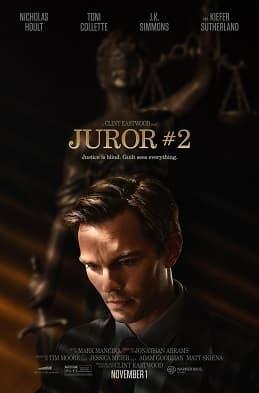
Juror #2 and Clint Eastwood's Final Courtroom
Clint Eastwood's probable farewell as a director was buried by Warner Bros in a ghost release. The film is better than the release, and the release is part of the story.
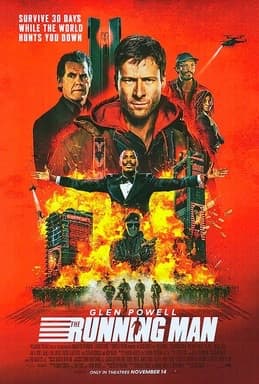
The Running Man Spent Like a Star Vehicle Without a Star
Edgar Wright's Stephen King adaptation took $69 million worldwide on a $110 million budget. The film was fine. The price tag assumed a star Paramount had never actually tested.
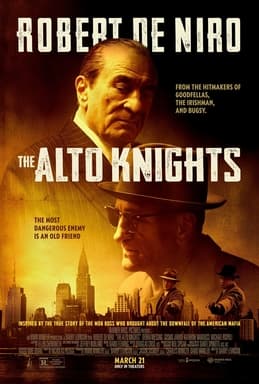
The Alto Knights: De Niro Twice, and Nobody Once
Barry Levinson's mob drama had a Goodfellas screenwriter, a great cinematographer, and Robert De Niro playing both leads. It grossed 9.6 million dollars. Here is why.