Piece by Piece: Morgan Neville, Pharrell, and the Biopic in Plastic
Morgan Neville's LEGO-animated Pharrell Williams biography arrived in October 2024 as a formal provocation: a documentary rendered in plastic bricks. The film solves a specific genre problem, and creates a different one.

Piece by Piece was released by Focus Features in the US on 11 October 2024 and arrived in Australian cinemas the same month. Morgan Neville, whose previous documentary work includes 20 Feet from Stardom (the 2013 Oscar winner for backing vocalists) and Won’t You Be My Neighbor? (the 2018 Fred Rogers portrait), has made a biography of Pharrell Williams rendered entirely in LEGO animation. The interviews (Williams himself, Jay-Z, Snoop Dogg, Gwen Stefani, Kendrick Lamar, Justin Timberlake, Missy Elliott, Daft Punk) have been transcribed from documentary audio and performed by LEGO versions of the subjects in LEGO versions of the rooms they sat in.
The film has been met with a specific critical confusion. Some reviews treated it as a feature-length commercial, some as a pop biography with an animation problem, and a smaller minority treated it as the formal experiment it is trying to be. I want to argue, across this piece, that the animation choice is doing more work than the reviews have credited, and that the film’s specific failure is located somewhere none of the reviews have quite placed.
The biopic problem the form solves
The contemporary music biopic, as a form, has been in slow crisis for at least a decade. The genre’s three canonical gestures (the working-class origin, the creative breakthrough, the fall-and-redemption arc) have been so thoroughly sedimented into audience expectation that any biographical subject now arrives pre-structured by the form rather than illuminated by it. Bohemian Rhapsody, Rocketman, Elvis, A Complete Unknown, Back to Black. The films vary in quality. The shape does not.
The documentary biography has a related problem. The talking-head mode, which is still the dominant register, has been drained of specific power by the sheer volume of competent streaming documentaries doing variants of it. The viewer watching Williams discuss the making of “Get Lucky” in a tastefully lit interview chair has seen so many similar sequences that the information arrives at the brain without any accompanying specific affect.
Neville’s LEGO choice is a solution to this specific exhaustion. By rendering the interview subjects as bricks, the film evacuates the viewer’s existing expectations about what a documentary interview looks like. The cognitive work of the image shifts: instead of decoding a face for sincerity, the viewer decodes a voice and a postural gesture for meaning. The flattening is productive. It lets Williams’s voice carry information that a conventional interview would bury under the accumulated visual noise of prestige-doc conventions.
What the bricks do
The animation is the work of Mikros Animation, the division of Technicolor that handled The Little Prince and the Smurfs feature work. The LEGO house style (the consistent scale, the fixed limb articulation, the specific facial vocabulary of the minifigure) has been extended with specific Williams-era references: his N.E.R.D. wardrobe, the trucker hats from the In My Mind era, the Louis Vuitton campaign looks. Williams is a figure whose public persona has been heavily mediated through visual style for three decades, and the LEGO rendering becomes a way of foregrounding that stylisation rather than apologising for it.
The specific sequences that work best are the ones in which the LEGO form becomes the argument. The “Happy” sequence, which reconstructs the song’s creation process (multiple takes, varying tempos, the specific moment at which Neville shows the vocal hook crystallising) uses LEGO figures to represent the song itself as a buildable object. The viewer watches the song being assembled. This is a specific cinematic register that conventional documentary cannot produce.
The childhood sequences work for a different reason. Williams grew up in Virginia Beach, and the film renders his childhood home, his school, his early collaborators, in a plastic register that matches the specific distance a fifty-one-year-old interview subject has from his twelve-year-old self. The LEGO is the distance, made visible.
What the film is not allowed to do
Here is where the film’s specific problem surfaces. Piece by Piece has Williams’s full co-operation. He is a producer on the film. His company, i am OTHER, is a production entity. The film is, in the specific commercial sense, an authorised biography.
Authorised biographies carry a specific formal constraint: the subject has approval over how he is shown. Neville has made authorised work before (20 Feet from Stardom was authorised in this sense, though by an ensemble rather than a single principal) and his technique has typically been to work around the constraint by finding angles the subject has not foregrounded. The brilliant specific case in 20 Feet was the way Neville used the singers’ self-narration to produce critical commentary on the star system that surrounded them.
Piece by Piece attempts the same move and cannot fully execute it. Williams has had public difficulties (an unsuccessful rap career during specific years in the mid-2010s, the Blurred Lines litigation with the Gaye estate, the personal loss of his cousin in a 2005 incident he has discussed obliquely in interviews) and the film gestures at all three without engaging any of them with the specific critical weight they require. The Blurred Lines sequence in particular is brief, stylised, and resolves with a specific visual gag that pulls the viewer’s attention away from the substantive question (the $7.4 million judgment, the questions it raised about authorship and influence in pop).
The LEGO form is specifically unsuited to critique. When the bricks are rendering joy or creative flow, the formal choice amplifies the content. When the bricks are rendering self-doubt, professional failure, or moral ambiguity, the formal choice renders the content cute. A minifigure cannot carry the weight of a career in crisis.
The Neville authorial question
Neville is a careful filmmaker. His track record indicates that he knows this. The decision to push forward with the LEGO frame despite the specific constraint it places on the critical register is either an acceptance of the constraint or a negotiation with his subject that produced this particular balance. Without knowing which, one can only assess the result: a film that is formally interesting, genuinely moving in specific moments, and structurally unable to tell the harder parts of the story it gestures toward.
The comparison that keeps coming back to me is Asif Kapadia’s Amy in 2015. Amy used only archival material (no new interviews, no new footage, no talking heads) and let the archive do the critical work the subject was no longer able to do. Kapadia’s film is a portrait with teeth. Piece by Piece is a portrait with bricks.
What the film adds to the biopic conversation
The specific argument Piece by Piece makes, regardless of its limits as biography, is that the biopic form can be formally broken and the break can produce illumination rather than gimmickry. The film is the strongest formal experiment in a music biography this decade, and the comparison pool is not small (A Complete Unknown, Elvis, Back to Black, Rocketman, Bohemian Rhapsody, Priscilla). None of those films asked a formal question of the genre. Piece by Piece does, and the question is worth the film being imperfect.
There is a version of this film, made about a less living and less approval-conscious subject, that would have been a significant piece. The form is strong. The content could have been stronger. Both things are true.
What to do with it
Watch it, especially if you have been discouraged by the state of the contemporary music biopic. Watch it specifically for the “Happy” sequence, the childhood Virginia Beach sequences, and the Daft Punk collaboration rendering. Skip the Blurred Lines section if the gag feels, as it will, specifically inadequate to the material. Come out thinking about what the form can do.
The film is on VOD and should land on Peacock in the standard Universal/Focus window. It is worth ninety-four minutes.
Lena writes long-form essays on the films that will still be talked about in a decade. Previously at a defunct monthly whose name we do not speak.
MORE BY LENA ASHWORTH →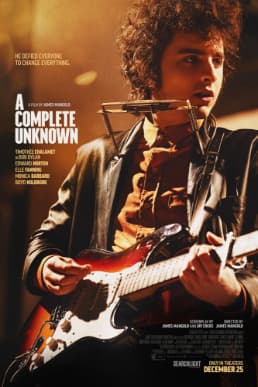
A Complete Unknown: Why the Dylan Biopic Works When Most Don't
A year after James Mangold's Dylan biopic arrived in the middle of a tired genre, the film's decisions keep looking smarter. An argument for the underrated music biopic of the decade.
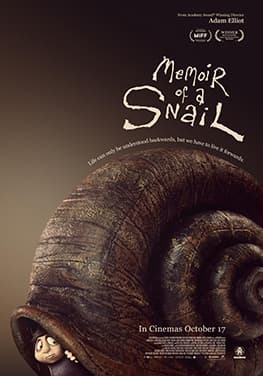
Memoir of a Snail: Elliot's Claymation Grief
Adam Elliot's second stop-motion feature took eight years to make and collected festival prizes from Annecy to Annapurna. The Australian argument is that his particular strain of misery-claymation is one of the country's more unusual exports.

Maria and Pablo Larraín's Closing Argument
Pablo Larraín's third and probably final entry in his trilogy of distressed-woman biopics is the most formally certain of the three, and the one least willing to flatter its subject.