Drive My Car and the Business of Letting Someone Else Take the Wheel
Ryusuke Hamaguchi's three-hour adaptation is usually described as a film about grief. It is closer to a film about who is permitted to drive, and what a man gives up when he finally hands over the keys.
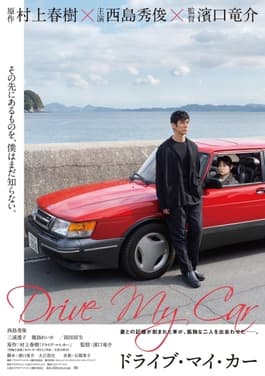
Poster via Wikipedia, Drive My Car. Used under fair use for criticism and review.
The most quoted fact about Drive My Car is that it runs for just under three hours. The most useful fact about it is that nothing in those hours is wasted on the question of whether Yūsuke Kafuku will confront his wife’s lover. He does not confront him. He casts him in a play.
Ryusuke Hamaguchi’s adaptation of Haruki Murakami’s short story, co-written with Takamasa Oe, won Best Screenplay at Cannes in 2021 and the Oscar for Best International Feature the following year, and it was the first Japanese film to be nominated for Best Picture. The honours arrived with a description attached: a quiet film about grief. That is accurate in the way “a film about a whale” is accurate of Moby-Dick. It names the object and misses the argument.
The argument is about control, and it is made almost entirely in the front seat of a car.
The man who will not be driven
Kafuku (Hidetoshi Nishijima) is a stage actor and director who rehearses by driving. His wife, Oto (Reika Kirishima), a screenwriter who composes her stories aloud after sex, has recorded the other parts of Uncle Vanya onto cassette, leaving gaps for his lines. He plays the tape in a red Saab 900 Turbo and answers it. The car is therefore a theatre, a study and a marriage, and he is the only one allowed to steer it.
Murakami’s story has a yellow Saab convertible. The film swaps it for a red Saab 900 Turbo, a change made to sit against the Hiroshima landscape, and the choice is more than decorative. In Hidetoshi Shinomiya’s cool, muted photography the red is the one colour that reads as a warning. It cuts through road, tunnel and snow alike, and every time it appears in the frame it looks like a single held note.
The prologue, which runs roughly forty minutes before the title appears, establishes what he has to lose and what he already has not said. He comes home to find Oto with the young television actor Kōji Takatsuki (Masaki Okada) and quietly leaves. Later, when she asks for a serious conversation, he spends the day driving alone instead. Oto dies of a brain haemorrhage before the conversation can happen. The film’s whole emotional structure is an unfinished talk, and Hamaguchi trusts the audience to feel its weight without being told.
A rule, and the girl who breaks it
Two years on, the Hiroshima festival that has hired him insists, for insurance reasons, that he be chauffeured. He objects. He then accepts Misaki Watari (Tōko Miura), a taciturn young woman who drives with a smoothness that he cannot fault, and who says almost nothing.
Drive My Car is generous about silence, and Eiko Ishibashi’s score is the film’s best instrument for it. The music is sparing: piano and a few sustained strings that arrive after a scene has finished doing its work, as an acknowledgement rather than an instruction. Hamaguchi has said that he normally uses very little music and that Ishibashi’s work was the first time it seemed possible. It is, in its own way, another form of ceding the wheel.
What Misaki offers is not therapy. She does not have the vocabulary and neither does he. What she offers is a competence he can trust without commenting on, and the film lets that trust accumulate across the film’s long drives until it is the only relationship on screen that is not a performance. The film’s real subject is not what Kafuku lost but what he will not let anyone else carry.
The rehearsal as a form of listening
The other half of the argument is staged in the theatre. Kafuku’s Uncle Vanya is multilingual: the actors speak Japanese, Mandarin, Korean and Tagalog, and Lee Yoo-na (Park Yu-rim), a mute actress, performs in Korean Sign Language. Actors read their lines in their own languages and hear the others only as rhythm and pause. His method, a flat table-read repeated until the words lose their performance, is a method for removing the will from an actor, and it is a mirror of the way he has been driving.
It is worth noticing what the method does and does not do. It prevents the performer from acting at the line. It does not prevent the performer from being moved by what is in the line. Kōji is cast as Vanya, the part Kafuku can no longer play himself, and when he finds it, it is because the process has made him listen to people speaking in languages he does not understand, and understand them anyway.
That is Hamaguchi’s thesis, and the Chekhov is how he tests it. Sonya’s closing speech, delivered in sign language, is the film’s single sustained moment of declaimed feeling, and it works because everything leading up to it has been designed to forbid declamation.
Where the car ends up
The ending, in which Misaki is driving the Saab in South Korea with a dog in the passenger seat, divides viewers. It is easy to read as a coda; I read it as the film’s only open assertion. The car has been handed on. The person who held it for Kafuku has taken it somewhere that is entirely hers.
Drive My Car has been released on home media by Criterion and had grossed a reported $14.7 million worldwide by April 2022, a remarkable sum for a Japanese three-hour literary adaptation with no stars of the kind the market recognises. It has since been listed among the best films of the 2020s. The listings are fair. What they tend to omit is how plainly the film is made: a car, a stage, two people who speak very little, and a story that refuses to resolve in the one place where resolution would have been dishonest.
The remaining question is the one Hamaguchi puts to Kafuku and, by extension, to anyone who has ever been proud of their own competence. If grief is a road, who gets to drive it? The film’s answer is not that you should let go. It is that you should notice who you have let take over, and whether you were ever really steering.
Lena writes long-form essays on the films that will still be talked about in a decade. Previously at a defunct monthly whose name we do not speak.
MORE BY LENA ASHWORTH →
Cloud and Kurosawa's Quiet Fury at the Platform Economy
Kiyoshi Kurosawa's 2024 thriller about a Tokyo reseller whose customers track him to a mountain cabin is the closest his cinema has come to an argument about the economy we are actually living inside.
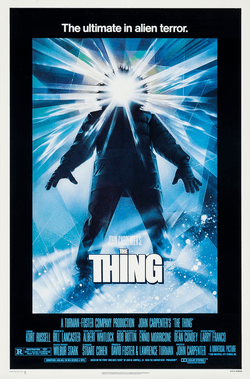
The Thing Was Not Rejected in 1982. It Was Mis-Sold.
John Carpenter's The Thing earned back its budget and was savaged anyway. The record says the film was not the problem. The poster, the tagline and the weekend it opened were.
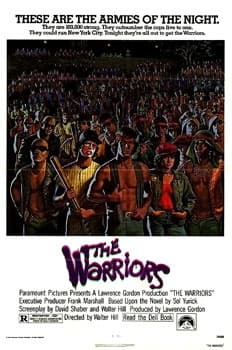
The Warriors Was a Hit That Its Own Studio Treated as a Threat
A $4 million picture grossed about $22.5 million, and Paramount still spent the spring of 1979 pulling its own advertising. The Warriors is a case study in a studio mistaking its audience for the film.