Songs of a Lost World: The Cure's Sixteen-Year Album
The Cure's first album in sixteen years arrived in November 2024. A year later, the wait was the point.
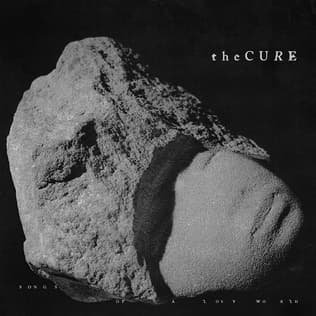
Poster / promotional material via Wikipedia, Songs of a Lost World. Used under fair use for criticism and review.
I am not going to pretend to neutrality about Songs of a Lost World. I have been listening to The Cure since I was thirteen years old. Disintegration (1989) is the record that formed my ideas about what a pop song could do with time and repetition. Robert Smith has been, across thirty-five years, one of the handful of artists whose work has reliably mattered to me.
The Cure’s fourteenth studio album, released in November 2024 after a sixteen-year gap following 4:13 Dream (2008), arrived with the expectations any record this long-delayed would have to navigate. The expectations were, broadly, that the album would either be a disappointing coda or the kind of vindicating late-career statement that artists who have been recording for four decades rarely manage.
Songs of a Lost World is the vindicating record.
What the album is
Eight tracks, forty-nine minutes, entirely written by Robert Smith, produced by Smith with Paul Corkett. The album has a specific extended-gestation quality: several of the songs were debuted live as far back as 2015. Smith has been, across the last decade, slowly working out what this record would be.
The sonic palette is thick, slow, and unmistakably the Cure: layered guitars, keyboard washes, Simon Gallup’s melodic bass, Smith’s vocal in its late-career register, specifically raw and unaffected. The tempos are, mostly, slow. The running times of the individual songs are, mostly, long. The opening track “Alone” is seven minutes. The closing track “Endsong” is ten.
This is a grief record. I mean this specifically. Smith has, across the last fifteen years, lost both his parents, his older brother, and close friends including the keyboardist Roger O’Donnell’s own health struggles. The record addresses these losses in specific terms. “I Can Never Say Goodbye” is about the death of Smith’s brother. “Nothing Is Forever” is about the end of a marriage. “All I Ever Am” is about the specific guilt of being a long-surviving member of a band whose members have not all survived.
The Smith-as-old-man argument
Smith is sixty-six years old. His voice, across the album, is noticeably aged: thinner in the higher register, more cracked in the sustained passages. He has not tried to hide this. The mix of the album places his vocal up-front, unprocessed, willing to break.
This is a specific artistic choice. Smith could have auto-tuned or pitched the vocals. He has not. The result is that the album reads, across its running time, as a record by a specific old man reckoning with mortality and the specific losses that accumulate in a long life.
The song “I Can Never Say Goodbye” is the clearest example. The track is a six-minute elegy for Smith’s brother. The arrangement is a gradual build from sparse piano to full-band devastation. Smith’s vocal in the final chorus is, genuinely, broken. The performance is almost unbearable to listen to on headphones. It is also the single best piece of vocal performance on any record Smith has made since Disintegration.
The “Endsong” problem
The album’s closing track, “Endsong,” is ten minutes long, and it is structured as a series of escalating musical passages that culminate in Smith delivering the album’s thesis line (“Left alone with nothing / At the end of every song”) over a drone that gradually consumes the mix.
This is a specific old-man-rock-music move. Extended closing tracks at slow tempos were a feature of classic-rock albums in the 1970s and have since been, largely, retired from the commercial pop-album form. Smith is invoking the idiom deliberately. The closing track is designed to feel like a conclusion to the band’s entire catalogue, not just to the record at hand.
Whether the move works depends on your tolerance for extended drone codas. I tolerate them. “Endsong” works for me. Readers who do not share my specific generational-gothic training will find the ten minutes long.
Simon Gallup, still
One note about Simon Gallup’s bass playing. Gallup has been with The Cure, with one brief interruption, since 1979. His specific melodic bass register is the foundation of the band’s sound. On Songs of a Lost World, Gallup’s bass is, if anything, more prominent than it was on 4:13 Dream. The bass lines on “Alone” and “Warsong” in particular are among the most melodically distinctive things on the album.
Gallup is a specific kind of bass player whose work is easy to miss if you are not listening for it. I am asking you, on the next listen, to listen for it.
The commercial afterlife
Songs of a Lost World debuted at number one on the UK albums chart, which is the band’s first number-one record there in nearly thirty years. The commercial reception was stronger than anyone, including the band, had reason to expect.
The specific demographic of the record’s commercial success is worth noting. The buyers are, predominantly, people over forty who own the classic Cure catalogue and were willing to pay for a physical copy of the new record. This is the vinyl-LP-era album audience, reconstituted at the end of the streaming era for one specific record by one specific band.
This is unrepeatable. Only a handful of legacy artists have the trust relationship with their original audience that The Cure has, and most of the artists who do have stopped making new records. Songs of a Lost World is, partly, an argument for what can still happen when the right artist at the right late-career moment commits to making the right record.
Where it sits
A year out, the album is already the best-reviewed Cure record since Disintegration. It will not reach the broader cultural stature of Disintegration because the cultural conditions that allowed Disintegration no longer exist, but within the specific audience that cares about The Cure, Songs of a Lost World will be the record of this late period.
Smith has indicated that another album, a companion to this one, is nearly finished and will be released in 2025 or 2026. I am waiting for it. Everyone who has loved this band for any length of time is waiting for it.
Put Songs of a Lost World on in a single sitting. Let it be as slow as it wants to be. The wait was the point.
Jules writes the kind of pieces that come from wandering somewhere and overhearing something. On Frame Junkie's masthead since the beginning.
MORE BY JULES OKONKWO →
Only God Was Above Us: Vampire Weekend at Full Power
Vampire Weekend's fifth album, released in April 2024 after a five-year wait, is the record where the band finally stopped being a band about youth. A year on, the shift is the interesting thing.

Short n' Sweet: Sabrina Carpenter's Fully-Funded Year
A year on from Short n' Sweet, Sabrina Carpenter is the first pop star of her generation who has successfully metabolised the Disney-pipeline training into something that is not, finally, Disney.

Brat Summer: What Actually Happened
Charli XCX's Brat was the pop event of 2024. A year on, the question is not whether the record was good. The question is what Brat Summer actually was, who it was for, and why almost everything it inspired was bad.