Big Trouble in Little China Was Rushed, Then Buried
Fox rushed Carpenter's kung fu comedy into cinemas to beat Eddie Murphy, then, by Kurt Russell's account, did little to promote it. The film is about a sidekick who has not noticed.
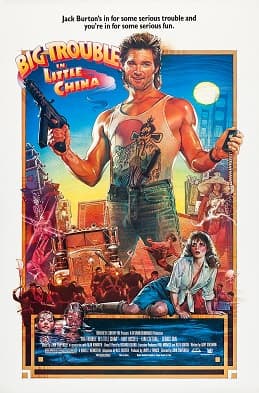
Poster via Wikipedia, Big Trouble in Little China. Used under fair use for criticism and review.
Let me get one thing out of the way. Big Trouble in Little China did not fail because audiences in the summer of 1986 had bad taste. It failed because Twentieth Century Fox made it in a hurry to beat a rival, opened it sixteen days before a blockbuster, and, by Kurt Russell’s later account, decided to bury it.
The numbers are not a mystery. It opened on 2 July 1986 in 1,053 theatres, took $2.7 million on its first weekend, and finished with about $11.1 million in North America against an estimated budget of $19 to $25 million. (Budgets in this era are reported loosely, and I would trust the range rather than the midpoint.) Aliens arrived sixteen days later, and Carpenter and Russell have discussed that timing among the reasons for the result; at a public appearance Russell said the studio decided to bury the film and did not promote it. It was a bomb, and Carpenter has said the experience left him disillusioned enough with the studio system that he went back to independent filmmaking afterwards.
What gets lost in the bomb story is how the film ended up the way it did.
A Western in a hurry
The script began as a Western. Gary Goldman and David Z. Weinstein, first-time screenwriters, wrote it as Lotus, set in the 1880s: a cowboy and a Chinese railroad worker, a fiancée arriving in San Francisco, a sorcerer called Lo Pan. Fox optioned it and then, finding the period setting a problem, brought in W. D. Richter to rewrite it almost from scratch as a modern comedy. Richter, who had directed The Adventures of Buckaroo Banzai Across the 8th Dimension, turned the cowboy into a blowhard trucker named Jack Burton and wrote the draft in ten weeks.
Then came a credit fight that tells you what kind of project this was. Fox wanted to deny Goldman and Weinstein a writing credit and removed their names from press releases. In March 1986, the Writers Guild of America West ruled that “written by” went to the original pair, with Richter credited for the adaptation. The film was already racing a calendar.
The calendar was Eddie Murphy’s. Paramount’s The Golden Child was a similar picture, a Californian everyman pulled into Chinese mysticism, and Fox feared a head-to-head against a superstar. So Big Trouble went into production in October 1985 to open five months ahead of it. Carpenter was hired in part because he worked fast. The whole thing was shot in fifteen weeks, mostly on sets built at the Fox lot in Los Angeles, with production designer John Lloyd rebuilding a three-storey Chinatown with its own sewers. That is a constraint, but it is also the reason the film has the dense, lacquered, compressed look it has.
The joke the studio did not get
Carpenter’s own description of the film, from the commentary track, is the cleanest summary anyone has given: it is about a sidekick who thinks he is the leading man. Jack Burton (Kurt Russell) swaggers into every scene and is wrong in it. He knocks himself unconscious before the climactic battle even starts. The competent one, the one who actually fights and rescues and plans, is Wang Chi (Dennis Dun), and the film knows it, and so does everyone in it except Jack.
That is a sharper idea than most action comedies manage, and it is an inversion of a stale convention: the white hero helped by a minority sidekick. Carpenter and Russell understood it as such. Russell, according to the reporting, played Burton as a John Wayne figure turned up until it became comic.
The studio, according to Carpenter, did not get it. It had first pitched him an adventure in the Indiana Jones mould, and it pushed him to add something that explained Jack, so the result is the prologue in which Egg Shen assures a lawyer that Jack Burton is a man of courage. It is a good scene (James Hong does it dry as bone) but it exists because someone worried the audience might not trust the lead. A studio that did not trust the joke was never going to promote the joke. What reached cinemas was a comedy in which the hero is the punchline, with nobody much shouting about it.
What the film actually does well
Strip away the release history and look at the craft. Dean Cundey photographs the underground sets so that the plaster-and-lath Chinatown reads as a real argument between two secret cities. Carpenter and Alan Howarth score it in his trademark synthesisers with a rock and roll push, and Carpenter said he wanted to avoid the “chop suey” music other American films used for Chinese characters. The closing-credits song is performed by The Coup De Villes, which is Carpenter, Tommy Lee Wallace and Nick Castle, and it is the funniest thing in the film that was not written for the screen.
The effects came from Boss Film Studios on a budget of just under $2 million, and they have dated the way latex dates: fondly. The floating Guardian, a many-eyed thing that took about sixty artists to build, still looks like someone’s idea of a nightmare rather than a computer’s.
And the cast is the reason to keep watching. Kim Cattrall’s Gracie Law is the brains to Burton’s brawn, a screwball heroine who is quick and rude and never screams for help. Dun, who was cast only days before shooting began, is the film’s real lead. Hong’s Lo Pan is a villain who is entertained by his own villainy.
The long afterlife
The film found its audience on home video, which is where the cult began, and that cult has outlasted the memory of The Golden Child by decades. I say this without any satisfaction, because a film should not need a second life to be understood. It needed a studio that backed the joke.
It is easy to give Big Trouble in Little China a prophet’s reputation, and I will not, because the idea is lazy. It was precisely of its time: a studio film assembled from a Western, a Hong Kong action homage and a screwball comedy, rushed through to beat a rival, and then, on Russell’s account, left to fend for itself. Carpenter made a comedy about a man who misreads his own movie, and then Fox misread it too.
Marcus believes good criticism is an argument. He is almost always angry about something, usually for good reason. Horror is his first language.
MORE BY MARCUS VELL →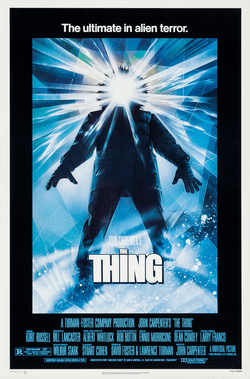
The Thing Was Not Rejected in 1982. It Was Mis-Sold.
John Carpenter's The Thing earned back its budget and was savaged anyway. The record says the film was not the problem. The poster, the tagline and the weekend it opened were.
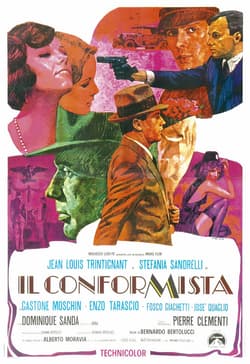
The Conformist Is a Film About Rooms
Bertolucci's 1970 adaptation of Moravia is usually praised for its colour. The argument it actually makes is architectural: a man is sorted by the spaces he walks through.
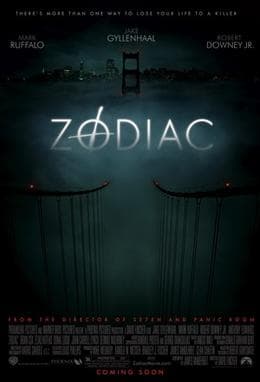
Zodiac Is a Film About Jurisdiction
The Zodiac killer is the least present figure in Zodiac. What the film dramatises instead is how knowledge fails to travel between desks, counties and decades.