The Leftovers and the Discipline of Not Explaining
HBO's The Leftovers began with a mystery and spent three seasons refusing to solve it. That refusal was the argument, and the finale is the only ending it could have had.
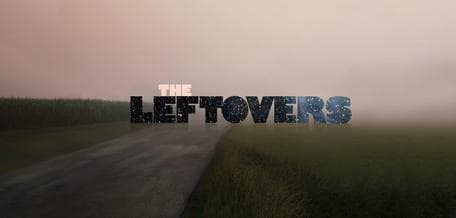
Title artwork via Wikipedia, The Leftovers (TV series). Used under fair use for criticism and review.
Television has a habit it rarely admits: it treats a mystery as a debt. Hand the audience a vanishing, a locked hatch or a body in a lake, and the genre says you will pay it back with an answer by the finale. The Leftovers is the show that looked at the debt and declined to pay, and the interesting question is what it did with the money it kept.
The set-up is simple and, on its own, more science-fiction than the series ever behaves. On 14 October, two per cent of the world’s population disappear in an instant. HBO’s drama, created by Damon Lindelof and Tom Perrotta from Perrotta’s 2011 novel, ran for three seasons and 28 episodes between 2014 and 2017, and it begins three years after the event. Nobody who left is coming back, and nobody knows why. The show never finds out either.
A cause is not a cure
The series is organised around a distinction that most grief drama blurs: knowing why something happened is not the same as being able to live after it. A mystery with a solution would imply that the survivors’ pain is an information problem. The Leftovers insists it is not. Kevin Garvey (Justin Theroux) is a police chief in Mapleton, New York, who is losing his marriage and his sense of the world. His wife Laurie (Amy Brenneman) has joined the Guilty Remnant, a white-clad order who smoke and refuse to speak. Nora Durst (Carrie Coon) lost her husband and two children in the Departure and takes a job at the Department of Sudden Departure, where she sits across from the bereaved and verifies their claims.
Look at what that job is. Nora’s profession is the show’s thesis in miniature: the institutional processing of unexplained loss, done with forms. Coon, who plays the part with a precision that deserves its own essay, gives Nora a surface that is brittle and administrative and a depth that is not. The show lets her be furious about the process and about the people who need it.
The theatre of it
My rule about television is that the best of it behaves like staged drama: blocking, silence and the length of a held shot do the work. The Leftovers is the strongest recent case. Its most characteristic scenes are two people in a room, one of whom wants something the other cannot supply. Christopher Eccleston’s Matt Jamison, a minister whose church is failing because he will not lie to his congregation about what he believes, makes a lost argument about faith look like the only honest position in town. The scenes depend on duration. Cut them by thirty seconds and they become a different, lesser show.
The second season changes the setting to Jarden, Texas, a town where, in the show’s mythology, nobody vanished. The move is a genuine formal risk. It replaces the first season’s dread with something stranger and warmer, helped by a new main-title sequence set to Iron & Wine’s “Let the Mystery Be”, a song that works as an instruction. The mystery is to be let be.
The episode that stands apart
The third season contains “International Assassin”, an episode that shifts into a heightened, almost hallucinatory register to follow Kevin through an afterlife that may or may not exist. It is the clearest demonstration that the show’s refusal to explain is a stylistic choice, not an absence of ideas. The episode risks absurdity (it is very funny) and earns its feeling by committing to the register completely. No other series of the period would have been permitted to make it, and few would have wanted to.
The finale, and why it must be quiet
I will avoid the particulars. The final episode, “The Book of Nora”, is built around a conversation. One character tells another a story that the audience cannot verify and the second person may not believe. The camera does not rule on its truth. What the scene turns on is whether the listener chooses to receive it.
That is the claim the series has been making from the beginning, and the ending stages it as an act rather than a statement. Belief here is not a matter of evidence. It is a practice, something two people do for each other across a table. A show that had spent 28 episodes insisting that answers do not heal could hardly have closed on an answer. It closes on a choice, and on the specific, undramatic labour of someone listening.
There is an industrial footnote worth marking: HBO gave the series a third and final season with a shorter episode order and a clear end point, and the final run is the most economical of the three. A show about acceptance was allowed to end when it wanted to. That, more than any twist, is the rarest thing it did.
Priya came to criticism sideways from theatre. She is patient with slow shows, short with bloated ones, and cheerfully vicious about lazy writing.
MORE BY PRIYA NAIR →
Chernobyl Is a Courtroom Drama That Happens to Contain a Disaster
Craig Mazin and Johan Renck's five hours of television are remembered for the reactor. Their real subject, and their real structure, is a trial, and the audience is seated in the jury box before it knows it.

The White Lotus Season Three Is Built to Refuse Change
The complaint about the Thailand season was that nothing happened for weeks. That was the design. Mike White built a season about people who cannot move, and then made the form hold still with them.

Every Plot in Task Is a Custody Dispute
Brad Ingelsby's seven-episode HBO drama looks like a crime series about armed robbery. Its actual subject is who gets to keep which child, and every storyline is a version of that question.