One to One Finds John Lennon on the Couch
Kevin Macdonald built a John Lennon film out of the television the man was watching in a small New York apartment, and then let him stand up once, to sing.

There is a shot early in One to One of a television set, on, in a small room, and it is the most honest image anyone has made of John Lennon in years.
The room is a rented apartment on Bank Street, in Greenwich Village, where Lennon and Yoko Ono lived for a stretch of the early seventies. The film, directed by Kevin Macdonald and Sam Rice-Edwards, decides that the way to understand this period is to sit where they sat and look at what they looked at. And what they looked at, mostly, was the TV.
So that is what the film gives you. Adverts. Game shows. Nixon. The war. Talk shows and cop shows and the news, always the news, bleeding into the apartment at all hours.
The set is the structure
Most music documentaries reach for the concert or the studio. Macdonald reaches for the aerial.
The organising idea is that 1972 arrives in this apartment through a screen, and the couple absorbs it the way everyone did, half-watching, arguing back at it, occasionally picking up the phone to try to do something about it. Macdonald had access to hours of telephone calls the pair recorded themselves, and he threads them through the archival television so that you hear Lennon and Ono reacting in near real time to the country they had chosen to live in.
It should feel like a gimmick. It does not. It feels like the truth of how a person actually experiences a decade, which is not as history but as broadcast, as the thing flickering in the corner while you eat.
The era pours in. The deportation fight, with the Nixon administration trying to force Lennon out of the country. The feminism Ono was living and Lennon was, awkwardly, learning. Attica. The John Sinclair rally. Vietnam behind all of it. The film does not lecture about any of this. It just leaves the television on, and lets you watch two people get radicalised by their own living room.
Then he stands up
And in the middle of all that couch-sitting, once, John Lennon gets up and goes to Madison Square Garden.
The One to One concerts, two shows on 30 August 1972, were the only full-length performances Lennon gave after the Beatles. He did them as a benefit, for the children of the Willowbrook State School, an institution whose conditions had just been dragged onto that same television by a young reporter’s exposé. The chain is the whole point of the film. He saw something terrible on the screen, and the concert is what he did about it. Cause and effect, television to stage.
Sean Ono Lennon remixed the concert audio for the film, and it is startling, close and raw and a little frightening. “Cold Turkey” is barely under control. “Mother” is somebody screaming in a nice suit. When “Imagine” arrives it lands without any of the varnish thirty years of overplay have put on it, because the film has earned it, has shown you the couch and the deportation papers and the dead children, so that the song sounds again like a demand rather than a lullaby.
Yoko, given back
The other thing the film does, quietly, is give Yoko Ono back her half of the frame.
For fifty years the story of this period has been told as John’s, with Yoko as the woman standing next to him, or worse, the woman blamed for something. Macdonald does not argue against that on the soundtrack. He just leaves the footage running, and the footage does the work: Ono on the phone organising, Ono making art, Ono on stage doing the thing that audiences of the day mocked and that now sounds like it was ahead of everyone in the room.
Her performances at the Garden are in the film uncut, and they are difficult, and the film does not soften them for you. It trusts you to sit with the difficulty. By the end you understand that the couch was hers too, that the radicalising was mutual, that the phone calls you have been listening to had two people on the line the whole time.
It is a small correction and a large kindness, and it costs the film nothing but the refusal to cut away.
What the film is actually about
I went in expecting a concert film with some context bolted on. It is the reverse. It is a film about the context, with a concert bolted in, and the concert is stronger for being small in the running time, one eruption of action in a life the film otherwise shows as mostly watching and worrying.
That is a braver shape than the biopic reflex, which would have marched us from the Beatles to the assassination and told us how to feel at every stop. Macdonald refuses the march. He gives you a year, an apartment, a television, and a man trying to work out what a famous person is for, and he lets the concert answer the question without underlining it.
You come out of it having watched almost no myth and a great deal of ordinary attention. Two people on a couch, taking the world personally, deciding that being famous is only useful if you spend it on something.
And then, once, spending it.
Jules writes the kind of pieces that come from wandering somewhere and overhearing something. On Frame Junkie's masthead since the beginning.
MORE BY JULES OKONKWO →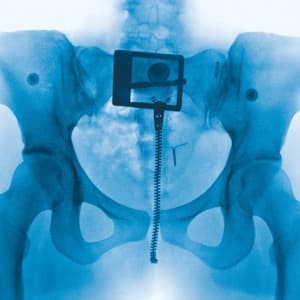
The X-Ray on the Cover of Virgin Is Not a Metaphor
Thirty-four minutes and fifty-one seconds, no cool-down, no exit ramp. Lorde's fourth record is the first one that sounds like a body instead of a report from one.

The Rehearsal Season 2 and the Aviation Problem
Nathan Fielder returned in April 2025 with six episodes about cockpit communication and commercial aviation safety. The premise sounds like a joke. It is not a joke.
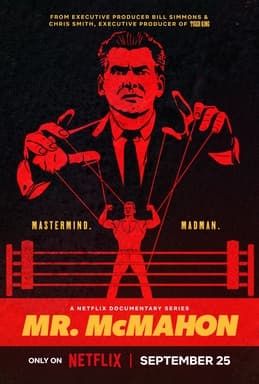
Mr. McMahon and the Documentary That Its Subject Agreed To
Chris Smith's six-part documentary arrived on Netflix in September and did the specific job the genre rarely gets to do. It let its subject speak, and then it outlasted him.