Magdalena Bay's Imaginal Disk and the Slow Return of the Album
Magdalena Bay's second full-length arrived in August 2024 to a slow critical build and a fanbase already waiting. Five months on, the album is the strongest argument for the form in current pop.
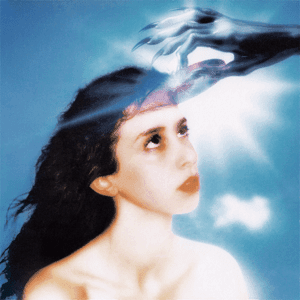
Poster / promotional material via Wikipedia, Imaginal Disk. Used under fair use for criticism and review.
I bought Imaginal Disk on vinyl in October, three weeks after its release, and I have been trying to articulate what the album does that the current pop ecosystem has largely stopped attempting. The record is Magdalena Bay’s second full-length, following Mercurial World in 2021, and it arrived on 23 August 2024 on Mom+Pop Music across fifteen tracks and roughly fifty-three minutes.
The short version, which I want to argue for across this piece, is that Imaginal Disk is the most successful pop-album-as-album of the last calendar year. The long version requires talking about what “album” is supposed to mean in a streaming economy that has been steadily dismantling the form.
Who Magdalena Bay is
Magdalena Bay is the duo of Mica Tenenbaum (vocals, writing, visuals) and Matthew Lewin (production, writing, instrumentation), a Los Angeles pop project that emerged from Miami in the late 2010s and built its audience across a specific stretch of lockdown-era internet activity: TikTok micro-clips, a heavily stylised YouTube visual practice, a newsletter, a sense of aesthetic authorship that treated every release as a piece of a larger project. Mercurial World, their 2021 debut LP, established the sonic signature, specifically synth-heavy pop that draws from both 1970s soft-rock (Fleetwood Mac, ELO, 10cc) and 2000s electronic production (Justice, early Daft Punk, the specific glossy compression of commercial dance pop). The record was praised at release and has continued to accumulate listeners slowly.
Imaginal Disk is the follow-up, produced entirely by Lewin with Tenenbaum, recorded across 2022 to 2024, and released without the kind of major-label push that would normally accompany a project at this scale of ambition.
The album as object
I want to talk about the specific listening experience, because the album is structured to reward a specific kind of listening that streaming playlists have been training listeners out of. The record opens with a three-minute instrumental prelude called “She Looked Like Me!” that functions as a specific tonal threshold. The listener is being asked, across those three minutes, to enter a specific sonic world with specific rules. If you skip the prelude to get to the first “proper” song, you miss the shape the album is asking you to hold.
The album’s central conceit, sketched across the lyrics and the visual material Tenenbaum has produced around the release, involves a character named True undergoing a specific transformation via an implanted disc. The narrative is not a linear story in the sense a rock-opera or concept-album narrative would be. It is, more accurately, a specific atmosphere with recurring imagery, and the songs inhabit the atmosphere rather than advancing a plot.
What this produces, for the listener, is a specific kind of repeat-listening reward. The album is legible on first pass. It becomes more interesting on second and third pass as specific lyrical echoes, specific sonic returns, specific structural rhymes between early and late songs begin to register. I have now played the album probably thirty times, and I am still finding new things.
The production
Lewin’s production is the specific technical achievement the album is built on. I am not a producer, but I can describe what I hear. The drum programming sits between a 1970s session-drum timbre and a 2020s compression register. The synth work, and there is a great deal of it, uses specific hardware (I have read Lewin discuss a Prophet-5, a Juno-106, an OB-6) in ways that let individual patches become recognisable textural elements across multiple songs.
The vocals are the specific thing the album gets most right. Tenenbaum’s voice has a specific narrow register and a specific breathy top, and Lewin has produced her in a way that gives the voice both intimacy and precision without over-processing. The multi-tracked harmonies, which are everywhere on the album, have been arranged with a specific attention to the way the harmonies fall inside the mix. The album sounds like a Fleetwood Mac record run through a 2024 mastering chain, which is the correct description of what it is.
The specific songs
I have favourites. “Image” is the track that first caught me. It is a specifically catchy pop song in the three-and-a-half-minute single-mode tradition, and it does the specific work of a pop song that can be played on the radio, on TikTok, at a party, without losing the album’s broader tonal integrity. The hook is specifically melodic. The production is specifically lush. The song does not announce itself as “experimental” in a way that would alienate the listener who came in for pop.
“Death & Romance” is the song I keep returning to. It sits in the middle of the album and does a specific tonal shift, pulling the record briefly toward a specific kind of late-1970s soft-rock register before the production pulls it back. The vocal performance on this song is the single best vocal on the record, in my view, and it is the clearest case where the album’s specific ambitions become visible.
“True Blue Interlude” and the three-song closing run “Tunnel Vision,” “The Ballad of Matt & Mica,” and “Make Believe” are where the album’s longer-form thinking is most audible. The listener who has stayed with the record through the earlier material is rewarded with a closing sequence that has been carefully prepared for by the preceding nine songs.
The live show
I saw Magdalena Bay at Enmore Theatre in Sydney in late September, two nights after their release-tour opener. The live show is the second thing I want to flag. Live performance for artists whose music is heavily produced is a specific problem. The temptation is either to backing-track the record and have the performers go through the motions, or to re-arrange the material for live band in ways that lose the specific sonic identity.
Magdalena Bay have found a third path. The live band (two additional musicians supporting Tenenbaum and Lewin) plays the material with specific attention to the album’s textures, using hardware synths and live percussion in ways that let the songs breathe without losing their shape. Tenenbaum performs with a specific theatrical confidence that the album’s introverted vocal register does not predict. The live show makes the argument, across ninety minutes, that this is a band rather than a production project.
The visual design of the show (costume work by Tenenbaum herself, projections, lighting by a touring designer whose name I have not retained) is integrated with the music in a way that makes the show feel like an actual performance object rather than a concert plus slides. Pop concerts at this scale rarely bother with this integration. It registers when someone does.
The critical context
Imaginal Disk received very positive reviews across release week (Pitchfork, The Guardian, Stereogum, NME), with the specific framing in most of the pieces being that the album represents a particular kind of ambition the current pop ecosystem has been making harder to execute. I agree with the framing. What I want to add is that the album is not only ambitious; it is specifically completable. It starts, it goes somewhere, it ends. It holds together as an object across its fifty-three minutes.
This sounds like faint praise. It is not. The current streaming-first pop economy has been producing, at its highest levels, specifically well-crafted individual songs that do not cohere into anything larger than a playlist. An album with fifteen tracks is normally, in 2024, a specific commercial strategy designed to maximise algorithmic distribution of the individual songs rather than to construct a whole. Imaginal Disk is the specific exception. The fifteen tracks cohere. Listening to the record front to back is a different experience from shuffling the songs into a playlist, and it is the better experience.
What the album argues for
The specific argument the album is making, by existing and by working, is that the pop album as a form is not dead and does not need to be. A duo with strong aesthetic control, a patient label, a committed audience, and the specific production chops to build a record at this level of sonic precision, can still produce work that rewards the specific slow attention the form was built for. This is, in current pop, a specific counter-example to the trajectory most of the major labels have been riding.
Imaginal Disk is, in my view, on the shortlist for the best pop record of 2024. Charli XCX’s Brat has received more of the specific discourse attention. Imaginal Disk is the more completely built album. Both can be true.
Put the record on tonight. Start at the beginning. Let the opening prelude do its work. The album is what pop used to do and can still do, and the fact that Magdalena Bay are doing it at this specific scale of execution is the most encouraging thing I heard in music across the last calendar year.
Jules writes the kind of pieces that come from wandering somewhere and overhearing something. On Frame Junkie's masthead since the beginning.
MORE BY JULES OKONKWO →
The X-Ray on the Cover of Virgin Is Not a Metaphor
Thirty-four minutes and fifty-one seconds, no cool-down, no exit ramp. Lorde's fourth record is the first one that sounds like a body instead of a report from one.

Short n' Sweet: Sabrina Carpenter's Fully-Funded Year
A year on from Short n' Sweet, Sabrina Carpenter is the first pop star of her generation who has successfully metabolised the Disney-pipeline training into something that is not, finally, Disney.

Brat Summer: What Actually Happened
Charli XCX's Brat was the pop event of 2024. A year on, the question is not whether the record was good. The question is what Brat Summer actually was, who it was for, and why almost everything it inspired was bad.