Grand Tour and the Two Ways to Cross a Map
Miguel Gomes tells the same journey across colonial Asia twice, once as flight and once as pursuit, and the doubling turns out to be the whole argument of the picture.

Poster via Wikipedia, Grand Tour. Used under fair use for criticism and review.
The first half of Grand Tour is a man running away, and the second half is the same journey walked again by the woman he ran from. Miguel Gomes builds his film out of that repetition, and the decision looks at first like a formal dare, the kind of structural stunt a director attempts once and regrets. It is not a stunt. The doubling is the argument. By the time Molly has retraced the route that Edward fled along, we understand that flight and pursuit are the same motion seen from opposite ends, and that both of them, in 1918, in a string of cities the British Empire had drawn onto its own map, are only tourism with the stakes turned up.
Gomes premiered the film in competition at Cannes in May 2024, where he took the award for Best Director. It runs 129 minutes, it was written with Telmo Churro, Maureen Fazendeiro and Mariana Ricardo, and it takes its seed from a passage in W. Somerset Maugham’s travel book The Gentleman in the Parlour. Those origins matter, because Grand Tour is a film about the gap between the map a traveller carries and the ground the traveller actually walks, and Maugham is the patron saint of exactly that gap.
The premise, and why it repeats
Edward, played by Gonçalo Waddington, is a British civil servant in Rangoon. Molly, his fiancée, is due to arrive so they can marry. On the day, seized by a panic he never quite explains and the film never quite diagnoses, he flees. He boards a boat. He keeps going, through Singapore, Bangkok, Saigon, Manila, up into China, always one port ahead of the woman who has decided, with a cheerfulness that curdles slowly into something harder, that she will marry him regardless.
The first hour is his. The second hour is hers. Crista Alfaiate plays Molly as a woman whose laugh precedes her into every room, and Gomes lets that laugh do the work a lesser film would give to tears. She is not tragic. She is relentless, and the film slowly reveals that her relentlessness is the more frightening of the two responses to a shared dread. Edward runs because he cannot face the marriage. Molly pursues because she cannot face the alternative to it. Neither of them, we come to see, is travelling toward anything. They are both travelling away.
Two centuries in one frame
The formal risk that everyone will talk about is not the doubling. It is the collision of times. Gomes shot the fiction in black and white on soundstages in Lisbon and Rome, a deliberately artificial 1918 of painted flats and studio fog. Into that fiction he cuts documentary footage of contemporary Asia, filmed by his crews on research trips, in colour, on 16mm: karaoke bars, night markets, puppet theatres, a ferris wheel turning against a modern skyline. A period narration describes Edward’s 1918 progress while the screen shows us a motorbike in 2020.
This could have been a shrug, the director winking at his own anachronism. It is the opposite of a shrug. The point of the cut is that the tourist route has not changed. The same cities, the same waterways, the same postcard sights that a colonial administrator was carried through a century ago are still being sold to travellers now, and the camera that records them is doing the same acquisitive work in both eras. Gomes implicates his own film in the thing it is describing. A movie about the Western gaze on Asia cannot pretend to stand outside that gaze, and Grand Tour refuses the pretence.
What the cameras know
There are three credited cinematographers, Rui Poças, Sayombhu Mukdeeprom and Gui Liang, and the film needs all three because it is really two films photographed by different logics. The studio black and white is composed, controlled, a little stifling, the visual grammar of a man who has planned every escape and is still trapped inside the frame. The documentary colour is loose, curious, alive to accident. Poças in particular has spent a career shooting interiors that feel like held breath, and the fugitive half of Grand Tour is full of that held breath: Edward in a hotel room, Edward on a deck, Edward always framed as though the walls of the composition were closing the last few inches.
The editing, by Churro and Pedro Filipe Marques, is where the film’s intelligence lives. The cuts between 1918 fiction and present-day fact are timed so that neither dominates. We are never allowed to settle into the story as pure story, nor into the travelogue as pure document. Each keeps interrupting the other, and the interruption is the meaning: no journey is ever only its own century.
The risk of the conceit
A film this schematic, the map doubled, the times layered, the metaphor legible from the first reel, can freeze into a diagram of itself. Grand Tour mostly escapes that fate, and where it does not, the lapses are the price of the ambition. The second half sags in places; Molly’s pursuit, by design, lacks the propulsive dread of Edward’s flight, because she is the one who knows where she is going. Gomes is asking us to sit inside that difference, and sitting is harder than fleeing. Some of the documentary passages run long, and a viewer can feel the director in love with his own footage.
But the film earns its patience. By the last stretch, on a river in China, the two halves have taught us to watch the same water twice and see two different things in it, and that is not a small achievement for a picture built on a gimmick that should not have worked.
What it leaves standing
Grand Tour is the work of a director who understands that a map is a promise the ground never keeps. Edward flees across a continent and arrives nowhere. Molly follows and arrives at him, which is worse. Between them, Gomes has made a film that treats the whole apparatus of travel, colonial and contemporary, as a machine for not being where you are. He photographs 1918 and 2020 in the same breath because the machine has not been switched off. The tour is still running. We are still on it.
Lena writes long-form essays on the films that will still be talked about in a decade. Previously at a defunct monthly whose name we do not speak.
MORE BY LENA ASHWORTH →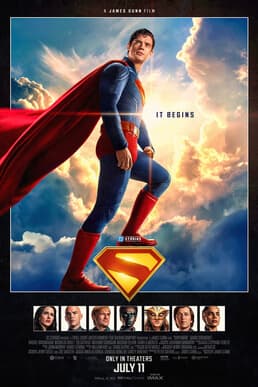
Superman Had to Launch a Universe and Be a Film at Once
James Gunn's Superman was carrying a whole rebuilt DC on its back and still had to be a movie for two hours. It managed both, and the strain shows in exactly one place.
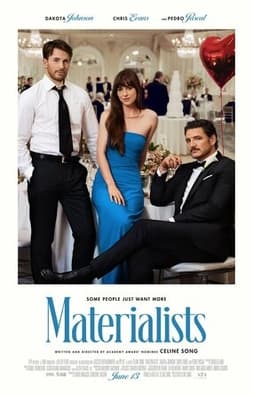
Materialists Is a Film About Pricing, Not Dating
Celine Song's second feature was sold as a romantic triangle. It is really an argument about what happens to people once you agree to put a number on them.
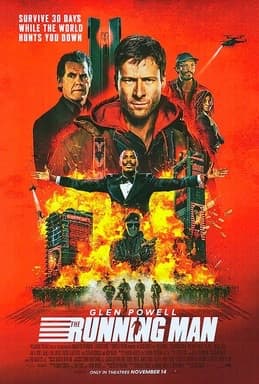
The Running Man Spent Like a Star Vehicle Without a Star
Edgar Wright's Stephen King adaptation took $69 million worldwide on a $110 million budget. The film was fine. The price tag assumed a star Paramount had never actually tested.