Alligator Bites Never Heal and the Year Doechii Stopped Waiting
Doechii's Top Dawg mixtape landed in August 2024, won Best Rap Album at the 67th Grammys, and did the specific thing most debut-tier rap records cannot do: hold the weight of a dozen genre switches without buckling.
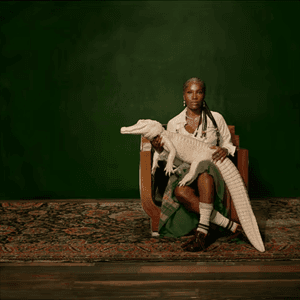
Poster / promotional material via Wikipedia, Alligator Bites Never Heal. Used under fair use for criticism and review.
Alligator Bites Never Heal was released on 30 August 2024 through Top Dawg Entertainment and Capitol Records, announced on 14 August (Doechii’s twenty-sixth birthday) with a tracklist reveal six days later. It is her second mixtape and her first full release in her Top Dawg tenure, a deal she signed in 2022 and which, up to the mixtape’s arrival, had produced singles and a steady touring life but not a project of this scale. In February 2025 it won Best Rap Album at the 67th Annual Grammy Awards, beating records by J. Cole, Future and Metro Boomin, Common and Pete Rock, and Eminem. Doechii became the third woman to win the category and the first artist to win it with a mixtape.
I want to put the award history alongside the record because the history is doing work the record deserves. What Doechii has made on Alligator Bites Never Heal is the mixtape as a statement of intent for a rapper who has been working since 2020 without yet producing the document that explained what she does. This is the document.
The long approach
Jaylah Hickmon grew up in Tampa, came up through SoundCloud and YouTube in the late 2010s, signed to TDE in March 2022 as the label’s first female signing, and spent the subsequent two years releasing singles, guest verses, and shorter projects while building a live act that played an unusual number of US markets for an artist at her commercial tier. The wait between signing and the first major project was two and a half years. The wait produced the record.
What the wait gave her, specifically, was time to settle the question that most TDE signees have to answer first: what kind of rapper is she. The label’s 2010s identity was built around the specific Kendrick Lamar sensibility, and the roster that came up behind him (Schoolboy Q, Jay Rock, Ab-Soul, SZA) has mostly defined itself against or alongside that sensibility. Doechii’s answer, across Alligator Bites Never Heal, is that she is a rapper whose primary influence is none of the obvious options and whose specific point of reference is the late-1990s register of inventive, fast, structurally-unpredictable rap that came out of the women who were rapping at the top of the form between 1996 and 2002.
The lineage, and what she does with it
The record audibly pays attention to Lauryn Hill, Missy Elliott, and Busta Rhymes. It also pays attention to more recent figures: there are traces of Princess Nokia in the stylistic range, Nicki Minaj in the multi-voice approach, and Tyler, The Creator in the structural willingness to pivot registers inside a single track. What Doechii does with the lineage is not pastiche. It is closer to the way Kendrick used G-funk on good kid: a specific claim on a tradition that lets her work with the tools the tradition provides without doing impressions.
The track that most clearly demonstrates the method is “Denial Is a River,” which builds a conversation with a therapist across the song’s runtime and uses the dual-voice structure to stage a specific comic and emotional argument about Doechii’s own avoidance patterns. The track is funny, which is not a word I use often about rap in 2024, and the comedy is load-bearing. It is also, at the craft level, one of the year’s most technically impressive pieces of rapping. She sustains two voices with distinct cadences across three minutes without losing the joke or the structure.
“Nissan Altima,” which was the first single and got a Best Rap Performance nomination, is the record’s most rhythmically aggressive piece of writing. The track is built on a specific rapid-fire delivery that Doechii sustains across a runtime longer than the genre convention. It is the kind of verse that would have been a career-maker in the 1997 moment and is, in 2024, the track the rest of the mixtape has to match. Most of the mixtape does match it.
The producers, the textures
The production credits are distributed across a specific working team. TDE’s in-house producer Devin Malik handles the mixtape’s more aggressive tracks, including “GTFO.” Childish Major, Kal Banx, Monte Booker, Banser, Camper, and Pivot Gang’s DaedaePivot each bring distinct textures. The spread is the point. What the record is doing, texturally, is refusing a single production identity in favour of a specific curatorial ear. Doechii is behaving like a rapper who has spent years deciding what she wants each track to sound like, and the mixtape reads as a sequencing decision rather than a drop-in-place of whatever the studio produced.
The most specific textural moment is “Catfish,” which sits roughly in the mixtape’s middle and works as the record’s most unconventional piece of structural writing. The track is built on a beat that would not have been out of place on an early Missy Elliott record, and Doechii uses the space to do the kind of playful, rhythm-inflected vocal performance that is not currently a dominant register in mainstream rap. The track is a reminder that rap has historically been, among other things, a comic form, and that the comedy has mostly disappeared from the commercial mainstream across the last decade.
The queer material, handled plainly
The mixtape is a specifically queer record. Doechii is out, has been since the beginning of her commercial career, and the record addresses the specific conditions of a queer woman making rap at a scale that most queer rappers have not previously reached. The handling is plain rather than performative. The queerness is load-bearing in the same way the comedy is load-bearing. It is part of the record’s ordinary texture rather than its argument.
This is a specific thing to note because the commercial rap genre has, across its entire existence, made space for queer rappers only intermittently and rarely at the top tier. Doechii’s Grammy win, and the specific fact that the win went to a mixtape rather than an album, mark a shift in what the category is willing to recognise. The shift is not complete. The record, on its own merits, is the argument for why it should be.
The mixtape form, defended
One of the thing the Grammy-category win does that is worth marking is legitimise the mixtape as a form at the awards level. Alligator Bites Never Heal is, by TDE and Capitol’s own billing, a mixtape rather than a studio album. The distinction has mattered historically because the mixtape has operated as a lower-stakes release format, less subject to commercial expectation, more amenable to experiment. What Doechii has done is release a project that is formally a mixtape and that sounds, craft-wise, like the most disciplined studio album of the year in its genre.
The Grammy recognition of a mixtape is the Academy catching up with a form that has been the primary engine of rap’s creative work for twenty years. This is not a structural shift on its own; it is an acknowledgement. The acknowledgement is overdue.
What the live show demonstrates
Doechii’s touring schedule across late 2024 and the first quarter of 2025 was heavy, and the live act is the record’s second argument. She is one of the current era’s more specifically physical rap performers, and the live show is built around a dance-and-rap integration that most of her peers are not attempting at the same level. The live performance is not window dressing on the record. It is the register the record is asking to be heard in.
The Saturday Night Live performance in February, after the Grammy win, was the clearest public demonstration of the live register. The two-song slot was staged with a choreographed ensemble and a live-band arrangement that shifted the studio tracks into a different and harder register. The performance is worth finding on YouTube. It is the fastest way to understand what the record is trying to do.
What stays
Alligator Bites Never Heal is the rap record I have most enjoyed listening to across the 2024 to 2025 window, and the enjoyment has not diminished across the months I have been playing it. What Doechii has done, specifically, is make the record that justifies the wait the label asked its audience to do, and has done it in a form that refuses most of the commercial shortcuts the genre currently rewards. The mixtape is funny, formally ambitious, technically accomplished, and queer in a plain register. It is also, and this is the thing that will matter longest, sequenced as a single piece of work.
Play it in order, the first time at least. The sequence is the argument. The next project, whenever it arrives, has a specific weight behind it. Alligator Bites Never Heal is the one to keep close until then.
Jules writes the kind of pieces that come from wandering somewhere and overhearing something. On Frame Junkie's masthead since the beginning.
MORE BY JULES OKONKWO →
Kendrick vs Drake: Notes on a Massacre
A year after 'Not Like Us' broke streaming records, changed halftime shows, and drove a superstar into the career wilderness, the question is no longer who won. The question is what the beef actually was.
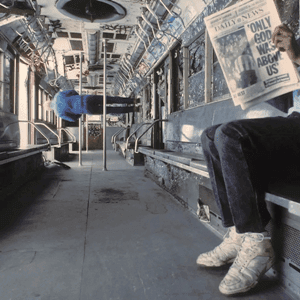
Only God Was Above Us: Vampire Weekend at Full Power
Vampire Weekend's fifth album, released in April 2024 after a five-year wait, is the record where the band finally stopped being a band about youth. A year on, the shift is the interesting thing.
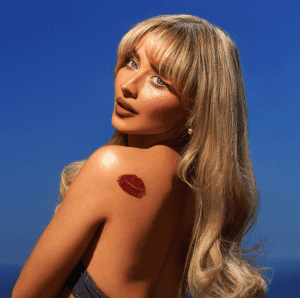
Short n' Sweet: Sabrina Carpenter's Fully-Funded Year
A year on from Short n' Sweet, Sabrina Carpenter is the first pop star of her generation who has successfully metabolised the Disney-pipeline training into something that is not, finally, Disney.